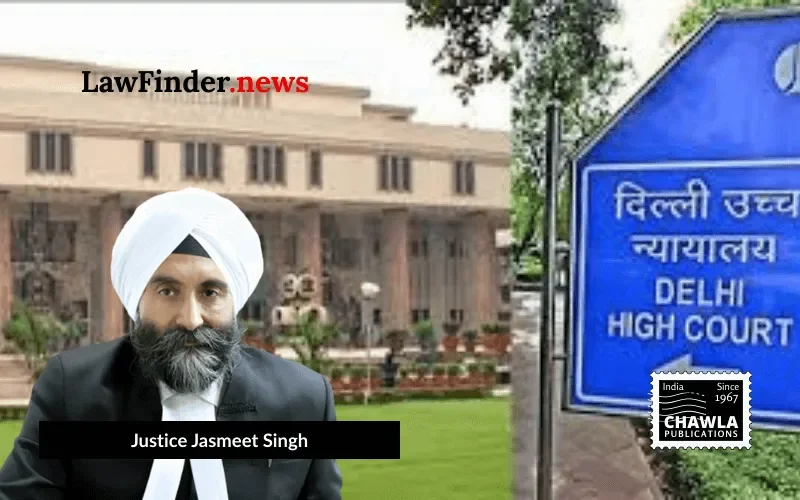
Court holds RBI KYC Directions, 2025 do not empower banks to freeze accounts without prior notice; UCO Bank's internal circular deemed ultra vires and arbitrary.
In a significant judgment dated October 6, 2026, the Delhi High Court, presided over by Mr. Jasmeet Singh, J., struck down the action of UCO Bank in imposing a debit freeze on the current account of M/s S.S. Enterprises merely on the ground of breaching an internally fixed threshold limit. The court held that the Reserve Bank of India (Commercial Banks - Know Your Customer) Directions, 2025 ("RBI Directions") impose only reporting obligations on banks for suspicious transactions and do not confer any power to freeze or restrict operations in customer accounts without due process.
The petitioner, M/s S.S. Enterprises, had its current account frozen after it exceeded the bank's internal threshold limit of Rs. 5 lakhs, with transactions amounting to Rs. 8.5 crores during the relevant period. UCO Bank cited pending KYC formalities and suspicious transactions as the reason for the freeze and refused to process RTGS instructions from the petitioner. Despite completing biometric e-KYC formalities as requested, the petitioner's account remained under debit freeze, causing commercial disruption and loss of business.
The court examined the relevant provisions of the RBI Directions, particularly Clauses 17.3, 52, 53, and 54. Clause 17.3 permits banks not to undertake a transaction or open an account without completing Customer Due Diligence (CDD) but does not authorize freezing an operative account. Clauses 52 to 54 impose a duty on banks to report suspicious transactions to the Financial Intelligence Unit-India (FIU-IND) but expressly prohibit imposing restrictions on account operations merely on the basis of such reports. The court ruled that UCO Bank's internal Master Circular authorizing real-time Automated Debit Clearing (ADC) blocking and over-the-counter debit restrictions upon threshold breach is contrary to RBI's regulatory framework and therefore ultra vires.
Furthermore, the court underscored the gravity of freezing a bank account, noting that it can bring a business operation to a standstill and cause severe commercial consequences. It emphasized that principles of natural justice - including prior notice and an opportunity to be heard - must be scrupulously followed before imposing such restrictions. The absence of any show cause notice or prior intimation rendered the bank's action arbitrary and violative of Articles 14 (Right to Equality) and 19(1)(g) (Right to Practice Any Profession or To Carry On Any Occupation, Trade or Business) of the Constitution of India.
The court also clarified that a bank is a custodian of funds and not an enforcement agency empowered to investigate or question legitimate business transactions of its customers. Confidential business details cannot be demanded arbitrarily, and customers are not obliged to satisfy the bank's subjective suspicions.
Addressing the bank's contention that suspicious transactions were flagged in its Anti-Money Laundering (AML) system after the freeze was imposed, the court held that subsequent AML flagging cannot retrospectively justify an earlier debit freeze imposed merely for threshold breach.
Consequently, the Delhi High Court directed UCO Bank to immediately lift the debit freeze on the petitioner's current account and permit normal operations forthwith.
This ruling reaffirms the limits of banking powers under RBI's KYC regulations and protects customer rights against arbitrary restrictions without due process.
Bottom Line:
Banking Law - Bank cannot impose debit freeze on a customer's operative account merely because internally fixed threshold limit is breached or suspicious transaction report is contemplated/filed - RBI KYC Directions, 2025 only impose reporting obligations and do not confer power to freeze account - Such action, without prior notice and hearing, is arbitrary, violative of principles of natural justice, and unsustainable.
Statutory provision(s):
Reserve Bank of India (Commercial Banks - Know Your Customer) Directions, 2025 Clauses 17.3, 52, 53, 54; Constitution of India Articles 14, 19(1)(g); Prevention of Money Laundering Act, 2002; Prevention of Money-Laundering (Maintenance of Records) Rules, 2005
M/s S.S. Enterprises v. UCO Bank, (Delhi) : Law Finder Doc Id # 2994785