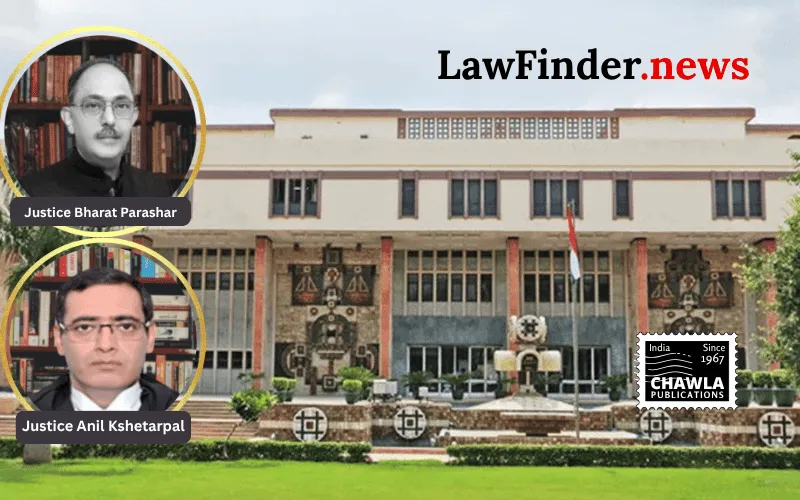
Court Rules Selection of Sole Arbitrator from Panel Unilaterally Furnished by One Party Does Not Waive Mandatory Statutory Protections Under Arbitration and Conciliation Act, 1996
In a landmark decision delivered on October 6, 2026, the Delhi High Court (Division Bench) quashed an arbitral award in the dispute between Newton Engineering And Chemicals Ltd. and Indian Oil Corporation Ltd., underscoring the imperative of a valid and legally compliant constitution of arbitral tribunals. The court held that the appointment of a Sole Arbitrator by the appellant from a panel of three names unilaterally furnished by the respondent violated Section 12(5) of the Arbitration and Conciliation Act, 1996, and that such selection did not amount to an express written waiver of the statutory provisions governing arbitrator appointments.
Background:
Newton Engineering had entered into a contract with Indian Oil for the supply of Heat Exchangers for Indian Oil's Haldia Refinery project. After disputes arose concerning delays and eventual termination of the contract by Indian Oil, arbitration proceedings were initiated. Indian Oil proposed a panel of three arbitrators, from which Newton Engineering selected Shri A.K. Srivastava as Sole Arbitrator. Newton Engineering subsequently participated in the arbitration, which culminated in an award in favor of Indian Oil for Rs. 6,30,054 plus GST and interest.
Legal Controversy:
Newton Engineering challenged the arbitral award under Section 34 of the Arbitration and Conciliation Act, arguing that the arbitral tribunal was not validly constituted. The crux of the issue was whether the appointment mechanism - wherein the respondent unilaterally curated a panel and the appellant was restricted to selecting from that panel - complied with the statutory requirement of equal participation and whether the appellant had waived its statutory right under Section 12(5) by selecting an arbitrator from that panel and participating in the proceedings.
Key Findings of the Court:
1. Invalid Appointment Mechanism: The court emphasized that the appointment of arbitrators must preserve equality between parties. A mechanism allowing one party to present a limited panel from which the other party may select an arbitrator is structurally unequal and contrary to the statutory mandate, as interpreted in the Constitution Bench judgment in Central Organisation for Railway Electrification v. ECI-SPIC-SMO-MCML (JV) (2025) 4 SCC 641.
2. No Waiver by Selection or Participation: The appellant's selection of an arbitrator from the respondent's curated panel, and subsequent participation in arbitral proceedings, did not amount to an express written waiver of Section 12(5) of the Act. The court reiterated the principle from Bhadra International (India) Pvt. Ltd. v. Airports Authority of India (2026 INSC 6) that waivers must be express, unequivocal, and in writing, made after the disputes have arisen.
3.Importance of Express Written Waiver: The letter communicating the selection of the arbitrator was merely a notification requesting approval and did not constitute a waiver. The court held that the statutory protection under Section 12(5) overrides any prior contractual agreement unless explicitly waived by a subsequent written agreement.
4. Jurisdictional Defect Goes to Root: The constitution of the arbitral tribunal affects its jurisdiction. The award rendered by an improperly constituted tribunal is void, and such jurisdictional objections can be raised even at the stage of challenge under Section 34.
5. Setting Aside the Award: The court set aside the arbitral award dated August 17, 2023, and the District Judge's order dismissing the Section 34 petition. The parties were permitted to initiate fresh arbitration proceedings in accordance with the law.
Significance:
The judgment reinforces the mandatory nature of equal participation in the constitution of arbitral tribunals and the necessity of a clear, express written waiver for any statutory protections under Section 12(5) to be set aside. It clarifies that procedural irregularities in appointment mechanisms cannot be cured by mere participation or acquiescence in arbitration.
Legal Experts believe this ruling will have a profound impact on arbitration practices in India, ensuring stricter compliance with statutory safeguards and promoting fairness in arbitral appointments.
Bottom Line:
Arbitration and Conciliation Act, 1996 Section 12(5) Selection by one party of a sole arbitrator from a panel of three names unilaterally furnished by the opposite party does not amount to an express written waiver of Section 12(5) - Participation in arbitral proceedings also does not cure the defect - Award set aside as tribunal was invalidly constituted.
Statutory provision(s):
Arbitration and Conciliation Act, 1996 Sections 12(5), 18, 34, 37