Court Rules Pre-Insolvency Export Dues Extinguished by Resolution Plan; Upholds `Clean Slate' Principle under Insolvency and Bankruptcy Code, 2016
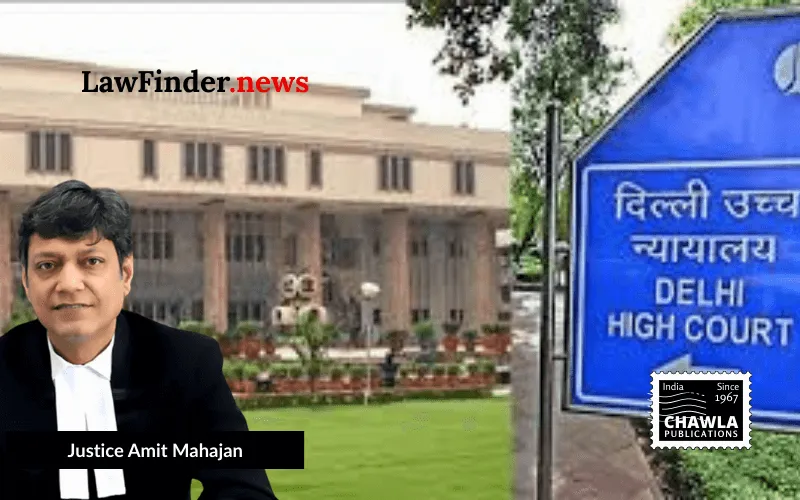
In a significant judgment delivered on September 30, 2026, the Delhi High Court, presided over by Justice Amit Mahajan, quashed the continued operation of the Denied Entry List (DEL) status imposed by the Directorate General of Foreign Trade (DGFT) on Waaree Transpower Private Limited's Importer Exporter Code (IEC). The DEL status had been imposed due to alleged non-fulfilment of export obligations prior to the commencement of the company's Corporate Insolvency Resolution Process (CIRP).
The petitioner, Waaree Transpower Private Limited (formerly Kotsons Private Limited), challenged multiple DEL orders dated April 5 and September 5, 2023, which restricted its ability to renew or obtain licences and authorisations essential for export-import operations. These orders were based on defaults concerning Advance Authorisations and EPCG Authorisations linked to the petitioner's manufacturing units in Agra and Alwar.
Crucially, the Court noted that nine out of the ten impugned DEL orders were issued during the subsistence of the moratorium under Section 14 of the Insolvency and Bankruptcy Code, 2016 ("IBC"), which prohibits coercive actions against a corporate debtor undergoing CIRP. Such orders were held to be void ab initio.
The petitioner further highlighted that DGFT had submitted a claim as an operational creditor during the CIRP, quantifying its claim at approximately ₹15.66 crores for government dues arising from the same export obligation defaults. However, the petitioner's resolution plan, approved by the National Company Law Tribunal (NCLT) on August 2, 2024, settled all government claims, including those of DGFT, at nil, thereby extinguishing pre-CIRP liabilities.
The Court emphasized that once a resolution plan is approved under Section 31(1) of the IBC, it is binding on all stakeholders, including government authorities, and extinguishes claims not included in the plan. It reiterated the "clean slate" principle recognized by the Supreme Court in Ghanshyam Mishra & Sons Private Limited v. Edelweiss Asset Reconstruction Company Limited (2021), which protects the corporate debtor and new management from liabilities arising from the erstwhile management's defaults.
Consequently, the Court set aside the impugned DEL orders and directed the removal of the petitioner's IEC from the Denied Entry List. The Court clarified that this extinguishment of past claims does not bar DGFT or other authorities from conducting fresh verification of the new management's credentials or taking action against any independent post-resolution default.
The judgment also addressed and rejected preliminary objections raised by the respondents relating to territorial jurisdiction and alternate remedies, affirming the Delhi High Court's jurisdiction and the maintainability of the writ petition.
This ruling reinforces the protection afforded to corporate debtors and resolution applicants under the IBC and ensures that administrative actions like DEL cannot be continued to enforce pre-CIRP defaults once the resolution plan is approved, thus facilitating the revival of companies as going concerns without lingering past liabilities.
Bottom Line:
Insolvency and Bankruptcy Code, 2016 - Denied Entry List status imposed by DGFT on account of pre-CIRP non-fulfilment of export obligations cannot continue after approval of resolution plan - Government dues admitted in CIRP and settled at nil stand extinguished - Continuation of DEL against corporate debtor under new management violates clean slate principle - However, authorities may undertake fresh verification regarding new management and take action for any independent post-resolution default.
Statutory provision(s):
Insolvency and Bankruptcy Code, 2016 Sections 14, 31(1); Constitution of India Article 226
Waaree Transpower Private Limited v. Union of India, (Delhi) : Law Finder Doc Id # 2992078