Court Remands Matter for Fresh Consideration, Underlining Distinct Statutory Pathways for Patent Examination and Pre-Grant Opposition Hearings
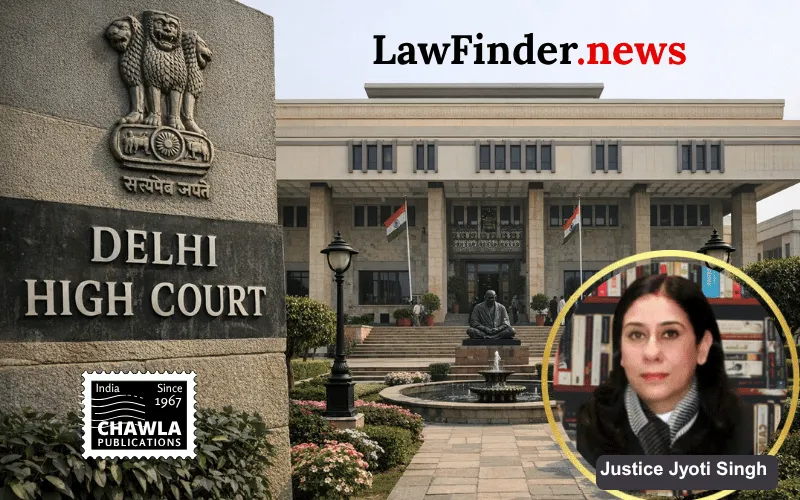
In a significant ruling impacting patent law procedures in India, the Delhi High Court, presided over by Justice Jyoti Singh, has set aside the order refusing a patent application filed by Fresenius Kabi Ipsum SRL for an improved chemical process related to the preparation of sugammadex. The Court underscored the mandatory nature of granting an opportunity of hearing under Section 14 of the Patents Act, 1970, separate and independent from any hearings conducted under Section 25(1) during pre-grant opposition proceedings.
The patent application in question, filed on March 22, 2016, concerned a process involving the use of isolated salts of 3-mercaptopropionic acid-particularly the disodium salt-for preparing sugammadex, a drug substance. The Controller of Patents and Designs had refused the application on grounds of lack of novelty, inventive step, and non-patentability under Section 3(d) of the Patents Act, relying heavily on prior art documents and pre-grant opposition filed by a third party.
Fresenius Kabi argued that the refusal order was vitiated by procedural irregularities, notably the denial of a hearing under Section 14 despite the fact that a hearing was granted under Section 25(1). The Court, after detailed examination, agreed with the appellant, emphasizing that the examination process (Chapter IV of the Patents Act) and opposition process (Chapter V) are separate statutory mechanisms that operate independently and require distinct hearings. The Court referred to established precedents, including the Division Bench ruling in Novartis AG v. Natco Pharma Limited, which held that these provisions do not merge, and hearing rights under Section 14 are mandatory irrespective of hearings under Section 25(1).
Further, the Court noted that the refusal order lacked a detailed, reasoned analysis on critical technical and patentability issues such as the novelty of using isolated salts versus in situ salts, the closest prior art, technical advancements, and economic significance. The Court highlighted that the Controller failed to consider experimental data and the fact that corresponding patents have been granted in other jurisdictions, which suggested the claimed process's potential novelty.
The Court also clarified that non-grant of hearing under Section 14 is not a mere procedural lapse but a substantive violation of statutory rights, affecting the applicant's ability to respond to objections and amend claims. It remanded the matter to the Controller for fresh consideration, mandating compliance with the statutory provisions of Sections 14 and 15, as well as Rule 129 of the Patents Rules, 2003, which requires a minimum notice period for hearings.
On technical merits, while the Court refrained from expressing any opinion due to procedural infirmities, it flagged several substantive issues raised by the appellant that must be examined in the fresh decision. These include the assessment of novelty vis-a-vis prior art, inventive step evaluation without hindsight bias, and the significance of technical features such as reduced reaction time and improved purity of the sugammadex product.
The Court's order mandates the Controller to conclude the proceedings within six months, ensuring the appellant and the opponent are heard and that the decision is based on a comprehensive and reasoned analysis consistent with the statutory framework.
This ruling reinforces the procedural safeguards embedded in Indian patent law and clarifies the distinct roles and rights of applicants and opponents during the patent grant process. It also serves as a reminder that technical nuances and experimental evidence must be given due weight while adjudicating patentability, preventing premature refusals based on superficial assessments.
Bottom Line:
Patent law - Opportunity of hearing under Section 14 of the Patents Act, 1970 is mandatory even if hearing is granted under Section 25(1) during pre-grant opposition proceedings. Examination and opposition processes are distinct and must be adjudicated separately.
Statutory provision(s):
Patents Act, 1970 Sections 3(d), 11(A), 11(B), 12(1), 13, 14, 15, 25(1), 25(2); Patents Rules, 2003 Rule 129