Writ Petition by M/s A.G. Enterprises Challenging Demand Notice and Adjudication Order under CGST Act Dismissed; Court Emphasizes Need for Statutory Appellate Remedy Over Writ Jurisdiction
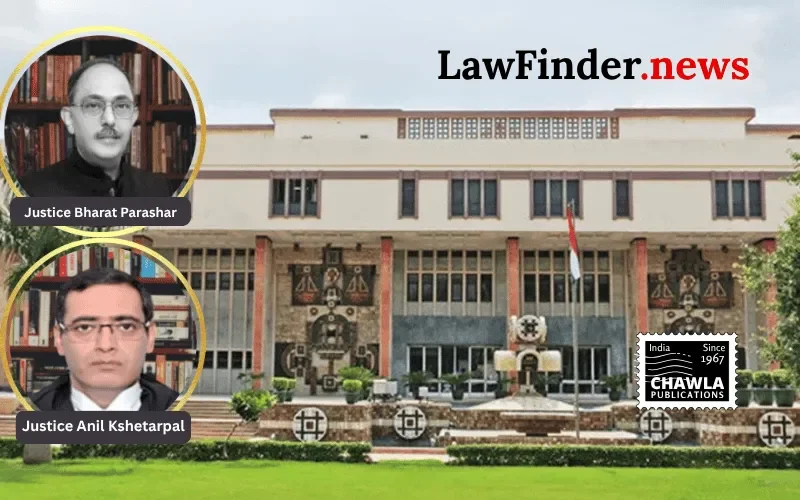
In a significant ruling dated October 1, 2026, the Delhi High Court (Division Bench of Justices Anil Kshetarpal and Bharat Parashar) dismissed the writ petition filed by M/s A.G. Enterprises challenging the Demand-cum-Show Cause Notice and the subsequent Order-in-Original issued under Section 74 of the Central Goods and Services Tax (CGST) Act, 2017. The petitioner had contested the recovery of Input Tax Credit (ITC) amounting to nearly Rs. 48 lakh, along with interest and penalties, on grounds including alleged violation of Section 6(2)(b) of the CGST Act and breach of principles of natural justice.
The proceedings arose from an investigation into the activities of M/s Pramod Traders/Bheem Traders, who were found to be issuing invoices without actual supply of goods. The petitioner had availed ITC from this supplier, which the department alleged was inadmissible as it was based on "goods-less invoices," i.e., invoices issued without actual receipt of goods or services. The Central GST authorities initiated proceedings under Section 74 for recovery of the said ITC, alleging fraud, willful misstatement, and suppression of facts.
A key contention of M/s A.G. Enterprises was that the State GST authorities had already initiated and, in some cases, concluded proceedings regarding the same ITC transactions for various financial years, thereby barring the Central GST authorities from pursuing parallel action under Section 6(2)(b). The petitioner also contended that the adjudication order went beyond the allegations in the Show Cause Notice and that the principles of natural justice were violated due to inadequate opportunity of personal hearing.
The High Court, after detailed examination, held that the "same subject matter" bar under Section 6(2)(b) cannot be determined solely based on a common supplier or assessee. Instead, it requires a nuanced factual inquiry into tax periods, specific invoices, transactions, and precise ITC amounts involved in the respective proceedings. The court emphasized that such complex factual and legal issues are best suited for statutory appellate authorities and not for writ jurisdiction under Article 226 of the Constitution.
Furthermore, the Court found no apparent violation of natural justice as the adjudication order expressly recorded opportunities of personal hearing granted to some noticees, with others proceeding ex parte after failure to appear. The alleged discrepancy in hearing dates and clubbing of multiple financial years in one proceeding did not, on the face of the record, warrant judicial interference at this stage.
The Court declined to examine the merits of the demand, ITC admissibility, or the applicability of Section 74, leaving these crucial issues open for consideration before the appellate authorities. It also clarified that subsequent State proceedings initiated after the Central show cause notice or orders cannot retrospectively invalidate the earlier Central proceedings.
In conclusion, the Delhi High Court dismissed the writ petition but granted liberty to the petitioner to avail all available statutory remedies, including appeals, where all contentions including jurisdictional objections, limitation, and evidentiary issues can be thoroughly examined.
This judgment underscores the principle that disputes involving detailed factual matrices and overlapping GST proceedings should primarily be resolved through the established statutory appellate framework rather than extraordinary writ jurisdiction, thereby preserving the integrity and efficacy of GST adjudication and appellate mechanisms.
Bottom Line:
GST - Writ petition challenging Order-in-Original under Section 74 of CGST Act on grounds of bar under Section 6(2)(b), violation of natural justice, travelling beyond show cause notice and clubbing of financial years - Held, where determination of "same subject matter" requires factual examination of tax periods, invoices, transactions and precise ITC liability, and order records grant of hearing, writ jurisdiction under Article 226 ought not to be exercised in view of efficacious statutory appellate remedy - All contentions left open to be raised in appeal.
Statutory provision(s):
Central Goods and Services Tax Act, 2017 Sections 6(2)(b), 16(2)(b), 16(2)(c), 50, 73, 74, 75(4), 107; Constitution of India Article 226
M/s A.G. Enterprises v. Union of India, (Delhi)(DB) : Law Finder Doc Id # 2989583