Court says written compromise for Rs. 40 lakh was clear and final; alleged oral promise of additional Rs. 3 crore could not override solemn statement made before trial court.
The Delhi High Court has dismissed a regular first appeal filed by three defendants challenging a consent decree passed in a property dispute over a portion of a house in Karol Bagh, holding that the compromise recorded before the trial court was clear, voluntary and binding.
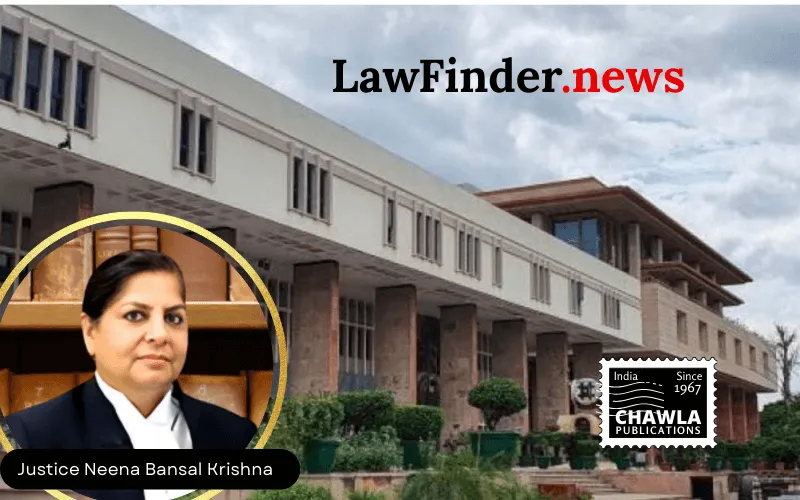
Justice Neena Bansal Krishna ruled that the appellants failed to prove that the settlement was vitiated by fraud, inducement or undue influence. The court found that the written compromise, recorded on 26 September 2022, expressly stated that Rs. 40 lakh had been paid as full and final settlement and that the defendants had no right, title or interest in the suit property.
The dispute arose from a suit filed by Dinesh Mehan and Danny Mehan seeking mandatory injunction and mesne profits in relation to one room and kitchen in property no. E-16/1269, Bapa Nagar, Padam Singh Road, Karol Bagh, New Delhi. During the pendency of the suit, both sides entered into settlement talks and later appeared before the trial court with counsel, where their joint statement was recorded on solemn affirmation.
According to the settlement, the defendants acknowledged that they had no claim over the property, handed over peaceful possession and keys, and received three demand drafts totalling Rs. 40 lakh. The court also recorded that the settlement was full and final and that there would be no further civil or criminal litigation concerning the property.
After the decree was passed, the defendants claimed that the real settlement was for Rs. 3.5 crore, comprising Rs. 50 lakh upfront and Rs. 3 crore later upon sale of the property. They alleged that only part of the arrangement was recorded because the plaintiffs had persuaded them not to disclose the full terms due to possible court fee and tax implications. They also relied on two post-dated cheques of Rs. 5 lakh each and an alleged telephonic conversation.
The trial court rejected their application under Section 151 CPC seeking recall of the decree, and the High Court has now affirmed that decision.
On maintainability, the High Court held that although Section 96(3) CPC bars an appeal against a consent decree, the appellants had first approached the trial court under the proviso to Order XXIII Rule 3 CPC, and after that objection was rejected, the appeal was maintainable under Section 96 read with Order XLIII Rule 1A CPC.
On merits, however, the court found no substance in the appellants’ claim. It observed that the settlement terms were specific, unambiguous and solemnly affirmed before the trial court in the presence of counsel. The alleged additional oral promise of Rs. 3 crore did not find any mention in the written compromise and could not be read into it later. The existence of prior negotiations or post-dated cheques, the court said, did not establish that those terms formed part of the final compromise.
The court also noted that the defendants had already accepted the Rs. 40 lakh, delivered possession and keys, and agreed that no further litigation would arise. In such circumstances, they could not resile from the settlement without strong and cogent proof of vitiating circumstances, which was absent in this case.
Holding that the trial court had rightly refused to set aside the consent decree, the High Court dismissed the appeal and disposed of all pending applications.
Bottom Line :
Civil Procedure Code, 1908 - Consent decree - Though Section 96(3) CPC bars appeal against consent decree, where party first approaches trial court disputing compromise under proviso to Order XXIII Rule 3 CPC and challenge is rejected, appeal is maintainable by invoking Section 96 read with Order XLIII Rule 1A CPC - Unrecorded oral assurances or prior negotiations cannot vary or add to clear written court-recorded full and final settlement unless fraud, inducement or vitiating circumstances are proved by cogent material.
Statutory provision(s): Section 96(3) CPC, Order XXIII Rule 3 CPC, Order XXIII Rule 3A CPC, Order XLIII Rule 1A CPC, Section 151 CPC, Sections 94 and 95 of Bharatiya Sakshya Adhiniyam, 2023
Aarti Kakkar v. Dinesh Mehan, (Delhi) : Law Finder Doc id # 2987640