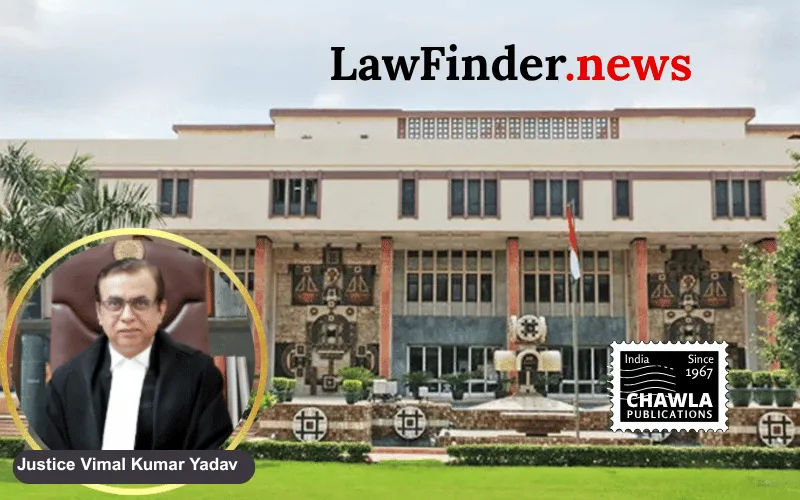
Court affirms evidence of cruelty and dowry demand under Sections 304B and 498A IPC; acquittal of mother-in-law maintained
In a significant judgment dated September 15, 2026, the Delhi High Court dismissed the appeal filed by Naveen Kumar Verma and Ajay Kumar Verma, upholding their conviction for offences under Sections 304B (dowry death) and 498A (cruelty) of the Indian Penal Code, 1860. The appellants, brothers and accused in the case, were sentenced to undergo 10 years of rigorous imprisonment for dowry death and 3 years RI with a fine for cruelty charges, with both sentences running concurrently.
The case stemmed from the death of Vinita @ Kamlesh, who allegedly committed suicide by hanging on April 10, 2003, within about four and a half months of her marriage to Naveen Kumar Verma on November 29, 2002. The prosecution's case was anchored on testimonies of the deceased’s family members who consistently alleged that Vinita was subjected to continuous cruelty, physical abuse, and harassment by the appellants in connection with a demand for Rs. 50,000 as dowry. These allegations were supported by statements recorded shortly after the death, including those before the Sub-Divisional Magistrate (SDM), and during the trial.
The appellants challenged the conviction on grounds that the prosecution witnesses were all related to the deceased and hence interested, that the evidence lacked independent corroboration and specificity, and that there was no proof of harassment “soon before” the death, as required under Section 304B IPC. They also contended that the defense witnesses, including the marriage mediator Savitri, who testified that the deceased was living happily, were unfairly disregarded by the trial court.
Rejecting these contentions, the High Court elaborated that in domestic offences within matrimonial homes, family members are natural witnesses and their testimony cannot be discredited solely on the basis of relationship. The Court emphasized that minor discrepancies in witness statements, common in traumatic circumstances, do not vitiate the core consistent allegations of dowry demand and cruelty. The Court also held that absence of physical injuries on the deceased does not negate the presence of cruelty under Section 498A IPC.
Applying the legal principles laid down in landmark judgments such as Gurdip Singh v. State of Punja and State of Madhya Pradesh v. Jogendra, the Court underscored that the prosecution had successfully established the foundational facts of dowry death — unnatural death within seven years of marriage, cruelty or harassment soon before death connected to dowry demand — thereby attracting the presumption under Section 113-B of the Indian Evidence Act against the accused. The appellants failed to rebut this presumption convincingly, with their alternative defenses being found fabricated or unsubstantiated.
Significantly, the Court noted that while the mother-in-law, Kaushalya Devi, was acquitted by the trial court due to lack of specific allegations and was not challenged by the State, the appellants’ conviction was warranted given the strong and consistent evidence against them.
The Court ordered the appellants to surrender forthwith to serve the remaining sentence and granted benefit of set-off for the period already undergone in custody. The judgment was transmitted to trial court and prison authorities for compliance.
This ruling reiterates the judiciary’s commitment to stringent enforcement of laws against dowry-related cruelty and death, reinforcing the protective mandate of Sections 304B and 498A IPC in safeguarding married women against domestic violence and dowry harassment.
Bottom Line:
Conviction under Sections 304B and 498A IPC upheld based on consistent and credible evidence of cruelty and harassment in connection with dowry demand soon before the death of the deceased.
Statutory provision(s):
Indian Penal Code Sections 304B, 498A, 34, 161, 113-B of Indian Evidence Act, 428 of Code of Criminal Procedure, 1973
Naveen Kumar Verma v. State, (Delhi) : Law Finder Doc Id # 2978822