Court finds disciplinary authority violated procedural fairness by issuing show-cause notice without communicating disagreement with enquiry officer's exoneration; imposes Rs.1 lakh costs for frivolous 32-year litigation over 17 months' wages
In a significant judgment addressing procedural fairness in disciplinary proceedings, the Delhi High Court has upheld an Industrial Tribunal's award directing the Delhi Transport Corporation (DTC) to pay back wages to a bus conductor for the intervening period between his unlawful removal and reinstatement. The court dismissed DTC's petition while imposing costs of Rs.1 lakh for pursuing an "insignificant dispute" for 32 years.
The Case Background:
The dispute originated on November 15, 1994, when conductor Rajender Prashad was allegedly found to have collected fares of Rs.67 from three and a half passengers but failed to issue tickets to three of them. Following this incident, he was suspended on December 2, 1994, and a charge sheet was issued.
The enquiry officer, after conducting disciplinary proceedings, found the charges against the workman were not established and exonerated him. However, the disciplinary authority disagreed with this exoneration and issued a show-cause notice on June 5, 1995, proposing removal from service. The conductor was ultimately removed from service with effect from August 14, 1996.
Appellate Reversal and Industrial Dispute:
The Chairman-cum-Managing Director of DTC subsequently set aside the removal order and directed reinstatement with no back wages for the intervening period, though he was brought to the initial stage of the pay scale for two years. Dissatisfied with this modified punishment, the conductor filed an industrial dispute raising two issues: (1) whether the punishment was illegal and unjustified, and (2) whether he was entitled to intervening period wages from August 14, 1996, to January 13, 1998.
The Industrial Tribunal allowed both claims, finding the punishment unlawful and directing payment of regular wages along with differential amounts for the reduced pay period.
Key Legal Holdings:
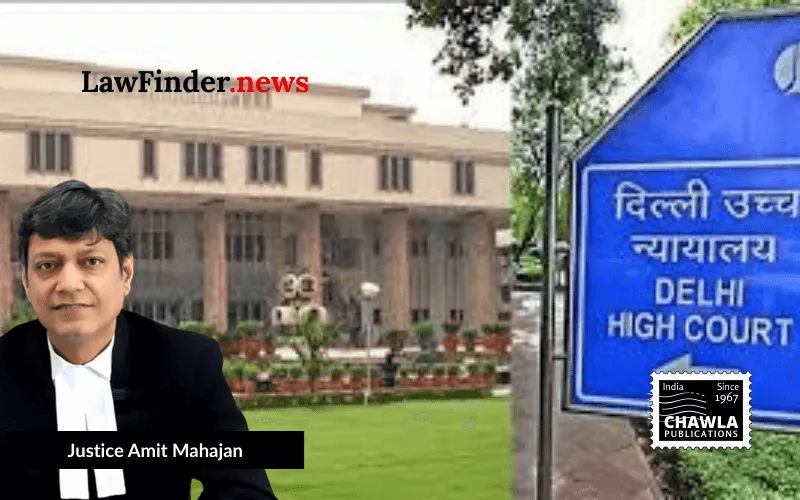
Justice Amit Mahajan, while dismissing DTC's petition, made several crucial observations regarding disciplinary procedures and judicial review:
On Scope of Judicial Interference: The court reiterated that interference with Industrial Tribunal awards under Articles 226 and 227 of the Constitution is limited to cases of patent illegality, perversity, or error apparent on the face of the record. The court cannot re-appreciate evidence or disturb findings of fact based on pleadings and evidence already considered by the Tribunal.
On Procedural Fairness in Disciplinary Proceedings: The judgment emphasizes a critical procedural requirement: when a disciplinary authority disagrees with an enquiry officer's findings favoring the delinquent, such disagreement must be tentative. Importantly, the reasons for disagreement must be communicated to the workman in a separate note, along with the enquiry officer's findings, to afford him an opportunity to represent his case before final punishment is imposed.
In this case, the court found that DTC violated this procedure. No disagreement note containing tentative reasons was issued to the conductor. Instead, the disciplinary authority issued the show-cause notice straightaway, which amounted to proceeding on an already-decided basis, thereby denying procedural fairness.
On Back Wages for Intervening Period: The Tribunal's finding that the workman was entitled to wages for the period from removal to reinstatement was upheld as reasonable and plausible. The court noted that DTC failed to place any material before the Tribunal to justify withholding wages during the intervening period. Since continuity of service was maintained (as evidenced by the subsequent reduction in pay scale rather than outright dismissal), wages for the intervening period were rightly awarded.
Costs and Abuse of Process:
Perhaps most significantly, the court observed that DTC's litigation spanning 32 years over a mere 17 months' back wages constitutes an "abuse of the process of law" resulting in "avoidable expenditure of public money." This observation underscores judicial concern about frivolous prolonged litigation over relatively small monetary claims by government departments.
Consequently, the court imposed costs of Rs.1 lakh, to be apportioned as follows: Rs.25,000 to the Delhi High Court Legal Services Committee, Rs.50,000 to the Prime Minister Relief Fund, and Rs.25,000 to the respondent workman. Notably, the court granted the DTC liberty to recover the cost from the officer responsible for pursuing such an "insignificant dispute."
Implications:
This judgment establishes important precedents: (1) disciplinary authorities must follow scrupulous procedural fairness when disagreeing with enquiry officer exonerations; (2) failure to communicate disagreement with reasoned notice vitiates the disciplinary proceedings; (3) workmen are entitled to back wages for periods of suspension or removal later found to be unjustified; and (4) courts will not hesitate to impose costs for protracted litigation by state departments over trivial claims.
Bottom Line:
Industrial Tribunal's award upheld, as disciplinary authority failed to follow due procedure in disagreeing with the enquiry officer's exoneration of the workman and failed to justify withholding wages for intervening period.
Statutory Provision(s):
Articles 226 and 227 of the Constitution of India, Industrial Disputes Act, 1947
D.T.C. v. Rajender Prashad, (Delhi) : Law Finder Doc Id 2972641