Court affirms mandatory prior written consent of Resilient Innovations and Centrum Financial Services under Shareholders Agreement before increasing authorised share capital and amending Memorandum of Association
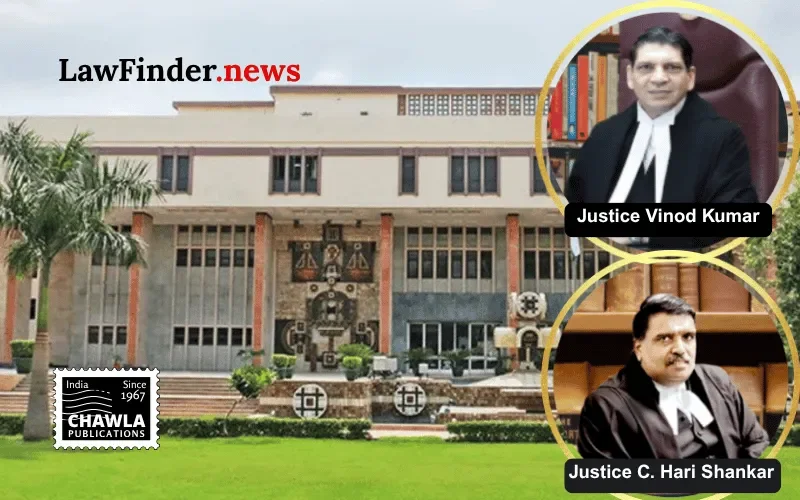
In a significant judgment dated November 5, 2026, the Division Bench of the Delhi High Court, comprising Justices C. Hari Shankar and Vinod Kumar, dismissed the appeal filed by Unity Small Finance Bank, thereby upholding an interim order restraining the bank from tabling an agenda item relating to the increase in authorised share capital and consequential amendment of Clause V of its Memorandum of Association (MOA) in its Board meeting scheduled for July 25, 2026.
The dispute arose from a Shareholders Agreement (SHA) dated October 26, 2021, executed between Unity Small Finance Bank (Unity), Resilient Innovations Pvt Ltd (Resilient), and Centrum Financial Services Ltd (Centrum). The SHA contained specific clauses (notably Clauses 5.2, 6.11(d), and 8, along with Schedule 2) that classified certain decisions as "Reserved Matters," requiring prior written consent from both Resilient and Centrum before such matters could be discussed or approved by the Board of Unity.
Agenda Item 18, proposed by Unity for its forthcoming Board meeting, sought approval to increase the authorised share capital of the bank from ₹4,000 crore to ₹4,900 crore, amend Clause V of the MOA accordingly, and seek prior approval from the Reserve Bank of India (RBI). Importantly, the agenda itself acknowledged that the proposed amendment constituted a Reserved Matter under the SHA. Unity had sent three communications over a period exceeding eight months to Resilient seeking consent to table this agenda, all of which were expressly refused.
Resilient approached the Court under Section 9 of the Arbitration and Conciliation Act, 1996, seeking an ad interim injunction restraining Unity from tabling, considering, or approving Agenda Item 18 without their prior written consent, as mandated by the SHA. The learned Single Judge granted the injunction, allowing the Board meeting to proceed but prohibiting discussion or approval of the impugned agenda item.
Unity contested the injunction, arguing that the increase in authorised capital was mandated by RBI directives under the Banking Regulation Act, 1949, and that the SHA could not override the Articles of Association (AOA) or the statutory obligations. Unity further contended that the term "Reserved Matters" had been deleted from the AOA following RBI directions and that the agenda item related to conversion of already issued warrants into Compulsorily Convertible Preference Shares (CCPS), which did not require fresh consent. Unity also referenced a mutual waiver letter between Resilient and Centrum purporting to allow certain transfers without consent.
The Division Bench, upon detailed examination, upheld the interim order. It emphasized that Clauses 6.11(d) and 8 of the SHA contained explicit prohibitions against taking up Reserved Matters for discussion or approval without prior written consent of both Resilient and Centrum. The Court observed that the SHA's Clause 8 began with a non obstante clause, making it prevail over the MOA and AOA, which did not contain any conflicting provisions after the deletion of certain clauses as directed by RBI. Furthermore, the Court found that the communications from Unity itself acknowledged the agenda item as a Reserved Matter and confirmed that consent was sought but denied by Resilient.
The Court held that the increase in authorised share capital and amendment of the MOA clearly fell within the ambit of Reserved Matters, specifically under clause (f) of Schedule 2 of the SHA, which includes any change in capital structure through new issues of shares or securities. The Court also noted that such action would substantially dilute Resilient's shareholding from 49% to 21%, underscoring the gravity of the matter.
Rejecting Unity's contention that the injunction violated RBI directions, the Court clarified that the interim order did not prevent compliance with RBI mandates but required such compliance to be in accordance with the SHA. The Court also rejected the claim that the SHA could not override the AOA, reiterating the precedence of the non obstante clause in Clause 8 of the SHA.
On the scope of appellate interference, the Court reiterated established principles from Supreme Court precedents, stating that appellate courts would not interfere with discretionary interim orders unless the discretion was exercised arbitrarily, capriciously, or perversely. Finding no such error in the learned Single Judge's order, the Division Bench dismissed the appeal.
In conclusion, the Court affirmed the necessity of adherence to contractual obligations under the SHA, particularly the requirement of prior written consent from all contracting shareholders for Reserved Matters, including changes to authorised share capital and MOA amendments, to maintain corporate governance and shareholder rights. The judgment underscores the enforceability of shareholders agreements and the limitations on unilateral board actions in closely held companies.
Bottom Line:
Arbitration and Conciliation Act, 1996 - Section 9 - Shareholders Agreement - Reserved Matters - Board of company cannot even take up for discussion agenda item relating to increase in authorised share capital and amendment of Memorandum of Association, where such subject is expressly a Reserved Matter under SHA, without prior written consent of contracting shareholders - Ad interim restraint on tabling such agenda item upheld in appeal under Section 37.
Statutory provision(s):
Arbitration and Conciliation Act, 1996 Sections 9, 37(1)(b); Banking Regulation Act, 1949 Sections 22, 35A; Companies Act, 2013 Sections 13, 61, 179, 49C
Unity Small Finance Bank v. Resilient Innovations Pvt Ltd, (Delhi)(DB) : Law Finder Doc Id # 3013942