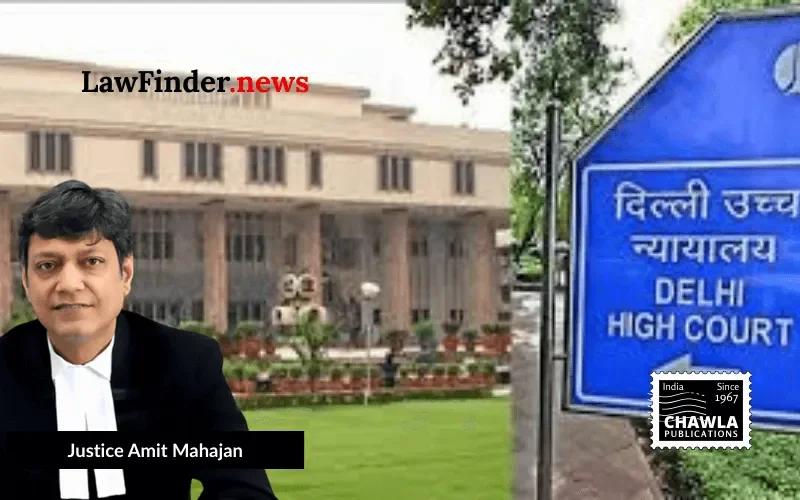
Court Rules Personal Details of DGCA Employee and Family Exempt from Disclosure, Emphasizes RTI Cannot Be Used to Settle Matrimonial Disputes
In a significant judgment delivered on October 7, 2026, the Delhi High Court dismissed a writ petition filed by Sachin Kumar Daksh challenging the refusal of the Central Information Commission (CIC) to disclose personal information relating to a Directorate General of Civil Aviation (DGCA) employee, Mr. Komal Prasad. The case revolved around an RTI application seeking detailed information about Leave Travel Concession (LTC) journeys, Central Government Health Scheme (CGHS) medical benefits availed by dependents, medical bills, and family declaration forms submitted by the DGCA employee.
The petitioner, who appeared in person through video conferencing, sought these details arguing that since public funds were involved in reimbursing such benefits, the information should be disclosed in the larger public interest. However, the Court, presided over by Justice Amit Mahajan, emphasized that the Right to Information Act, 2005, promotes transparency and accountability but does not grant an unqualified right to access all information.
The Court examined Section 8(1)(j) of the RTI Act, which exempts from disclosure personal information the release of which would constitute an unwarranted invasion of privacy unless it is justified by a larger public interest. The Court held that the information sought concerned the private affairs of the employee and his family members, who are third parties, and disclosure would violate their privacy rights.
Importantly, the Court distinguished between aggregate expenditure incurred from public funds and the underlying personal details connected to such expenditure. Merely because the LTC and medical benefits are funded from public money does not transform the personal details of travel, medical treatments, and family declarations into information that must be disclosed. The Court found that the petitioner failed to demonstrate any overriding larger public interest that would justify disclosure of such sensitive personal information.
Furthermore, the Court rejected the petitioner's claim that the information was sought to pursue vigilance complaints, clarifying that such a purpose does not create an independent right to access information exempt under the Act.
A critical aspect of the judgment was the Court's recognition that the RTI mechanism cannot be misused as a tool to settle personal or matrimonial disputes. It was brought to the Court's notice that the petitioner was formerly married to the sister of the DGCA employee and that ongoing matrimonial discord was likely motivating the RTI request. The Court cautioned against allowing RTI applications to become instruments for pursuing personal grievances, especially when the information sought pertains to the private life of third parties.
In conclusion, the Delhi High Court upheld the orders of the CIC and lower authorities refusing disclosure, thereby reinforcing the protection of personal privacy under the RTI Act. The writ petition was dismissed, sending a clear message that transparency must be balanced with privacy rights and that public authorities are justified in withholding personal information unless a genuine larger public interest is demonstrated.
Bottom Line:
Right to Information Act, 2005 - Personal information of a government employee and his family members relating to LTC, CGHS medical benefits, medical bills and family declaration forms is exempt from disclosure under Section 8(1)(j) - Mere involvement of public funds does not by itself justify disclosure - In absence of any demonstrated larger public interest, such third-party personal information cannot be disclosed - RTI mechanism cannot be used to settle personal or matrimonial disputes.
Statutory provision(s):
Right to Information Act, 2005 Section 8(1)(j)
Sachin Kumar Daksh v. Director-Admin and Finance, (Delhi) : Law Finder Doc Id # 2993322