Termination of a professor at Assam Royal Global University deemed a private contractual matter, not subject to writ jurisdiction
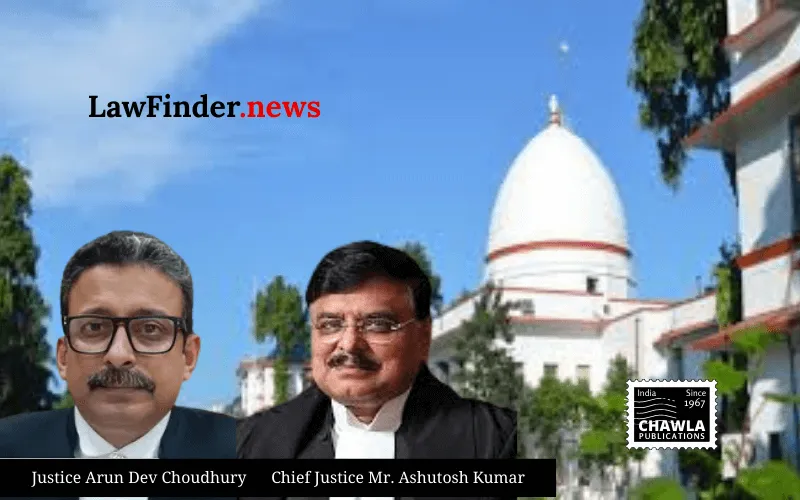
The Gauhati High Court, in a recent judgment dated June 22, 2026, dismissed a writ appeal filed by Anjuman Ara Begum, challenging her termination from Assam Royal Global University. The division bench, comprising Chief Justice Ashutosh Kumar and Justice Arun Dev Choudhury, upheld the decision of a single judge, ruling that the termination did not involve a public law element and was thus not amenable to writ jurisdiction under Article 226 of the Constitution of India.
Anjuman Ara Begum, a senior academic and human rights scholar, had been terminated from her position as an Associate Professor at the Royal School of Law and Administration, Assam Royal Global University. She contended that her dismissal, which was executed without an inquiry or show-cause notice, disrupted the statutorily regulated Ph.D. supervision processes and adversely affected the rights of her research scholars, thereby involving a significant public law element.
The appellant argued that the university, despite being a private entity, was bound by University Grants Commission (UGC) regulations, which impose a public duty to adhere to academic standards. However, the court found that the actions of the university did not amount to the discharge of a public duty and that the dispute was essentially a private contractual matter between the employer and the employee.
The court referred to multiple precedents, including the Supreme Court's decision in "St. Mary's Education Society vs. Rajendra Prasad Bhargava," to establish that actions or decisions within the confines of an ordinary contract of service, lacking statutory force, are not subject to challenge under writ jurisdiction. The court emphasized that unless the employment conditions are regulated by statutory provisions, the matter remains within the realm of private contractual agreements.
The judgment also highlighted that mere regulatory control or statutory recognition does not elevate a private institution's actions to a public function. The court concluded that Anjuman Ara Begum's termination, governed by the terms of her employment contract and the university's statutes, did not involve a public law element.
In affirming the single judge's decision, the division bench reinforced the principle that writ jurisdiction under Article 226 is not applicable to private employment disputes unless there is a breach of statutory obligations or a significant public interest element.
The judgment underscores the distinction between public and private law remedies, reiterating that employment matters in private institutions, even if regulated by public norms, are not automatically subject to judicial review under writ jurisdiction.
Bottom line:-
Termination of a professor from a private university not involving a public law element is not amenable to writ jurisdiction under Article 226 of the Constitution of India.
Statutory provision(s):
Article 226 of the Constitution of India
Anjuman Ara Begum v. Assam Royal Global University, (Gauhati)(DB) : Law Finder Doc id # 2931841