Long-term Occupation Does Not Confer Legal Rights; Rehabilitation Considerations to be Examined Separately
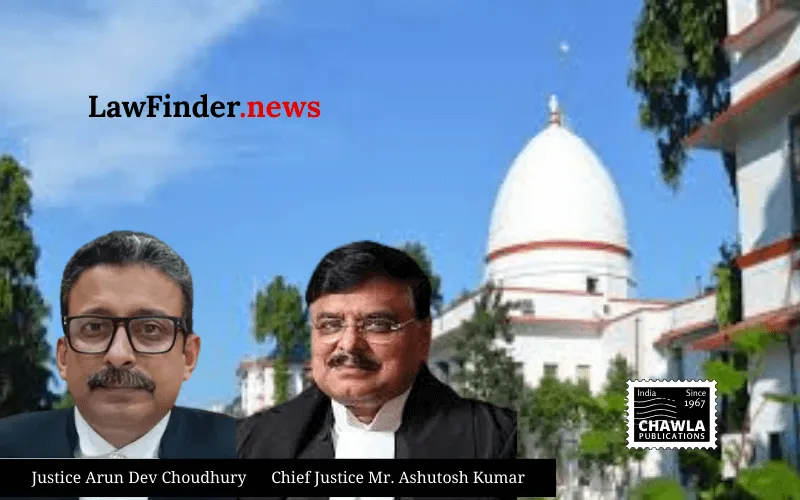
The Gauhati High Court has reaffirmed the imperatives of forest conservation by dismissing a batch of appeals in the case of Abdul Khalek and Others v. State of Assam. The Division Bench, comprising Chief Justice Ashutosh Kumar and Justice Arun Dev Choudhury, upheld the eviction of individuals occupying reserve forest lands, stating that mere prolonged occupation or administrative tolerance does not confer any legal rights over such lands.
In their detailed judgment, the court examined the claims of the appellants, who contended that they had been residing on the lands for decades, deriving their rights from historical governmental arrangements under the Taungya system. The court, however, found no evidence of any statutory grant or legally enforceable rights that would allow them to remain on the lands, which are part of the notified reserve forests.
The court supported the methodology adopted by the Forest and Revenue Departments in identifying the encroachments, which included the use of modern survey techniques and geospatial methods. The appellants' reliance on documents such as Aadhar cards, electoral rolls, and ration cards was dismissed as these documents do not establish proprietary rights over forest land.
Significantly, the court also addressed the issue of rehabilitation, acknowledging the potential hardships faced by the appellants due to eviction. While the court cannot confer property rights based on equitable considerations, it stated that the appellants may seek benefits under any existing rehabilitation policy by the State.
The judgment stressed the importance of procedural fairness, highlighting that the verification exercise conformed with the directions issued by the Supreme Court in a related matter. The court extended the timeline for eviction by 45 days, considering the monsoon season.
The decision reinforces the statutory obligations under the Forest Conservation Act, 1980, emphasizing that forest land cannot be diverted for non-forest use without compliance with legal provisions, thus upholding the principles of environmental conservation over individual claims of long-term occupation.
Bottom line:-
Forest Conservation Act, 1980 - Long-term occupation on reserve forest land does not confer legal rights or immunity from eviction - Administrative tolerance or public facilities extended to encroachers do not create proprietary rights over reserve forest land.
Statutory provision(s): Forest Conservation Act, 1980, Forest Rights Act, 2006, Assam Panchayat Act, 1994
Abdul Khalek v. State of Assam, (Gauhati)(DB) : Law Finder Doc id # 2929563