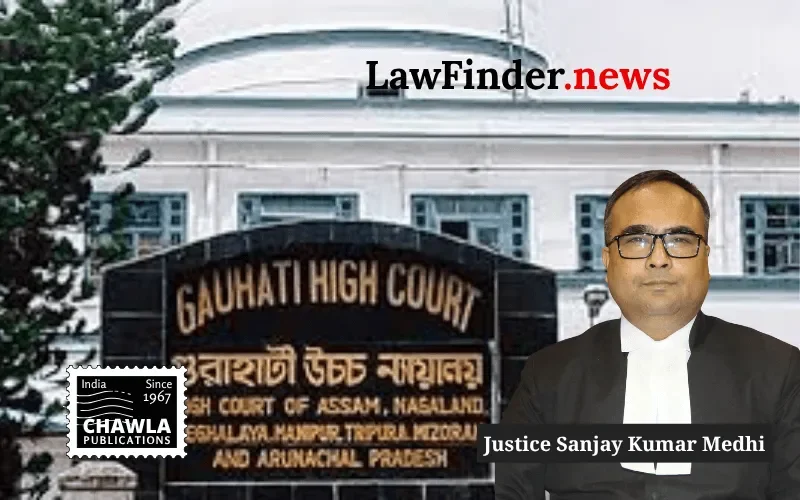
Court Declines to Quash Transfer from Guwahati to Chhattisgarh, Emphasizes Limited Scope for Interference Unless Mala Fide or Statutory Violation Proven
Guwahati, October 1, 2026: In a significant judgment delivered by Mr. Sanjay Kumar Medhi, J. of the Gauhati High Court, the writ petition filed by ASI/GD Syed Juliash Hussain challenging his transfer order from Guwahati to the 231 Battalion in Chhattisgarh was dismissed. The petitioner had sought to quash the transfer on compassionate grounds, citing his wife's anxiety disorder and the academic concerns of his daughter. However, the Court underscored the limited scope of judicial interference in transfer matters, emphasizing that transfers are an incident of service and can only be set aside if mala fide intent or violation of statutory rules is demonstrated.
The petitioner had approached the Court under Article 226 of the Constitution of India seeking to restrain the Union of India and other respondents from implementing the transfer order dated December 24, 2025, which was to take effect by April 1, 2026. He argued that as the sole caregiver to his ailing wife and daughter, the transfer would cause severe personal hardship. Additionally, he requested retention at his current posting or a posting within his home state to ensure family wellbeing and continued diligent service.
The learned counsel for the petitioner highlighted the medical condition of his wife and his daughter's preparation for the NEET examination (which had concluded by the time of hearing). Despite these hardships, the Court noted that the petitioner was already granted time to join the new posting due to election-related delays and interim relief.
The Central Government Counsel submitted that the transfer order was issued following due consideration and that no mala fide or statutory violation was involved. The Court agreed, pointing out that judicial interference in transfers is warranted only if there is a manifest mala fide or breach of rules. Since neither was evident, the petition was dismissed.
Importantly, the Court recognized the petitioner's personal difficulties and directed the authorities to grant him an additional 15 days from the date of the judgment to report for duty at the new posting. Furthermore, the petitioner was to be afforded reasonable opportunity for his wife's treatment at the new location.
This decision reiterates the principle that while compassionate grounds are relevant, they do not automatically justify quashing transfer orders unless exceptional circumstances exist. The judgment balances the administrative prerogative of transfers with humane consideration for personal hardship.
Bottom Line:
Transfer is an incidence of service and interference by writ court is limited; unless mala fide or violation of statutory rules is shown, transfer order is not liable to be interfered with. Personal hardship may justify limited time to join but not quashing of transfer.
Statutory provision(s):
Constitution of India, 1950 Article 226
Syed Juliash Hussain v. Union of India, (Gauhati) : Law Finder Doc Id # 2994727