Court affirms income-tax returns as valid evidence of claimant's income despite student status; endorses award for future prospects in motor accident injury case
In a significant judgment dated September 28, 2026, the Gujarat High Court dismissed the appeal filed by United India Insurance Co. Ltd. against a compensation award of Rs.12,95,280 granted to Pankajkumar Mahednrasinh Beravat, a young civil engineer who sustained permanent disability in a motor accident. The original award, passed by the Motor Accident Claims Tribunal, Dahod, included compensation for loss of future income and future prospects, along with interest at 7% per annum.
The case arose from an accident on March 25, 2012, when the claimant and his friend were traveling on a motorcycle that slipped due to rash and negligent driving by the rider. The claimant suffered serious injuries, including a fracture in his left leg, resulting in permanent disability that impaired his earning capacity.
During the compensation proceedings, the Tribunal relied on the claimant's income-tax returns (ITRs) from the preceding four financial years, averaging an annual income of approximately Rs.3.32 lakh, to determine his income. The Insurance Company challenged this approach, arguing that since the claimant was a full-time student pursuing a diploma in Civil Engineering at the time, the ITRs were fabricated and did not reflect genuine income.
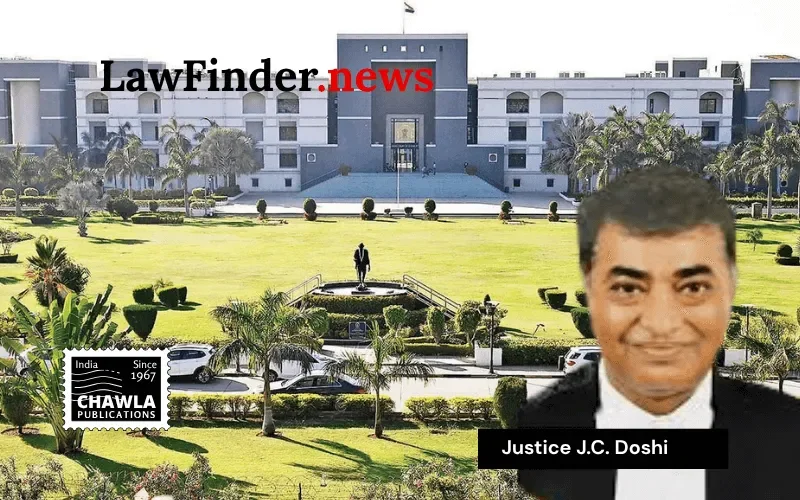
Rejecting the insurer's objections, Justice J.C. Doshi affirmed that ITRs are statutory documents and constitute important relevant evidence to assess income in motor accident claims, particularly for self-employed claimants. In the absence of any concrete proof of fabrication or artificial inflation, the Tribunal was justified in relying on these returns. The Court further noted that the claimant's status as a student was no ground to presume he had no independent income, especially as the Income Tax Department had accepted the returns for assessment purposes.
The Court also upheld the Tribunal's award of compensation for future prospects, despite the claimant not being completely incapacitated from working. Citing authoritative Supreme Court precedents, including Pranay Sethi and subsequent rulings, the Court held that future prospects form an integral part of "just compensation" under the Motor Vehicles Act and are applicable to self-employed individuals below 40 years of age. The addition towards future prospects was therefore warranted.
Moreover, the Court cautioned against the misuse of the statutory right of appeal to prolong litigation unnecessarily, emphasizing that appeals should not be filed merely to re-agitate settled issues. It underscored that motor accident claim proceedings aim to provide expeditious relief to victims and their families, and frivolous appeals impose undue hardship and waste judicial resources.
Ultimately, the Gujarat High Court confirmed the Tribunal's award in its entirety and dismissed the Insurance Company's appeal, thereby securing just compensation for the injured claimant.
Bottom Line:
Motor Vehicles Act - Injury claim - Income-tax returns being statutory documents can be relied upon for determining income of self-employed claimant by taking average of preceding three years in absence of evidence showing fabrication - Claimant being a student is no ground to discard ITRs - Future prospects are payable even in injury cases to self-employed claimant below 40 years - Appeal by Insurance Company dismissed.
Statutory provision(s):
Motor Vehicles Act, 1988 Sections 166, 168, 170, 173