Court emphasizes that a marriage certificate alone does not establish a valid Hindu marriage without essential rites.
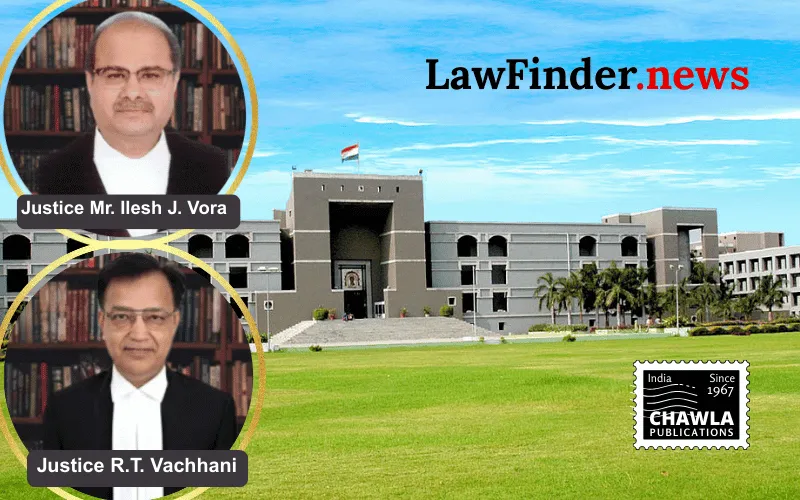
In a significant ruling, the Gujarat High Court has declared an alleged marriage between Kaushal Pramodbhai Sonar and Khushi Sanjay Shah as null and void, emphasizing the necessity of performing essential rites and ceremonies for a marriage to be recognized under Hindu law. The Division Bench comprising Justices Ilesh J. Vora and R. T. Vachhani passed the judgment on June 23, 2026, overturning the Family Court’s earlier decision that called for a full trial despite admissions negating the solemnization of the marriage.
The case arose after Kaushal Sonar, residing in the United Kingdom, discovered a marriage certificate claiming his union with Khushi Shah, who resides in Ahmedabad. Sonar contended that no Hindu rites were performed, and his signature on the marriage documents was fraudulently obtained. During the proceedings, Shah admitted in her written statement that no marriage ceremonies occurred, and they never lived as husband and wife.
The High Court criticized the Family Court for ignoring the defendant's clear admission that no lawful marriage was solemnized, asserting that the mere existence of a marriage certificate does not suffice to create a valid marriage under the Hindu Marriage Act, 1955. The court emphasized that Section 7 of the Act mandates the performance of essential rites and ceremonies, including Saptapadi, for a marriage to be considered valid. Registration under Section 8 only serves as evidence of a marriage that has been solemnized and cannot independently establish the legal status of marriage.
The judgment draws on the precedent set by the Supreme Court in Rathnamma v. Sujathamma, reinforcing that marriage registration alone is insufficient proof of a valid marriage. The High Court's decision underscores the importance of respecting traditional ceremonies and rituals, urging individuals to understand the sacred nature of marriage in Indian society.
The court directed that the marriage certificate be canceled and granted liberty to the appellant to pursue its annulment with the appropriate authorities. This landmark ruling reaffirms the essential role of ceremonial rites in validating Hindu marriages and curtails the misuse of marriage registration.
Bottom Line:
Mere registration of a marriage or existence of a marriage certificate does not create a valid Hindu marriage under the Hindu Marriage Act, 1955, if the essential ceremonies required under Section 7 are not performed.
Statutory provision(s): Hindu Marriage Act, 1955 Sections 5, 7, 8, 12; Civil Procedure Code, 1908 Order XII Rule 6.
Kaushal Pramodbhai Sonar v. Khushi Sanjay Shah, (Gujarat)(DB) : Law Finder Doc id # 2932399