Court Rules No Violation of Natural Justice or Jurisdictional Excess in GST MOV-10 and MOV-11 Orders; Petitioner Relegated to Appeal under Section 107 of CGST Act
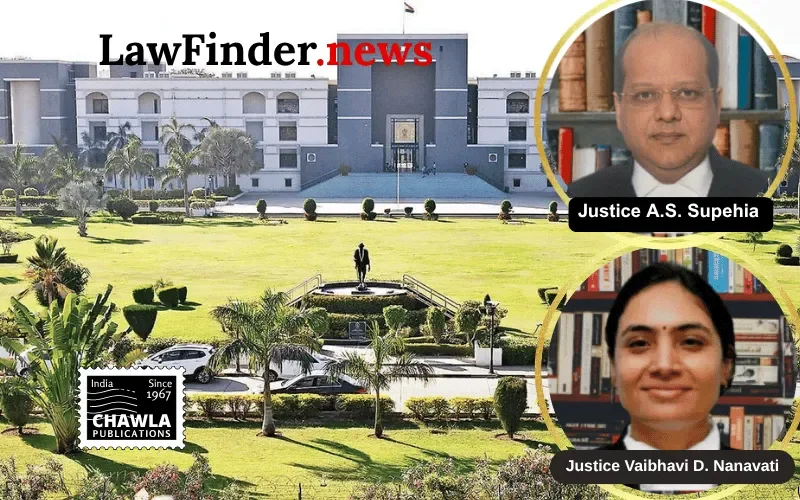
In a significant ruling dated October 1, 2026, the Gujarat High Court (Division Bench comprising Justices A.S. Supehia and Vaibhavi D. Nanavati) dismissed the writ petition filed by M/s Shreeji Steel challenging the show-cause notice and confiscation order issued under the Central Goods and Services Tax Act, 2017 (CGST Act). The petitioner had questioned the legitimacy of the show-cause notice in Form GST MOV-10 and the Order-in-Original in Form GST MOV-11 issued by the State Tax Officer, Kutch Mobile Squad, alleging procedural irregularities and violation of Rule 138B of the CGST Rules, 2017.
The petitioner, engaged in trading of waste and scrap cast iron, had its goods and conveyance detained following an inspection on February 13, 2025. The authorities initiated confiscation proceedings on grounds that the supplier, M/s A.S. Construction, was a bogus dealer involved in illegal trading, with its registration cancelled subsequently. Despite the petitioner's contentions that the same officer should not have issued both the notice and order and that relevant documents were not supplied timely, the Court found no breach of fundamental rights, violation of principles of natural justice, excess of jurisdiction, or challenge to the constitutional validity of the law.
The Court underscored that the physical verification and subsequent actions were carried out by officers duly authorised by the Commissioner as per Rule 138B. Earlier, similar contentions were considered and rejected in a related batch of writ petitions, leading to a remand and reissuance of show-cause notice and order. The petitioner was given ample opportunity for personal hearing and supplied with necessary documents, including those related to cancellation of the supplier's registration.
Importantly, the Court emphasized the availability of an efficacious statutory remedy under Section 107 of the CGST Act, which allows appeal against orders passed under Section 130 concerning confiscation. Citing the Supreme Court's decision in Assistant Commissioner of State Tax v. M/s Commercial Steel Ltd., the Court reiterated that writ petitions under Article 226 are maintainable only in exceptional circumstances such as breach of fundamental rights, violation of natural justice, jurisdictional excess, or challenge to the vires of the statute. None of these exceptions were found in the present case.
The Court further observed that factual disputes regarding the bogus nature of supplier entities and the adequacy of document supply fall within the appellate framework and should be examined by the appellate authority rather than through writ jurisdiction. The petitioner's grievance about non-supply of relied-upon documents was held to be an adjudicatory matter, not warranting bypass of the statutory remedy.
Consequently, the writ petition was dismissed with the liberty granted to the petitioner to pursue the statutory appeal process. This judgment reinforces the procedural safeguards and the hierarchical adjudication mechanism under the GST regime, ensuring that administrative orders are subject to thorough appellate scrutiny while discouraging premature judicial intervention.
Bottom Line:
Goods and Services Tax - Challenge to show-cause notice in Form GST MOV-10 and confiscation order in Form GST MOV-11 - Writ petition not maintainable when efficacious alternative remedy of appeal under Section 107 of CGST Act is available - Alleged non-supply of documents and objection regarding Rule 138B authorisation held not sufficient to bypass statutory appeal - In absence of breach of fundamental rights, violation of natural justice, excess of jurisdiction or challenge to vires, assessee relegated to appellate remedy.
Statutory provision(s):
Central Goods and Services Tax Act, 2017 Sections 107, 129, 130; Central Goods and Services Tax Rules, 2017 Rule 138B; Constitution of India, Article 226
M/s Shreeji Steel v. State Tax Officer, (Gujarat)(DB) : Law Finder Doc Id # 2989859