New Delhi, Oct 7 The Supreme Court agreed to list for hearing on Thursday the Centre's plea seeking initiation of contempt proceedings against the Jharkhand government for appointing senior IPS officer Tadasha Mishra as the state DGP a day before her retirement in violation of apex court directions on appointment of police chiefs.
The Centre, represented by Solicitor General Tushar Mehta, had alleged that the Jharkhand government was in contempt for violating the apex court directions given in the Prakash Singh judgement on appointment of DGP.
It was alleged the Jharkhand government appointed Mishra as DGP on December 30, 2025, a day before her retirement, in violation of the direction that an officer must have at least six months of residual service to be considered for the post of state police chief to ensure stability and merit.
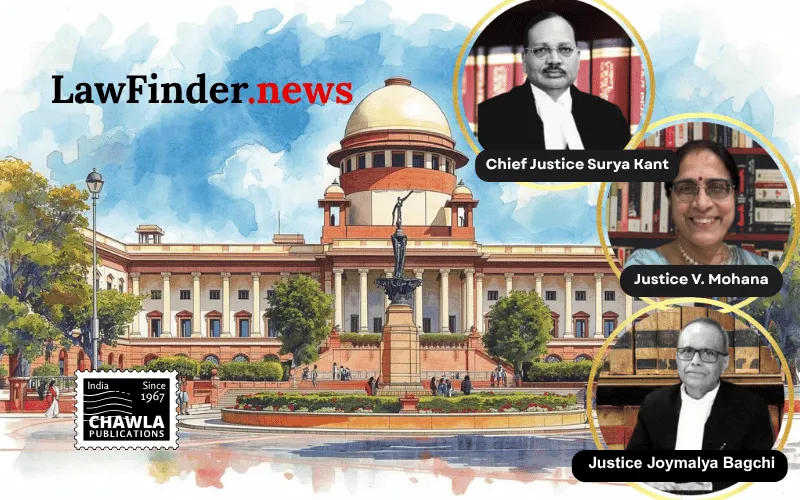
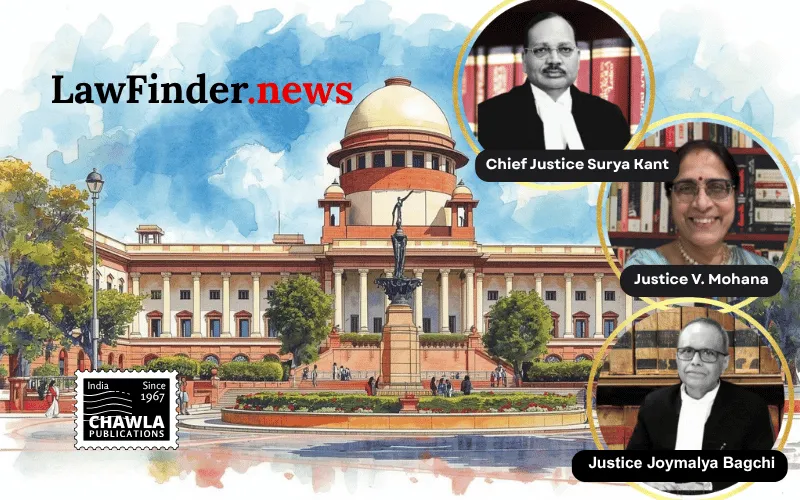
On Wednesday, a bench comprising Chief Justice Surya Kant and justices Joymalya Bagchi and V Mohana was urged by the solicitor general that the Centre's plea be also listed for hearing along with other pending petitions.
The top court is scheduled to hear other petitions pertaining to appointment of DGP in the state including Mishra allegedly in contravention of the apex court guidelines.
The CJI said the Centre's plea will also be listed for hearing on Thursday.
"To direct the State of Jharkhand to abide and implement the directions of this Hon'ble Court issued from time to time in the matter of Prakash Singh & Ors. vs. UOI ...true spirit," the Centre said in its plea which was filed on July 16.
It also urged the top court to declare the appointments of DGP made in Jharkhand under the Regulation of "Selection and Appointment of Director General and Inspector General of Police, Jharkhand (Head of Police) Regulation, 2025" as illegal.
The Centre alleged that Jharkhand repeatedly violated the Supreme Court's directions governing the appointment of state DGPs and proceeded on the basis of its own 2025 regulations.
The application referred to a series of Supreme Court orders and said that the state government did not follow the prescribed procedure for appointing the head of its police force.
The Centre has specifically challenged the "Selection and Appointment of Director General and Inspector General of Police, Jharkhand (Head of the Police Force) Regulation, 2025", notified by the state government on January 8, 2025.
The application said the regulation was framed without obtaining the leave or permission of the top court, as required under its earlier directions.
Under the regulation, a nomination committee was constituted for the selection of the DGP and it also originally prescribed at least six months of residual service for an officer to be eligible for appointment and provided for a panel of three to five officers.
The Centre said that Jharkhand subsequently amended the requirement relating to residual service.
On December 29, 2025, the state amended the regulation, and on December 30 appointed Mishra as DGP despite her scheduled retirement the next day.
The Centre said that the appointment effectively enabled an officer due to retire immediately thereafter to receive a two-year tenure, contrary to the procedure laid down by the Supreme Court.
The plea also referred to the earlier appointment of Anurag Kumar Gupta as DGP on February 2, 2025.
According to the application, Gupta had only about three months of service remaining at the time of his appointment, although he was given a two-year tenure.
The Ministry of Home Affairs subsequently opposed the appointment through communications dated April 22, May 3 and May 23, 2025, and informed the state that Gupta had retired from service on April 30, 2025, it said.
The plea further said that Gupta later sought voluntary retirement, which was accepted by the Jharkhand government in November 2025.
Under the landmark Prakash Singh judgments, an officer must have at least six months of residual service to be considered for the post of DGP to ensure stability and merit.
By appointing Mishra as DGP 24 hours before her retirement, the state effectively granted her a two-year extension.
The 2006 apex court verdict and subsequent directions in the Prakash Singh case had said the DGP of a state shall be "selected by the state government from amongst the three senior-most officers of the department, who have been empanelled for promotion to that rank by the UPSC on the basis of their length of service, very good record and range of experience for heading the police force".
And, once a person has been selected for the job, they should have a minimum tenure of at least two years irrespective of the date of superannuation, it had said.