Court holds that failure to provide underlying documents with Section 148A(1) notice vitiates proceedings; emphasizes statutory right to meaningful opportunity of hearing.
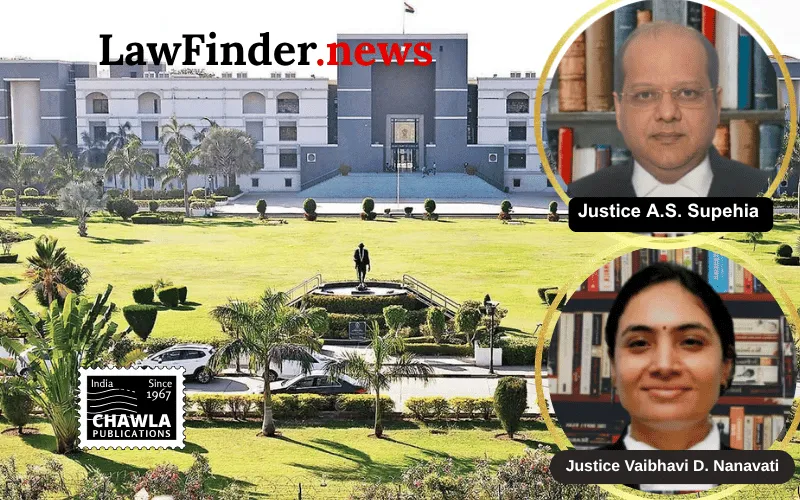
In a significant judgment delivered on September 7, 2026, the Division Bench of the Gujarat High Court comprising Justices A.S. Supehia and Vaibhavi D. Nanavati quashed the reassessment notices issued by the Income Tax Department to Jyoti CNC Automation Limited for the Assessment Year 2019-20. The court held that the notices issued under Section 148A(1) and subsequent orders passed under Sections 148A(3) and 148 of the Income Tax Act, 1961 (hereinafter "the Act") were legally unsustainable due to non-disclosure of material particulars and incriminating documents at the time of issuance of the reopening notice.
The petitioner, Jyoti CNC Automation Limited, a company engaged in manufacturing CNC machines, had initially filed its return declaring an income of Rs. 45.05 crores for AY 2019-20. The return was processed under Section 143(1) and later reassessed under Section 147 on the basis of allegations that the petitioner was involved in accommodation entries and bogus transactions involving multiple entities. Despite furnishing detailed responses and voluminous documentary evidence including ledger accounts, sales invoices, bank statements, and E-way bills, the petitioner challenged the reopening notices issued on March 30, 2025, and June 28, 2025, on the ground that the Income Tax Department failed to provide the underlying material relied upon at the stage of the notice issuance.
The Court meticulously examined the statutory requirements under Section 148A of the Act, which mandates that the notice issued for reopening must disclose sufficient particulars and material that prima facie connect the assessee to the alleged escapement of income. It was found that the impugned notice merely contained screenshots of the Case Related Information Detail from the Insight Portal and did not include critical dissemination reports or other underlying documents forming the basis of the allegations. These vital documents were only furnished during the pendency of the writ petition, which the Court held could not cure the fundamental defect in the notice.
The Court stressed that the opportunity of hearing under Section 148A is not a mere formality but a substantive right that requires the Assessing Officer to independently apply mind to the evidence and clearly indicate the incriminating material to the assessee. The absence of such disclosure renders the proceedings void ab initio. Further, it was noted that the Assessing Officer failed to demonstrate any independent application of mind towards the dissemination reports and did not adequately address the petitioner's detailed replies and documentary evidence.
The judgment drew on precedents from this Court in Filco Trade Centre (P.) Ltd. v. Deputy Commissioner of Income-tax and Bhagwati Polyfill Private Limited v. Assistant Commissioner of Income Tax, reinforcing the principle that reopening cannot be based on borrowed satisfaction or vague allegations.
Consequently, the Gujarat High Court set aside the notices issued under Sections 148A(1), 148A(3), and 148 of the Act, quashing the reassessment proceedings. The Court declined to remit the matter back to the Income Tax Department, observing that the Revenue had ample opportunity to furnish relevant material and consider the petitioner's response at the appropriate stage.
This ruling upholds the procedural safeguards guaranteed to taxpayers under the Income Tax Act and reiterates that the Revenue must act transparently and with due diligence when reopening assessments. It sends a clear message that notices lacking in requisite material particulars and evidence cannot be sustained in law.
Bottom Line:
Income Tax - Reopening of Assessment - Notice under Section 148A(1) of the Income Tax Act, 1961 must disclose material particulars and incriminating material that at least prima facie connects the assessee with alleged transactions. Failure to provide underlying documents along with the notice vitiates the proceedings.
Statutory provision(s):
Income Tax Act, 1961 Sections 143(1), 143(3), 147, 148, 148A(1), 148A(3)