Court holds Head Office and Branch Offices as distinct persons under CGST Act but treats valuation of internal services as `Nil' per CBIC Circulars; invocation of extended limitation under Section 74 quashed for lack of foundational facts
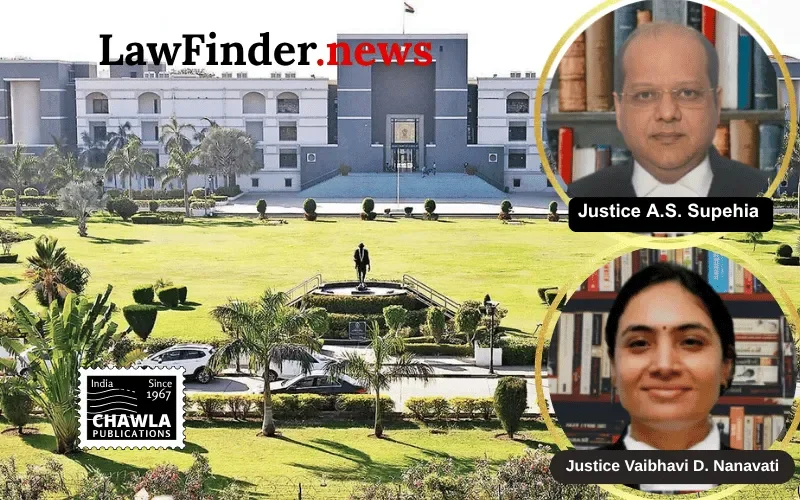
In a significant judgment delivered on October 14, 2026, the Gujarat High Court (Division Bench comprising Justices A.S. Supehia and Vaibhavi D. Nanavati) set aside an order demanding IGST of over Rs.43 crore from M/s Gujarat Co-operative Milk Marketing Federation Limited (popularly known as Amul), for allegedly failing to cross-charge common expenses incurred at its Head Office (HO) to its branch offices (BO) under the Goods and Services Tax (GST) regime.
Background:
The petitioner, a farmers' co-operative federation with its HO at Anand, Gujarat, operates numerous branches and depots across India. While the HO holds a GST registration as an Input Service Distributor (ISD) and a common GST registration for its Gujarat branches, it has separate GST registrations for branch offices located outside Gujarat.
Between July 2017 and March 2019, the petitioner incurred various corporate expenses at its HO, including advertising, IT infrastructure, legal fees, and salaries. The petitioner did not allocate these expenses to its branches by way of cross-charging, a common accounting practice whereby an HO invoices its branches for shared services.
The GST authorities initiated an inquiry alleging that since the HO and the branch offices have distinct GST registrations, they are "distinct persons" under Sections 25(4) and (5) of the Central Goods and Services Tax Act, 2017 (CGST Act). Consequently, supplies of services from the HO to the branches attract GST. The authorities further alleged fraudulent non-disclosure and invoked the extended limitation period under Section 74 of the CGST Act, demanding IGST of Rs.43.43 crore with interest and penalty.
Key Legal Issues:
- 1. Whether the HO and branch offices with distinct GST registrations qualify as "distinct persons" under Section 25(4) and (5) of the CGST Act, making supplies between them taxable?
- 2. Whether the petitioner's failure to cross-charge expenses to branches results in a taxable supply attracting GST?
- 3. Whether the valuation of such internal supplies, where no invoice is issued and the recipient is eligible for full Input Tax Credit (ITC), can be treated as `Nil' in light of CBIC Circulars dated 17.07.2023 and 26.06.2024?
- 4. Whether invocation of Section 74 (extended limitation and penalty for fraud, wilful misstatement, or suppression) was justified?
Court's Analysis and Findings:
Distinct Persons and Cross-Charging:
The Court affirmed that the HO and branch offices holding separate GST registrations are "distinct persons" within the meaning of Section 25(4) and (5) of the CGST Act. Supplies of goods or services between distinct persons in the course or furtherance of business fall under Schedule I of the CGST Act and attract GST, even if made without consideration.
The Court explained that although the CGST Act does not expressly define "cross-charging," the invoicing mechanism between HO and BO under the GST framework effectively establishes the concept. However, if the HO and branches operate under a single GST registration, they are not distinct persons, and cross-charging does not arise.
Valuation of Services and Effect of CBIC Circulars:
The petitioner relied on CBIC Circulars dated 17.07.2023 and 26.06.2024, which clarify that if the HO does not issue a tax invoice to the BO and the recipient is eligible for full ITC, the value of such services can be treated as `Nil' under Rule 28 of the CGST Rules.
The Court observed that the petitioner did not issue tax invoices to its branches for these services. Therefore, in line with the Circulars and supporting precedent from the Delhi High Court (M/s Metal One Corporation India Pvt. Ltd.), the value of such internal supplies is deemed `Nil', resulting in no tax liability.
The Court faulted the adjudicating authority for ignoring this clarification and for determining the value proportionately based on turnover merely because the petitioner did not adopt cross-charging.
Invoking Section 74 - Extended Limitation and Allegations of Fraud:
The revenue authorities invoked Section 74 of the CGST Act, which allows for recovery beyond the normal limitation period if there is fraud, wilful misstatement, or suppression of facts.
The Court emphasized the Supreme Court's ruling in Tata Steel Ltd. v. Union of India (2026), which requires foundational facts showing fraud or suppression before invoking Section 74. Merely failing to adopt cross-charging does not amount to fraud or suppression.
Further, since the tax on such internally generated services would be available as ITC to the branches, the overall tax position is revenue-neutral. The Court noted that the authorities failed to record any specific finding on fraud or suppression and mechanically invoked Section 74.
Conclusion:
The Gujarat High Court quashed and set aside the Order-in-Original dated 01.01.2025 confirming the IGST demand and penalty against the petitioner.
The Court's ruling clarifies that:
- - HO and branches with distinct GST registrations are distinct persons, and supplies between them may attract GST.
- - Where no tax invoice is issued by HO to BO and the recipient is eligible for full ITC, the value of such supplies can be treated as `Nil' per CBIC Circulars and Rule 28, resulting in no tax liability.
- - Invocation of Section 74 requires concrete foundational facts of fraud or suppression, which were absent here.
This judgment aligns with the GST regime's principles and provides relief to organizations operating multiple GST registrations by ensuring that internal supplies without invoicing and with full ITC eligibility do not trigger undue tax liability.
Bottom Line:
GST - Cross-charging between Head Office and Branch Offices - Where HO and branches/depot have distinct GST registrations, they are distinct persons under Section 25(4) and (5) of CGST Act and supplies between them may attract GST - However, where no invoice is issued by HO to BO and recipient is eligible for full ITC, value of such supply can be treated as 'Nil' in terms of CBIC Circulars dated 17.07.2023 and 26.06.2024 read with Rule 28 - Invocation of Section 74 requires foundational facts showing fraud, wilful misstatement or suppression; mere non-adoption of cross-charging is insufficient.
Statutory provision(s): Central Goods and Services Tax Act, 2017 Sections 7, 15(4), 16(1), 25(4), 25(5), 74; Schedule I Entry 2; Central Goods and Services Tax Rules, 2017 Rule 28