The court finds procedural lapses in arbitration proceedings, invoking Section 18 of the Arbitration and Conciliation Act, 1996.
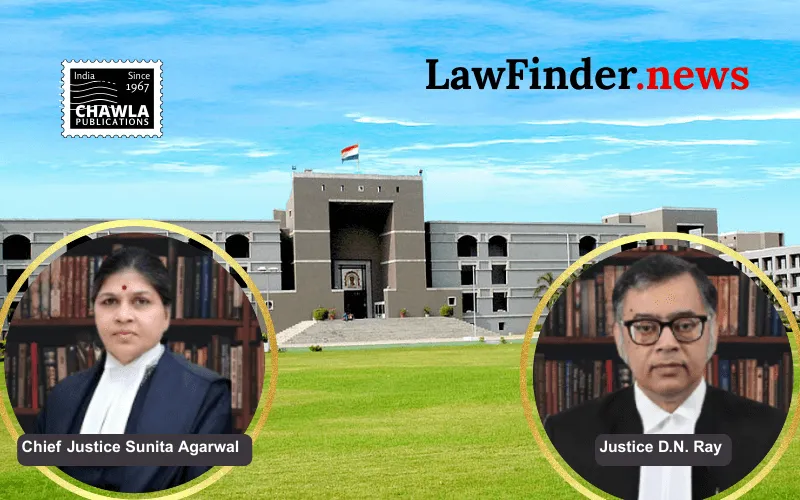
The Gujarat High Court has set aside an arbitral award concerning a dispute between Indore Sahkari Dugdh Sangh and Ashutosh Sharma, following a detailed examination of procedural lapses that violated the principles of natural justice. The division bench, consisting of Chief Justice Sunita Agarwal and Justice D.N. Ray, delivered the judgment on July 2, 2026, emphasizing the importance of fairness and equality in arbitration proceedings.
The case revolves around a contract awarded to Ashutosh Sharma, who had been the second highest bidder for constructing a new dairy plant for Indore Dugdh Sangh. Disputes arose over payment issues, service tax reimbursement, and delayed project completion, leading to arbitration proceedings. The sole arbitrator passed an award in favor of the respondent, Ashutosh Sharma, entitling him to recover over Rs. 1.97 crore.
Indore Sahkari Dugdh Sangh challenged the award under Section 34 of the Arbitration and Conciliation Act, 1996, citing unfair treatment during the arbitration process. The Commercial Court at Ahmedabad upheld the award, prompting the appellant to seek further recourse under Section 37.
The High Court identified key procedural errors by the arbitrator, who closed the respondents' right to present evidence during the COVID-19 pandemic, despite acknowledging the extension of limitation periods as directed by the Supreme Court. The affidavits submitted by the respondents were rejected due to lack of notarization, without considering the pandemic-related constraints. The court noted the ample time available for the arbitrator to address these issues but found that the respondents were treated unfairly, thereby vitiating the proceedings.
In its judgment, the High Court underscored the significance of Section 18 of the Arbitration and Conciliation Act, which mandates equal treatment and full opportunity for parties to present their cases. The court referenced previous Supreme Court judgments emphasizing the necessity of adhering to procedural safeguards in arbitration to ensure just outcomes.
The appeal was allowed, and the arbitral award dated July 16, 2021, along with the Commercial Court's order dated March 2, 2023, was set aside. The parties have been granted the liberty to initiate fresh arbitration or court proceedings, with specific directions on calculating the limitation period.
This decision highlights the judiciary's role in ensuring fairness in alternative dispute resolution mechanisms, reiterating the importance of natural justice principles in arbitration processes.
Bottom line:-
Arbitration proceedings must adhere to principles of natural justice and treat parties with equality and fairness. Violation of Section 18 of the Arbitration and Conciliation Act, 1996 constitutes grounds for setting aside an arbitral award.
Statutory provision(s): Sections 18, 34, and 37 of the Arbitration and Conciliation Act, 1996.
Indore Sahkari Dugdh Sangh v. Ashutosh Sharma, (Gujarat)(DB) : Law Finder Doc id # 2937157