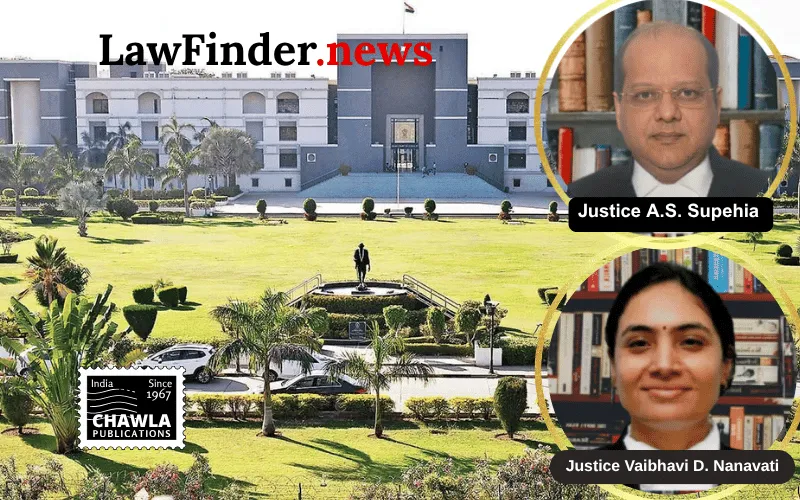
Court Allows Sheth Shree Karshandas Halu Dharamshala Trust's Claim under Section 11(1A) of Income Tax Act, 1961, Directs Refund of Excess Tax with Interest
In a significant judgment delivered on August 25, 2026, the Gujarat High Court (Division Bench) has ruled in favor of Sheth Shree Karshandas Halu Dharamshala Jamnagar, a public charitable trust, affirming its entitlement to exemption under Section 11(1A) of the Income Tax Act, 1961. The Court quashed the rejection order passed by the Commissioner of Income-Tax (Exemption) under Section 264 of the Act, which had denied the trust’s claim for exemption on procedural grounds despite the trust’s bona fide compliance with charitable objectives.
The dispute arose from the Assessment Year 2012-13 when the petitioner trust sold an immovable property located in Jamnagar and reinvested the sale proceeds in Fixed Deposit Receipts (FDR) with Canara Bank. Although the trust duly declared the entire capital gains from the sale in its return and paid the applicable tax, it inadvertently failed to claim exemption under Section 11(1A) which allows exemption for reinvested capital gains. This omission led to an excess tax payment of Rs.1,00,27,298.
The petitioner filed a revision application under Section 264 of the Income Tax Act seeking correction of this procedural lapse. However, the Commissioner rejected the application, citing delay in receipt of sale consideration and questioning the trust’s compliance with conditions imposed by the Joint Charity Commissioner under the Gujarat Public Trust Act, 1950.
Upon hearing the case, the Court extensively analyzed the legal provisions and relevant precedents, including the landmark decisions of this Court in Chandrakant J. Patel v. V.N Srivastava and C. Parikh & Co. v. Commissioner of Income Tax, and the Bombay High Court’s ruling in Swaminarayan Mandir Trust v. Commissioner of Income Tax (Exemptions). The Court emphasized that Section 264 empowers the Commissioner to rectify mistakes made either by the assessing authority or the assessee and that procedural lapses should not deny substantive rights when eligibility is clearly established.
The Court held that the petitioner trust had valid registration under Section 12A of the Income Tax Act and had complied with the charitable objectives. The reinvestment of capital gains in FDRs for a period exceeding six months qualified as acquisition of a new capital asset under CBDT Instruction No. 883 dated September 24, 1975, thereby entitling the trust to exemption under Section 11(1A). The Court observed that the provisions of Section 11(1A) are standalone and cannot be negated by non-compliance with provisions of the Gujarat Public Trust Act, 1950. It further noted that the trust had paid excess tax due to inadvertent omission and was entitled to refund with interest under Section 244A of the Act.
Consequently, the Court set aside the impugned order and directed the tax authorities to grant exemption under Section 11(1A) and refund the excess tax paid along with applicable interest within four weeks.
This ruling reinforces the principle that genuine mistakes in tax returns, especially by charitable institutions acting in good faith, should not be penalized when the substantive eligibility for exemption is established. It underscores the revisional powers of the Commissioner under Section 264 to correct such errors and uphold the charitable status and tax benefits of trusts.
Bottom Line:
Income Tax, Section 264 revisional powers - Relief to assessee permissible for errors committed by subordinate authorities or by the assessee - Exemption under Section 11(1A) of the Income Tax Act cannot be denied for procedural lapses when eligibility is established.
Statutory provision(s):
Income Tax Act, 1961 - Sections 11(1), 11(1A), 143(1), 143(1)(a), 244A, 264; Gujarat Public Trust Act, 1950 - Section 36(1)(a).