Court Rules Educational Qualifications as Personal Information Protected under Sections 8(1)(e) and 8(1)(j) of RTI Act; CIC Overstepped Jurisdiction by Treating Oral Request as RTI Application
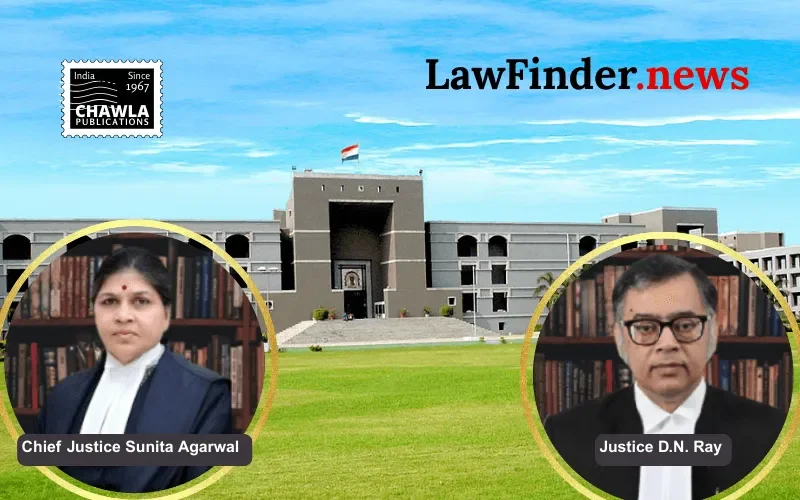
In a significant judgment dated September 29, 2026, the Division Bench of the Gujarat High Court, comprising Chief Justice Sunita Agarwal and Justice D.N. Ray, dismissed the Letters Patent Appeal filed by Arvind Kejriwal, the then Chief Minister of Delhi, against Gujarat University. The appeal challenged the quashing of an order dated April 29, 2016, passed by the Central Information Commissioner (CIC) directing disclosure of Prime Minister Narendra Modi's educational qualifications under the Right to Information Act, 2005 (RTI Act).
The controversy originated during a second appeal proceeding before the CIC concerning information about Kejriwal's Electoral Photo Identity Card (EPIC). During the hearing, Kejriwal submitted a written request, which the CIC treated suo motu as an RTI application, directing Delhi University and Gujarat University to disclose details of Prime Minister Modi's educational degrees. This action was challenged by Gujarat University, leading to the writ petition that was allowed by the single judge, quashing the CIC's order and imposing costs of Rs. 25,000 on Kejriwal for persisting with the matter despite the degree information being publicly available on the University's website.
The High Court, upon hearing arguments from Senior Advocate Dr. Abhishek Manu Singhvi for Kejriwal and Solicitor General Tushar Mehta for Gujarat University, confined the scope of the appeal to the observations about Kejriwal's conduct and cost imposition. However, the Court also dealt extensively with the merits of the case, emphasizing the statutory framework of the RTI Act.
Key findings of the Court included:
1. Jurisdictional Limitations of CIC: The Court held that under Section 6(1) of the RTI Act, a citizen desiring information must make a written request accompanied by prescribed fees to the Public Information Officer (PIO). The CIC cannot entertain oral or suo motu requests at the second appellate stage without compliance with the statutory procedure. The CIC's order treating Kejriwal's letter as an RTI application was thus held to be outside its jurisdiction and invalid.
2. Educational Records as Personal Information: The Court reaffirmed that educational qualification documents such as mark sheets and degrees are personal information of an individual. Universities and examining bodies hold such information in a fiduciary capacity, protecting the privacy and confidentiality of students. The relationship between the student and the University is akin to a fiduciary relationship, imposing a duty of loyalty and confidentiality on the University.
3. Exemption Under Sections 8(1)(e) and 8(1)(j) of RTI Act: The Court relied on authoritative Supreme Court precedents including CBSE v. Aditya Bandopadhyay (2011), Institute of Chartered Accountants of India v. Shaunak H. Satya (2011), and the landmark privacy judgment K.S. Puttaswamy v. Union of India (2017) to hold that educational records fall within the exemption clauses of the RTI Act. Disclosure is exempt unless the competent authority is satisfied that larger public interest justifies disclosure. Mere public curiosity or political interest does not qualify as larger public interest.
4. No Larger Public Interest in Disclosing PM's Educational Qualifications: The Court found no public interest, let alone larger public interest, in disclosing the Prime Minister's educational qualifications under RTI. It underscored that educational qualifications have no bearing on election to constitutional posts and political motives or personal vendettas cannot be pursued through RTI.
5. Balance Between Right to Information and Right to Privacy: The judgment emphasized the delicate balance the RTI Act strikes between transparency and privacy. While the Act promotes accountability, it also protects personal and confidential information from unwarranted disclosure, especially when such information is held in fiduciary capacity.
6. Condemnation of Abuse of RTI Process for Political Vendetta: The Court observed that statutory authorities and courts should not be used as platforms to pursue political vendetta or harass public officials through RTI proceedings. It upheld the imposition of costs on Kejriwal for his conduct, rejecting his plea for expungement of adverse remarks.
The Court ultimately upheld the decision of the writ court quashing the CIC's order and dismissed Kejriwal's appeal, reinforcing that RTI requests must follow the prescribed procedure and that personal educational records are protected from disclosure unless overriding public interest is demonstrated.
This judgment provides crucial clarity on the scope of the RTI Act concerning personal information, the fiduciary responsibility of educational institutions, and the limits of CIC's jurisdiction in entertaining requests. It also serves as a caution against misuse of RTI for political objectives.
Bottom Line:
Right to Information Act, 2005 - Educational qualification documents such as marksheets and degrees are personal information and are also held by Universities/Boards in fiduciary capacity - Such information is exempt from disclosure under Section 8(1)(e) and Section 8(1)(j) of the RTI Act, unless larger public interest justifies disclosure - CIC cannot, at second appellate stage, take suo motu cognizance of an oral/written request made in another proceeding and treat it as an RTI application without compliance of Section 6(1).
Statutory provision(s):
Right to Information Act, 2005 Sections 6(1), 8(1)(e), 8(1)(j), 18, 19, 20; Evidence Act, 1872 Sections 74, 76; Digital Personal Data Protection Act, 2023 (amendment to Section 8(1)(j) of RTI Act)
Arvind Kejriwal v. Gujarat University, (Gujarat)(DB) : Law Finder Doc Id # 2989281