Court Emphasizes Limited Revisional Jurisdiction and Reformatory Nature of Probation Law in Dismissing Revision Application
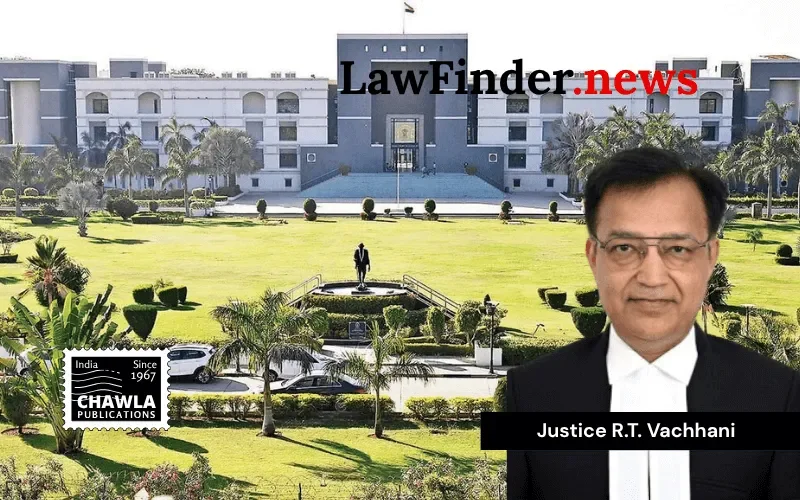
In a significant decision dated October 27, 2026, the Gujarat High Court, presided over by Mr. R.T. Vachhani, J., dismissed a criminal revision application challenging the extension of probation benefits to accused persons convicted for assault-related offences. The revision was filed by the original complainant, Parmar Parulben Vijaykumar, against the State of Gujarat and others, following an appellate court's order granting probation to accused individuals despite their alleged political influence and prior criminal records.
The case arose from an incident on January 8, 2017, where the accused, including a sitting village Sarpanch, Bhavnaben, were convicted for voluntarily causing hurt with dangerous weapons and related offences under Sections 323, 324, 504, 506(2), and 114 of the Indian Penal Code, 1860. The trial court sentenced the accused to imprisonment and fines. However, upon appeal, the Sessions Court confirmed the conviction but exercised discretion to release the accused on probation subject to conditions of good behaviour and maintaining peace in society.
The complainant contested this decision, alleging that the accused were politically influential and had multiple criminal antecedents which were allegedly overlooked by the Sessions Court. It was argued that the probation order was perverse and made without due consideration of critical factors such as the character and conduct of the accused.
The High Court, after hearing arguments from both sides, reiterated the limited scope of revisional jurisdiction under Sections 438 and 442 of the Bharatiya Nagarik Suraksha Sanhita, 2023. The Court emphasized that interference in appellate or revisional matters is warranted only where there is a patent illegality, perversity, or material irregularity causing miscarriage of justice.
Highlighting the object of probation law as reformatory rather than punitive, the Court noted that probation is not a right but a discretionary relief to reform offenders. It further observed that no breach of conditions or untoward incidents had been reported against the accused since the grant of probation. The Court found no fault in the Sessions Court's reliance on the probation officer's report and its exercise of discretion in granting probation.
Consequently, the Gujarat High Court upheld the Sessions Court's order dated February 28, 2026, confirming the conviction but allowing probation. The Court dismissed the revision application, reinforcing the principle that courts should not substitute their own views lightly when the lower court's decision falls within the bounds of reasoned judicial discretion.
This judgment underscores the judiciary's balanced approach in administering probation, ensuring that the law's reformatory objectives are met while maintaining societal order and justice.
Bottom Line:
Probation - Revisional jurisdiction against order granting benefit of probation - High Court would not interfere unless order suffers from illegality, perversity or material irregularity - Benefit of probation is not a matter of right, but is reformatory in nature and can be granted where conditions are satisfied - Mere allegation regarding antecedents and political influence, in absence of breach of conditions or subsequent untoward incident, not sufficient to upset order granting probation.
Statutory provision(s):
Bharatiya Nagarik Suraksha Sanhita, 2023 Sections 438, 442; Indian Penal Code, 1860 Sections 323, 324, 504, 506(2), 114