Insurer Relieved of Liability in Driving License Dispute, Supreme Court asserts importance of valid driving licenses and places compensation liability on driver and vehicle owner.
In a significant ruling, the Supreme Court of India has upheld the Motor Accidents Claims Tribunal's decision, relieving Reliance General Insurance Company Ltd. of liability in a case involving the validity of a driving license. The case, Reliance General Insurance Company Ltd. v. Om Parkash, revolved around an accident dated October 14, 2009, where the driver, Om Prakash, was accused of not possessing a valid driving license at the time of the incident.
The Tribunal had initially ruled that the insurer was not liable for compensation, placing the burden on the driver and the vehicle owner, Rajinder Singh. However, the Punjab and Haryana High Court later reversed this decision, relying on secondary evidence that suggested the driving license was renewed, thus holding the insurer liable.
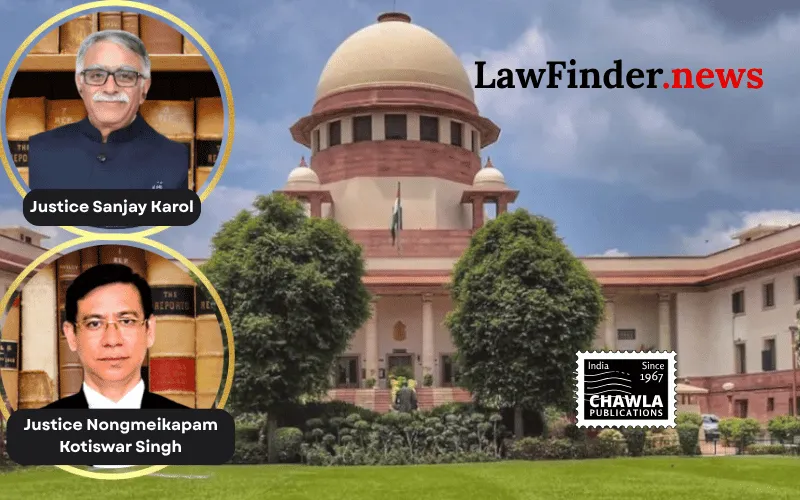
In its judgment delivered on July 30, 2026, the Supreme Court, led by Justices Sanjay Karol and Nongmeikapam Kotiswar Singh, found the High Court's reliance on secondary evidence unjustified. The Court emphasized the inadmissibility of secondary evidence unless the conditions under Section 65 of the Indian Evidence Act, 1872, are fulfilled. The Tribunal's original finding was reinstated, asserting that the burden of compensation falls on the driver and the owner due to their failure to ensure the license's validity at the time of the accident.
Highlighting the critical nature of valid driving licenses, the Supreme Court underscored the responsibility of vehicle owners to verify and ensure the renewal of a driver's license. The ruling also advocated for awareness campaigns and procedural improvements in the issuance and renewal of driving licenses to prevent similar issues in the future.
The Supreme Court's decision aligns with previous judgments, reinforcing the principle that insurers cannot be held accountable when there is a breach of policy terms due to an invalid driving license. The judgment serves as a reminder of the legal obligations of vehicle owners and drivers in maintaining valid documentation and the consequences of negligence.
The Court also suggested that the Ministry of Road, Transport and Highways, along with state counterparts, should take proactive steps to enhance awareness and compliance with driving license regulations, including streamlining the application and renewal processes.
This ruling not only clarifies the responsibilities of parties involved in vehicle operation and insurance but also emphasizes the importance of adhering to legal requirements to mitigate risks and liabilities.
Bottom Line:
Insurer not liable to pay compensation if the driver does not possess a valid driving license at the time of the accident, and the owner fails to ensure its renewal.
Statutory provision(s): Motor Vehicles Act, 1988 Sections 2(10), 3, and 5; Indian Evidence Act, 1872 Sections 61 to 64, and 65
Reliance General Insurance Company Ltd. v. Om Parkash, (SC) : Law Finder Doc id # 2950466