Court Seeks Comprehensive Category-Wise Data on Risk Zones, Required and Functional Fire Stations as per Standing Fire Advisory Council Guidelines
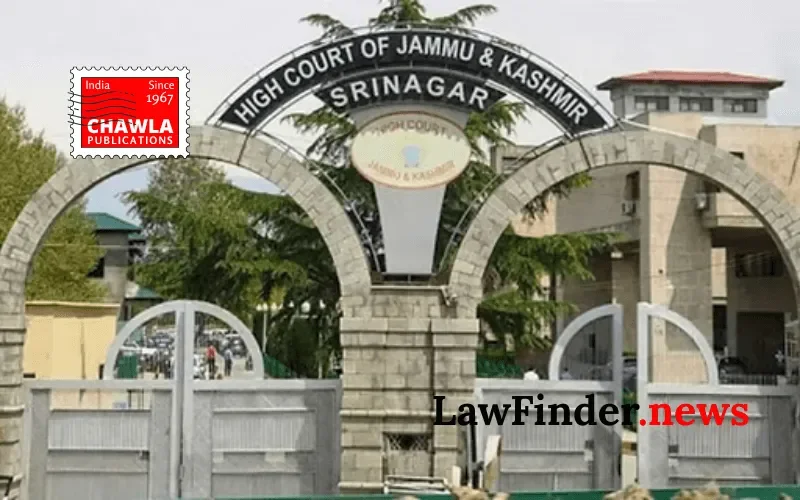
In a significant public interest litigation (PIL) concerning the implementation of firefighting policy in the Union Territory (UT) of Jammu & Kashmir and Ladakh, the High Court bench comprising Chief Justice Dr. Pushpendra Singh Bhati and Justice Yash Paul Bourney has issued directives demanding detailed disclosure from the authorities about fire safety infrastructure.
The petitioner, Mohd Rahoof Khan, appearing in person, alleged gross violation and non-implementation of the firefighting policy, placing the general public at risk. Addressing these concerns, the Court examined the parameters prescribed by the Standing Fire Advisory Council (SFAC), Ministry of Home Affairs, Government of India, which lays down comprehensive guidelines for the establishment of fire stations based on population, topography, risk factors, and response times.
According to the SFAC guidelines highlighted in the Court, fire risk zones are classified into four categories:
- High Risk (A Zone)
- Medium Risk (B Zone)
- Low Risk (C Zone)
- Rural/Least Risk (D Zone)
The guidelines specify that one "D" category fire station should cover 50,000 population, with urban fire stations recommended at one per 10 square kilometers and rural stations covering up to 50 square kilometers. Response times vary by zone with a maximum of 3 minutes for high-risk zones, 5 minutes for medium and low-risk zones, and 20 minutes for rural areas.
The Court, seeking to ensure compliance with these norms, posed three critical questions to the respondents (Union Territory of Jammu & Kashmir and others):
1. The exact number of areas in the UT falling within each risk category (A, B, C, and D).
2. The number of fire stations or firefighting establishments required in each category per the policy.
3. The number of such stations currently functional in each category.
Senior Additional Advocate General Ms. Monika Kohli, representing the respondents, was directed to furnish a single, consolidated chart containing these details, supported by an affidavit.
The Court emphasized the importance of adequate firefighting infrastructure, including specialized vehicles and manning norms, to safeguard lives and property, particularly in high-risk and industrial areas where risk assessments might necessitate additional resources.
The matter is listed for further hearing on November 17, 2026, with the Court intent on ensuring the authorities uphold fire safety norms and adequately protect the citizens of the Union Territory.
This judgment underscores judicial vigilance in public safety matters and highlights the critical role of transparency and adherence to national safety guidelines in disaster preparedness.
Bottom Line:
Public interest litigation concerning implementation of firefighting policy - High Court sought category-wise details of risk zones and corresponding requirement and availability of fire stations in the Union Territory in light of Standing Fire Advisory Council guidelines.
Statutory provision(s): Guidelines of Standing Fire Advisory Council, Ministry of Home Affairs, Government of India (non-statutory but authoritative guidelines relevant to fire safety policy)
Mohd Rahoof Khan v. Union Territory of J and K, (J&K And Ladakh)(DB) : Law Finder Doc Id # 3014541