Court holds that failure to inform about death of ex parte respondent and attempt to recall judgment instead of appealing or seeking review is a grossly misconceived approach
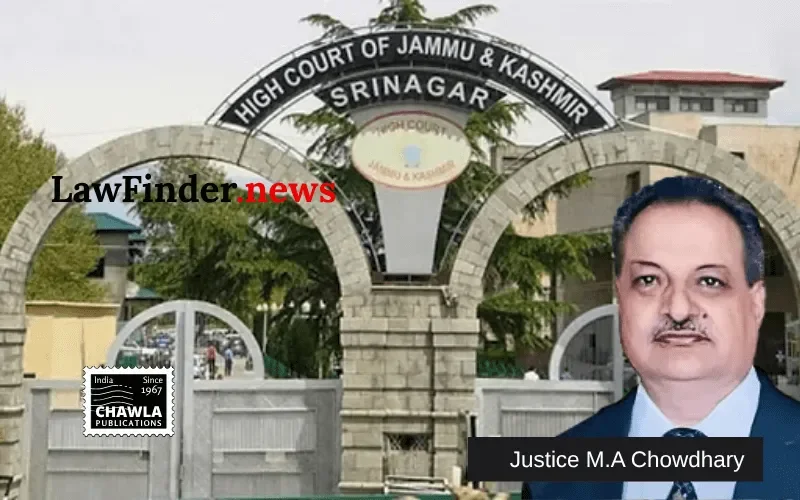
In a significant judgment dated November 4, 2026, the Jammu & Kashmir and Ladakh High Court, presided over by Justice M.A. Chowdhary, dismissed the application filed by Dharmarth Trust seeking recall of the court’s earlier judgment dated December 19, 2025, which had dismissed the writ petition challenging an award of the Industrial Tribunal.
The writ petition pertained to an award passed by the J&K Industrial Tribunal in favor of the respondent workman, Chand Ram, awarding him 50% back wages from the date of his termination. The petitioner Dharmarth Trust had challenged this award before the High Court. During the pendency of the writ petition, Chand Ram appeared initially but was later proceeded against ex parte due to his continued absence. The writ petition was dismissed, upholding the Industrial Tribunal’s award.
The Trust later filed an application seeking to recall this judgment on the ground that Chand Ram had died before the pronouncement of the judgment and that his legal heirs were never brought on record. The petitioner argued that this omission rendered the judgment a nullity and invalid. Further, the Trust contended that the judgment was passed in violation of principles of natural justice since it was delivered ex parte without adequate consideration of the Trust’s status under the Industrial Disputes Act.
Rejecting these contentions, the High Court noted that the petitioner had never informed the court about the death of Chand Ram during the writ petition proceedings. The petitioner had ample opportunity to bring the legal heirs on record or to challenge the judgment via appeal or review, but instead opted for a recall application, which the court found to be a misconceived and improper remedy.
The court further observed that the petition had been heard after the respondent was proceeded ex parte and the petitioner was heard before the dismissal of the writ petition. Allegations that the judgment was reserved and delivered after several months without proper hearing were factually baseless, as the judgment was reserved on December 4, 2025, and delivered within 15 days on December 19, 2025. The court cautioned the petitioner’s counsel against making such unfounded allegations that cast aspersions on the court’s functioning, indicating that such behavior could amount to professional misconduct.
The court emphasized the availability of alternative legal remedies such as filing an appeal against the legal heirs of the deceased respondent or seeking review of the judgment if there was an error apparent on the face of the record. The recall application was held to be an improper and novel attempt to circumvent these remedies.
Consequently, the High Court dismissed the recall application, reinforcing the principle that mere death of an ex parte respondent during the pendency of a writ petition, when not brought to the notice of the court and when alternative remedies are available, does not justify recalling a judgment. The judgment underscores the importance of procedural propriety and timely invocation of available remedies in litigation.
Bottom Line:
Recall of judgment - Mere death of ex parte respondent during pendency of writ petition, when not brought to notice of Court by petitioner and when alternative remedies of appeal or review were available, does not justify recall of judgment - Application seeking recall held grossly misconceived.
Statutory provision(s):
Industrial Disputes Act, 1947 (Section 36)