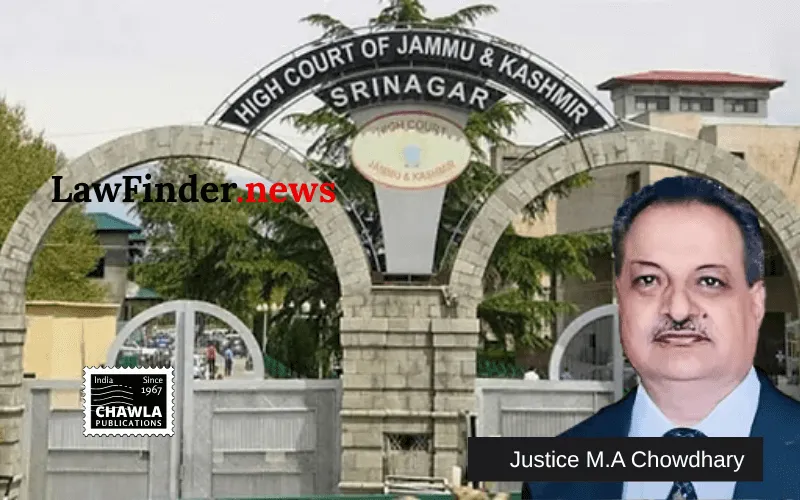
Court Rules Detention Unsustainable Without Evidence of Public Disorder; Upholds Constitutional Safeguards
In a landmark judgment, the Jammu & Kashmir and Ladakh High Court has quashed the preventive detention order against Sabeer Ahmed, citing the lack of evidence that his alleged activities posed a threat to public order. The court, presided over by Justice M A Chowdhary, underscored the necessity for concrete evidence demonstrating the potential for public disorder to justify preventive detention.
The case revolved around allegations against Ahmed for transporting bovine animals without valid permission, which led to his detention under the Jammu & Kashmir Public Safety Act, 2026. The District Magistrate of Rajouri had issued the detention order, claiming that Ahmed's activities were prejudicial to the maintenance of public order.
However, the High Court highlighted the absence of any substantial link between the alleged activities and the threat to public order. The judgment emphasized that preventive detention cannot be invoked solely based on allegations without a clear demonstration of their impact on public order. The court also noted that the FIRs against Ahmed, dating back to 2023 and 2025, did not provide a proximate link to the detention order issued in 2026.
Furthermore, the court found a significant procedural lapse in the non-communication of Ahmed's right to make a representation before the detaining authority. This omission was deemed a violation of Article 22(5) of the Indian Constitution, which mandates the right to be informed of grounds for detention and the right to make a representation.
Justice Chowdhary, referencing a similar case, reiterated that preventive detention should only be used in exceptional circumstances where there is a clear threat to public order or national security. The judgment stressed that routine legal proceedings should suffice for penal offenses, and preventive detention should not be employed as a substitute.
The court's decision to quash the detention order and direct the immediate release of Sabeer Ahmed, unless involved in other legal matters, reinforces the importance of constitutional safeguards and the need for stringent adherence to legal procedures in matters of personal liberty.
Bottom Line :
Preventive detention cannot be invoked solely based on allegations of bovine transportation without valid permission unless there is a clear demonstration of activities prejudicial to public order. Non-communication of the right to make representation before the detaining authority renders the detention order unsustainable under Article 22(5) of the Constitution of India.
Statutory provision(s): Jammu & Kashmir Public Safety Act, Section 8, Constitution of India, Article 22(5)
Sabeer Ahmed v. UT of Jammu & Kashmir, (Jammu & Kashmir And Ladakh) : Law Finder Doc id # 2967806