Court clarifies scope of Order XVIII Rule 17 and Section 151 CPC, permits recall of husband and examination of new witnesses but strikes down costs imposed for alleged concealment
In a significant ruling delivered on September 26, 2026, the Jammu & Kashmir and Ladakh High Court addressed crucial procedural and substantive issues arising in a matrimonial dispute concerning allegations of cruelty, desertion, and an alleged second marriage during the subsistence of the first marriage. The petitioner, Mangat Ram, had sought dissolution of marriage under Section 13 of the Hindu Marriage Act, 1955, on grounds of cruelty and desertion. The respondent, Shano Devi, contested the petition and later sought to reopen evidence to introduce fresh material suggesting the petitioner had contracted a second marriage with Laxmi Devi, a fact purportedly unknown to her until recently.
The Family Court at Jammu had allowed the respondent's application filed under Order XVIII Rule 17 of the Civil Procedure Code (CPC) read with inherent powers under Section 151 CPC, permitting recall of the petitioner and some of his witnesses, as well as examination of new witnesses - Raman Kumar and Priya Rani, allegedly the son-in-law and daughter from the petitioner's second marriage.
Mangat Ram challenged this order before the High Court, contending that Order XVIII Rule 17 CPC only permits recalling witnesses to clarify doubts in evidence already led and cannot be used to reopen evidence generally or introduce fresh material. He also argued that the imposition of costs on him for concealment of the second marriage was premature as such fact was yet to be established.
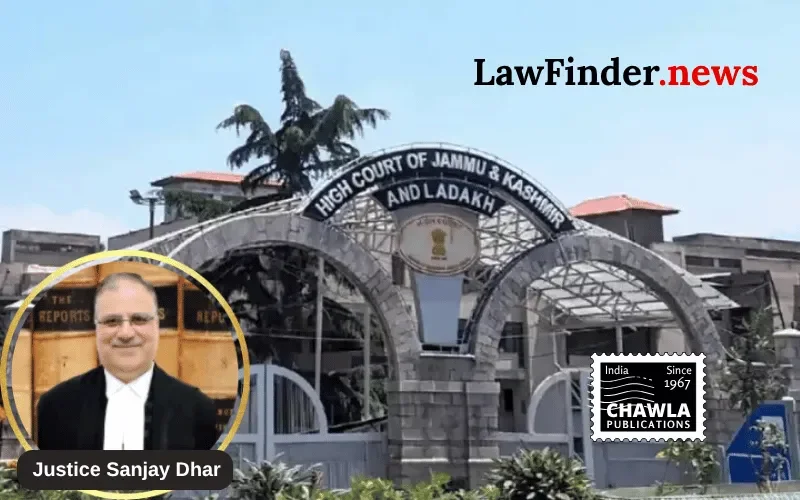
Justice Sanjay Dhar, presiding over the case, meticulously analyzed the scope of Order XVIII Rule 17 CPC and Section 151 CPC. The Court reiterated established Supreme Court jurisprudence that Order XVIII Rule 17 is intended to clarify ambiguities in evidence and should be sparingly used, not as a tool to fill gaps or reopen evidence for general purposes. Conversely, Section 151 CPC, which recognizes the inherent powers of courts to make orders necessary for ends of justice or to prevent abuse of process, can be invoked in exceptional cases to permit additional evidence if it is relevant, necessary, and in the interest of justice.
The Court observed that the respondent's newly discovered evidence - including Aadhaar card, marriage documents, and pleadings reflecting Priya Rani as the petitioner's daughter - prima facie indicated the petitioner's second marriage and could materially affect the outcome. Such evidence, if proven, would have a bearing on whether the respondent was justified in not cohabiting with the petitioner and could constitute a defense against allegations of cruelty.
Accordingly, the High Court upheld the Family Court's decision permitting recall of the petitioner to clarify aspects related to the second marriage and allowing examination of the new witnesses. However, the Court set aside the order insofar as it required recall of other witnesses of the petitioner who had already testified they had no knowledge of the alleged second marriage, deeming it unnecessary and legally unsustainable.
Importantly, the High Court quashed the Family Court's imposition of Rs. 10,000 as costs on the petitioner for concealment of the second marriage. The Court held that without a formal finding on the existence of the second marriage after evidence was led, the petitioner cannot be presumed to have concealed such information.
The judgment clarifies the nuanced application of procedural provisions in matrimonial litigation, balancing the need for finality with the interests of justice when new, relevant evidence emerges late in proceedings. The Family Court was directed to continue the trial consistent with these observations.
Bottom Line:
Order XVIII Rule 17 CPC is meant only to enable Court to clarify doubts in evidence and cannot be used to fill lacunae or generally reopen evidence; however, in appropriate cases, Court may invoke Section 151 CPC to permit additional evidence relevant to just decision of case. In matrimonial proceedings, where wife subsequently came across prima facie material suggesting husband's second marriage during subsistence of marriage, Family Court was justified in permitting examination of new witnesses and recall of husband, but not other witnesses who had no knowledge of such fact; imposition of costs for alleged concealment before proof thereof was unsustainable.
Statutory provision(s):
Order XVIII Rule 17, Civil Procedure Code 1908; Section 151, Civil Procedure Code 1908; Section 13, Hindu Marriage Act 1955; Section 494, Indian Penal Code (referenced)
Mangat Ram v. Shano Devi, (Jammu & Kashmir and Ladakh) : Law Finder Doc Id # 2992768