Court affirms legal obligation of father-in-law to maintain dependents under Hindu Adoption and Maintenance Act, 1956, awarding monthly maintenance and emphasizing constitutional right to life with dignity.
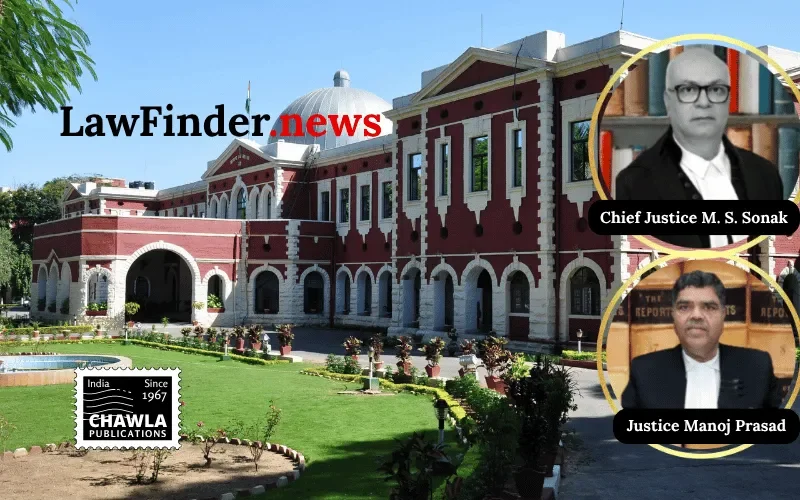
In a significant ruling delivered on November 3, 2026, the Jharkhand High Court (Division Bench comprising Chief Justice M.S. Sonak and Justice Manoj Prasad) dismissed an appeal filed by Roshan Lal Saw, affirming the maintenance entitlement of Nilam Kumari, a widowed daughter-in-law, and her two minor sons under the Hindu Adoption and Maintenance Act, 1956.
The case arose from an Original Maintenance Case filed by Nilam Kumari and her minor children against Roshan Lal Saw, their grandfather and father-in-law respectively, seeking monthly maintenance following the death of Nilam's husband, Suraj Kumar, in 2020. The respondents contended they lacked independent livelihood and had not received maintenance or any share in the deceased's estate, despite Roshan Lal Saw's admitted monthly pension and rental income from a shop.
The Family Court, Dhanbad had ordered Roshan Lal Saw to pay Rs.7,000 monthly to Nilam Kumari and Rs.5,000 each to her two minor sons until they attained majority, with arrears payable within two months. The appellant challenged this order, disputing the inclusion of rental income, asserting his advanced age and medical conditions, and claiming he was already maintaining the respondents.
Upon hearing both sides, the Jharkhand High Court thoroughly examined the statutory provisions under Sections 19, 20, 21, and 22 of the Hindu Adoption and Maintenance Act. The Court emphasized that these sections impose a legal and moral duty on a Hindu father-in-law to maintain his widowed daughter-in-law and minor grandchildren if they are dependents without independent means of livelihood. The Court also referred to the recent Supreme Court judgment in Kanchan Rai v. Geeta Sharma (2026 INSC 54), which clarified that widows of sons, irrespective of whether their husbands predeceased or survived the father-in-law, are entitled to maintenance. The Supreme Court underscored that denying maintenance would violate Article 14 (equality before law) and Article 21 (right to life with dignity) of the Constitution.
The Jharkhand High Court found that the appellant's admitted pension of Rs.32,000 per month and rental income of approximately Rs.18,000 per month cumulatively amounted to a sufficient income base for awarding maintenance. The Court rejected the argument that the appellant's old age and health exempted him from his statutory obligation. It also noted the appellant's failure to pay the full maintenance arrears despite the absence of any stay order.
The Court upheld the Family Court's maintenance quantum as reasonable and lawful. It directed immediate payment of outstanding maintenance within two months and dismissed the appeal without costs, reinforcing the principle that maintenance rights of vulnerable dependents must be protected to uphold social justice and constitutional guarantees.
This judgment reiterates the judiciary's commitment to ensuring financial security and dignity for widowed daughters-in-law and minor grandchildren under Hindu law, balancing familial duties with constitutional protections.
Bottom Line:
Hindu Adoption and Maintenance Act, 1956 - Father-in-law's obligation to maintain widowed daughter-in-law and minor grandchildren - Held, the father-in-law is legally obligated under Sections 19, 20, 21, and 22 of the Act to maintain his widowed daughter-in-law and minor grandchildren if they are dependents and lack independent means of livelihood.
Statutory provision(s):
Hindu Adoption and Maintenance Act, 1956, Sections 19, 20, 21, 22; Article 14 and Article 21 of the Constitution of India.
Roshan Lal Saw v. Nilam Kumari, (Jharkhand)(DB) : Law Finder Doc Id # 3018760