The Court rules that private unaided educational institutions do not qualify as "State" under Article 12, advising petitioners to seek remedies under the Industrial Disputes Act.
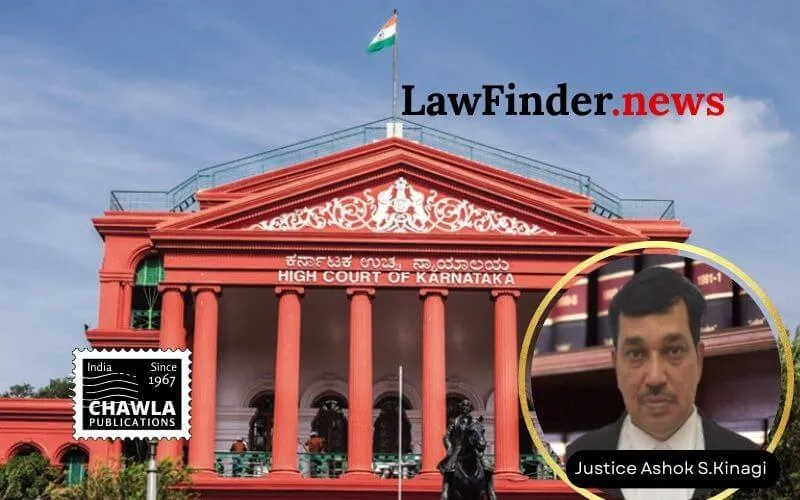
In a significant judgment, the Karnataka High Court, presided over by Justice Ashok S. Kinagi, has dismissed the writ petitions filed by the non-teaching staff of a private unaided educational institution. The case, titled "Hari Prakash S.P v. State of Karnataka," revolved around the petitioners' demand for salary parity with their counterparts in government educational institutions.
The petitioners, who are permanent non-teaching staff at a private pharmacy college affiliated with PES University, approached the court seeking a writ of mandamus. They requested the court to direct the institution to pay salaries in line with government pay scales and to provide arrears from the date of their initial appointments.
The High Court, however, ruled that the writ petitions were not maintainable under Article 226 of the Constitution of India. The judgment emphasized that private unaided educational institutions do not qualify as "State" or "instrumentality of State" under Article 12, and thus, employment disputes with such institutions do not fall within the ambit of writ jurisdiction.
The court advised the petitioners to pursue their grievances through appropriate remedies available under the Industrial Disputes Act, as these matters are outside the scope of public law. The decision also highlighted that the PES University, being a minority institution, retains freedom over its internal administrative matters, including the appointment and management of staff.
The ruling referenced several precedents set by the Supreme Court, which consistently held that private entities performing regulatory functions do not constitute a "State" under Article 12. The court underscored the existence of alternate efficacious remedies for the petitioners, which they had already availed by approaching the Assistant Labour Commissioner.
This judgment reiterates the distinct legal boundaries between public and private employment disputes, emphasizing the need for private institutional employees to seek resolution through statutory mechanisms like the Industrial Disputes Act rather than through writ petitions.
Bottom Line :
Writ petition against private unaided educational institutions for service disputes involving non-teaching staff is not maintainable under Article 226 of the Constitution. Employment contracts with private institutions lack "public law elements."
Statutory provision(s): Article 226 of the Constitution of India, Article 12 of the Constitution of India, Industrial Disputes Act, 1947, Minimum Wages Act, 1948
Hari Prakash S.P v. State of Karnataka, (Karnataka) : Law Finder Doc id # 2962119