Court Rules Police Must Assess Meaning, Context, and Mens Rea Before Registering FIRs on Speech-Related Offences; Emphasizes Protection of Reasonable, Strong-Minded Public from Hypersensitive Interpretations
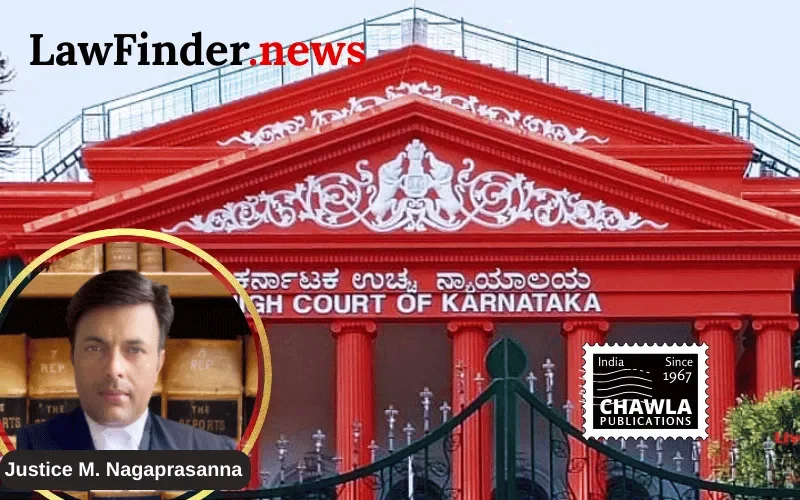
In a significant judgment delivered on October 16, 2026, the Karnataka High Court quashed a second First Information Report (FIR) registered against Sri Basanagouda R. Patil (Yatnal), a sitting Member of the Legislative Assembly (MLA), relating to a speech he delivered on the occasion of Ramanavami. The court held that the subsequent FIR, arising from the same speech incident for which an earlier FIR had already been quashed, was unsustainable and amounted to an abuse of the legal process.
Background and Facts:
The petitioner addressed a speech on April 7, 2025, which led to the registration of Crime No.80 of 2025 by Gandhi Chowk Police Station, Vijayapura. This FIR was challenged and eventually quashed by the High Court in August 2026 on the grounds that the speech did not meet the ingredients of the offences charged under Sections 196(1), 299, and 353(1) of the Bharatiya Nyaya Sanhita (BNS), 2023. Shortly after the interim relief was granted, a second FIR (Crime No.51 of 2025) was registered on April 17, 2025, at Hubballi Town Police Station concerning the same speech incident. This second FIR was also challenged, leading to the present petition.
Legal Issues and Court's Analysis:
The petitioner's counsel argued that the second FIR was registered deliberately in a different jurisdiction to circumvent the interim order granted by the court in the first petition. The opposing counsel contended that the speech caused communal disharmony and thus warranted investigation.
The court extensively analyzed the provisions under Sections 196(1), 299, and 353(1) of the BNS, 2023, which replaced Sections 153A, 295A, and 505 of the Indian Penal Code (IPC), respectively. The court emphasized that:
1. Single Incident, Single FIR Principle: Since the first FIR related to the speech had been quashed after due consideration, a second FIR on the same facts and grounds could not be sustained.
2. Interpretation of Speech Offences: Police must assess the actual meaning, context, and mens rea (intention) behind the spoken or written words before registering FIRs under these provisions. The words must be examined from the standpoint of reasonable, strong-minded, and firm individuals, not from hypersensitive or insecure perspectives.
3. Mens Rea is Essential: The court reiterated that intention to promote enmity or to outrage religious feelings is a necessary element for these offences. Mere hurt sentiments or displeasure cannot constitute an offence.
4. Freedom of Speech and Expression: The judgment highlighted the fundamental right under Article 19(1)(a) of the Constitution of India, protecting free speech. The court underscored that legitimate criticism or protest, even if offensive to some, is protected, provided it does not incite violence or hatred.
5. Preliminary Inquiry and Police Conduct: Under Section 173(3) of the Bharatiya Nagarik Suraksha Sanhita, 2023, police officers are empowered to conduct a preliminary inquiry before registering FIRs for offences punishable with imprisonment between 3 to 7 years. The police failed to adequately consider the speech's content and context before registering the second FIR.
6. Judicial Precedents: The court relied on various Supreme Court judgments, including Imran Pratapgadhi v. State of Gujarat (2026), Javed Ahmad Hajam v. State of Maharashtra (2024), Manzar Sayeed Khan v. State of Maharashtra (2007), and Patricia Mukhim v. State of Meghalaya (2021), to expound the correct legal standards for speech-related offences.
Outcome:
The court allowed the criminal petition and quashed the second FIR (Crime No.51 of 2025) pending before the JMFC I Court, Hubballi. The judgment serves as a precedent reinforcing that repeated FIRs on the same incident with no new material are liable to be quashed to prevent abuse of process. It also places a duty on police officers to carefully evaluate the substance and context of alleged speech offences, respecting constitutional freedoms and avoiding unnecessary harassment of individuals.
Significance:
This ruling clarifies the stringent standards that must be met for offences related to speech, particularly those involving religious sentiments or public harmony. It upholds the democratic values enshrined in the Constitution by protecting citizens' right to free expression while balancing reasonable restrictions. The judgment also guides law enforcement agencies on the proper approach to handling complaints involving speech, emphasizing the need for objectivity, mens rea, and context-sensitive analysis.
Bottom Line:
Bharatiya Nyaya Sanhita, 2023 - Sections 196(1), 299 and 353(1) - Second FIR on same speech incident not sustainable - Where earlier FIR arising out of same speech had already been quashed on finding that ingredients of offences were not made out, subsequent FIR on same incident was also liable to be quashed - For offences relating to speech, police must consider actual meaning, context and mens rea, and effect must be judged from standpoint of reasonable, strong-minded persons, not hypersensitive minds.
Statutory provision(s):
Bharatiya Nyaya Sanhita, 2023 Sections 196(1), 299, 353(1); Bharatiya Nagarik Suraksha Sanhita, 2023 Section 173(3); Constitution of India Article 19(1)(a)
Sri Basanagouda R. Patil (Yatnal) v. State of Karnataka, (Karnataka) : Law Finder Doc Id # 3004106