Advocate S. Rangaswamy's misconduct during sessions trial led to initial contempt action; court emphasizes legal profession's noble duties and mutual respect between judiciary and advocates.
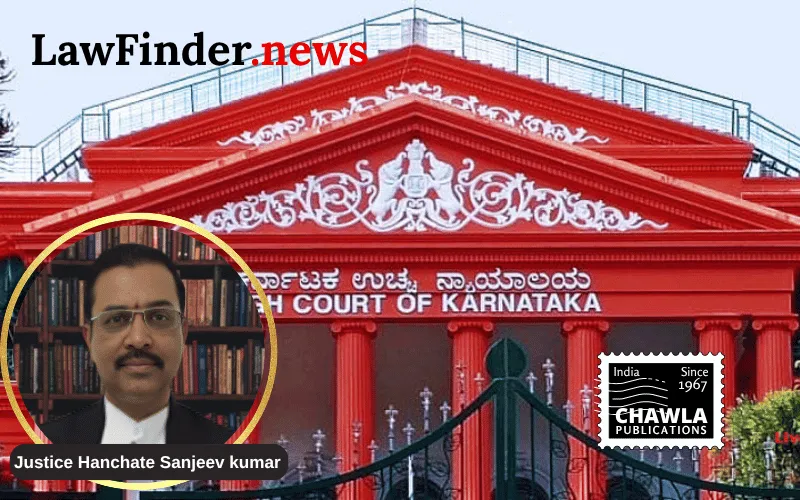
In a significant judgment dated September 1, 2026, the Karnataka High Court, presided over by Justice Hanchate Sanjeevkumar, recalled its earlier order initiating criminal contempt proceedings against Advocate S. Rangaswamy for misconduct during a sessions trial at the District Court, Koppal. The Court initially found the advocate guilty of threatening and hampering the dignity and decorum of the court, based on detailed observations made by the Sessions Judge in the case S.C.No.5/2026. However, following an apology tendered by the advocate and submissions by senior counsel, the High Court took a lenient view.
The case arose from the accused/petitioners' criminal petition seeking transfer of the sessions trial, which was dismissed by the High Court on April 16, 2026. While dismissing the petition, the Court observed that Advocate Rangaswamy had behaved in a manner derogatory to the court's dignity and decorum, including threatening the sessions court and attempting to obstruct proceedings. The Sessions Judge's order sheets contained several adverse remarks against the advocate, amounting to criminal contempt of court.
Consequently, the High Court directed the Karnataka State Bar Council to initiate disciplinary proceedings against Advocate Rangaswamy and ordered the filing of criminal complaints under Sections 186 and 228 of the Indian Penal Code, as well as corresponding provisions under the Bharatiya Nyaya Sanhita, 2023. The Court emphasized the necessity of safeguarding the dignity and independence of the judiciary and enabling presiding officers to discharge their judicial functions without intimidation or fear.
However, on Advocate Rangaswamy's request, the Court allowed him to tender an affidavit of apology. After hearing submissions from the advocate's counsel and the Additional Advocate General, and reviewing the apology affidavit, the Court accepted the apology and recalled the orders initiating contempt proceedings and criminal complaints.
The High Court imposed a symbolic fine of Rs.1,000 on Advocate Rangaswamy payable to the District Legal Services Authority, Ballary. Additionally, the advocate was directed to plant and maintain 1,000 fruit-bearing saplings on government or educational institution land as a social corrective measure, highlighting the importance of social responsibility among legal professionals.
In its comprehensive judgment, the Court reiterated the noble and solemn nature of the legal profession, drawing upon numerous Supreme Court precedents and legal principles. It underscored that advocates are officers of the court with duties towards the judiciary, clients, and society at large. The Court further emphasized the reciprocal respect between the Bench and Bar, urging judges to act impartially and maintain dignity towards advocates while expecting advocates to uphold professionalism and decorum.
The Court also reflected on the historic and constitutional role of advocates in nation-building and the administration of justice. It reminded all stakeholders that the legal profession must be practiced with honesty, dignity, and a commitment to justice, eschewing misconduct or disrespectful behavior that undermines public confidence in the judicial system.
The judgment serves as a stern reminder and a guidepost for advocates and judges alike on maintaining the integrity of the justice delivery system, preserving mutual respect, and upholding the highest standards of professional conduct.
Bottom Line:
Misconduct by an advocate leading to initiation of criminal contempt proceedings - The High Court initially imposed stringent measures but later recalled the order upon the advocate's apology, emphasizing the importance of maintaining the dignity and decorum of the court.
Statutory provision(s): Section 407 of Code of Criminal Procedure, Section 447 of Bharatiya Nagarika Suraksha Sanhita, 2023, Sections 186 and 228 of Indian Penal Code, Sections 221 and 267 of Bharatiya Nyaya Sanhita, 2023
Ravi Basavaraj v. State of Karnataka, (Karnataka) : Law Finder Doc Id # 2972601