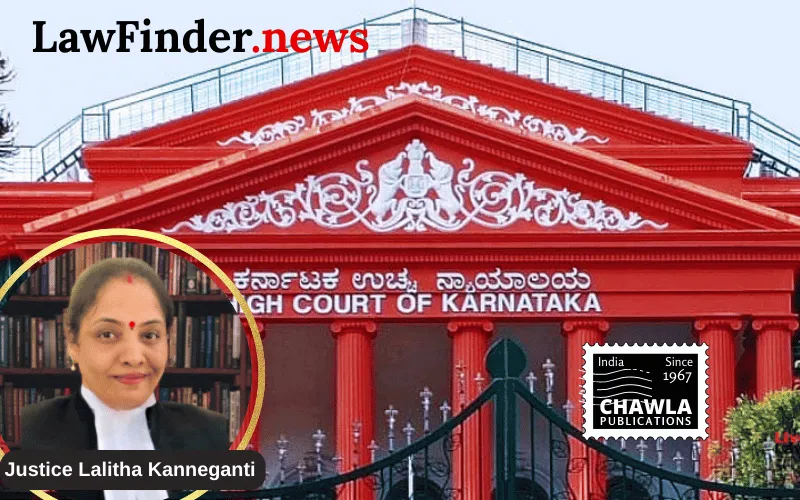
Court holds that mere MSME registration does not stop recovery proceedings; borrower must cooperate with bank and place a workable revival plan before seeking committee-based rehabilitation.
Bengaluru: The Karnataka High Court has dismissed a writ petition filed by M/s. Additive 3D and another challenging SARFAESI recovery proceedings initiated by ICICI Bank, holding that mere registration as an MSME does not automatically bar enforcement action by a secured creditor.
Justice Lalitha Kanneganti observed that the revival and rehabilitation framework for micro, small and medium enterprises is intended to support viable businesses, but borrowers seeking its protection must also cooperate with the bank and furnish the financial and operational details needed to assess whether revival is possible. The Court said a bank cannot be expected to prepare a revival proposal “in the absence of basic information from the borrower itself.”
The petitioners had sought quashing of the bank’s measures under Section 13(4) of the SARFAESI Act, 2002, and also asked for a direction to constitute a Stressed MSME Committee under the Government of India notification dated 29 May 2015. They argued that, being a registered micro enterprise, they were entitled to the statutory revival mechanism and that the bank ought to have first considered restructuring before proceeding with recovery.
The bank opposed the petition, contending that only one of the petitioners’ several loan accounts was an MSME account, while the remaining borrowings were personal in nature. It further stated that the MSME unit was not operational, the petitioners had failed to submit the required financial particulars and revival roadmap, and no concrete proposal for restarting the business had been placed before the bank or the Court.
The High Court accepted the bank’s stand. It noted that the bank had called upon the petitioners to furnish relevant documents, including details of liabilities, business projections, GST records and a roadmap for revival, but the petitioners failed to provide the necessary material. The Court also found significance in the fact that the MSME unit was admittedly not functioning and that no rejoinder had been filed to dispute the bank’s assertion on that point.
Referring to precedent, including the Supreme Court’s decision in Pro Knits, the Court reiterated that MSME protection is available where the enterprise is viable and the borrower cooperates in the revival process. However, the framework cannot be used to indefinitely stall recovery proceedings when the unit has stopped functioning and no workable plan is shown.
The Court also rejected the attempt to treat all the petitioners’ loan accounts as MSME-linked liabilities merely because one account fell within the MSME category. It held that the benefit of the MSME framework applies only to the enterprise and the specific credit facility covered by it, and not to independent personal borrowings.
Finding no illegality in the bank’s action and no ground to interfere in writ jurisdiction, the High Court dismissed the petition and closed all pending interlocutory applications. No costs were awarded.
Bottom Line :
SARFAESI Act and MSME revival framework - Mere MSME registration does not automatically bar SARFAESI proceedings - Borrower seeking benefit of revival and rehabilitation mechanism must furnish necessary financial particulars and a workable revival proposal - Where borrower failed to provide required information, unit was not functioning, and no concrete revival plan was shown, non-constitution of Stressed MSME Committee did not vitiate SARFAESI action.
Statutory provision(s): Micro, Small and Medium Enterprises Development Act, 2006 Section 9, Securitisation and Reconstruction of Financial Assets and Enforcement of Security Interest Act, 2002 Sections 13(2), 13(3A), 13(4), Constitution of India, 1950 Article 226
M/s. Additive 3D v. ICICI Bank Limited, (Karnataka) : Law Finder Doc id # 2982813