Court holds nine-year lease created after mortgage, in violation of Section 65A of the Transfer of Property Act, is not binding on secured creditor; suit dismissed as abuse of process.
The Kerala High Court has held that a lessee who claims rights under a lease created after the mortgage of a property cannot maintain a civil suit to restrain a secured creditor from taking action under the SARFAESI Act, 2002. The Court ruled that the proper remedy for such a tenant lies before the Debt Recovery Tribunal under Section 17(4A) of the Act.
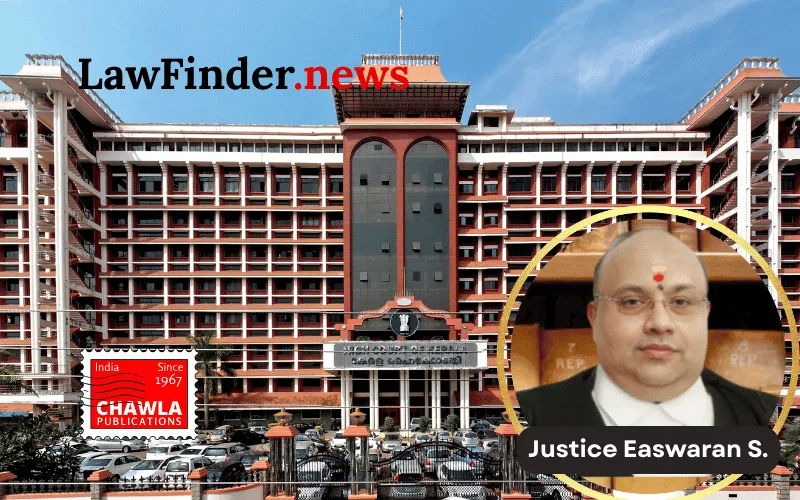
Justice Easwaran S. delivered the verdict while allowing a petition filed by IFCI Limited, the secured creditor, and setting aside the Sub Court’s order which had refused to reject the plaint.
The dispute arose after the borrower, during the subsistence of the mortgage, executed a registered lease deed in favour of the first respondent, Hotel Mythri, for a period of nine years. The secured creditor initiated SARFAESI proceedings, following which the lessee approached the Debt Recovery Tribunal by filing S.A. No. 174/2020. That application was dismissed on 5 December 2024. Despite this, the lessee later filed a civil suit seeking an injunction to prevent the secured creditor from proceeding further under SARFAESI and from evicting it from the secured asset.
The High Court found the suit to be clearly not maintainable. It noted that the SARFAESI Act, after the 2016 amendment, specifically provides a remedy to tenants under Section 17(4A), enabling them to raise their grievances before the Tribunal. Since the lessee had already invoked that remedy and suffered an adverse order, the fresh civil suit was held to be an abuse of the process of law.
The Court also rejected the trial court’s reasoning that the lease was valid merely because the mortgage deed did not expressly prohibit the creation of a lease. Referring to Section 65A of the Transfer of Property Act, the Court held that a mortgagor in possession can grant a lease only in accordance with that provision. In the case of a building lease, the duration cannot exceed three years. Since the lease in question was for nine years, it was contrary to Section 65A and therefore not binding on the mortgagee or secured creditor.
The High Court further relied on the Supreme Court’s ruling in Bajarang Shyamsunder Agarwal v. Central Bank of India, which held that a tenancy created after a mortgage but before notice under Section 13(2) must still satisfy the requirements of Section 65A.
Observing that the trial court had relied on pre-amendment law and ignored the effect of the 2016 insertion of Section 17(4A), the High Court said civil courts should be slow to entertain such suits when a statutory remedy exists. It also held that the suit was barred by the principles of res judicata, since the Tribunal had already dismissed the lessee’s securitisation application.
Accordingly, the High Court set aside the Sub Court’s order, allowed the application under Order VII Rule 11 CPC, rejected the plaint, and terminated all further proceedings in the suit.
Bottom Line :
SARFAESI Act, 2002 - Lessee claiming rights under lease created after mortgage cannot maintain civil suit to restrain secured creditor from taking SARFAESI measures - Remedy of tenant/lessee lies under Section 17(4A) before Debt Recovery Tribunal - Lease of building for nine years created by mortgagor contrary to Section 65A of Transfer of Property Act is not binding on mortgagee - Suit after dismissal of securitisation application is abuse of process and barred.
Statutory provision(s): Section 17(4A), Section 14, Section 35 of SARFAESI Act, 2002, Section 65A of Transfer of Property Act, 1882, Order VII Rule 11 of Code of Civil Procedure, 1908