Court directs inquiry under Registration of Electors Rules, 1960 to precede any criminal probe under Bharatiya Nyaya Sanhita, 2023 in voter deletion case targeting Muslim community
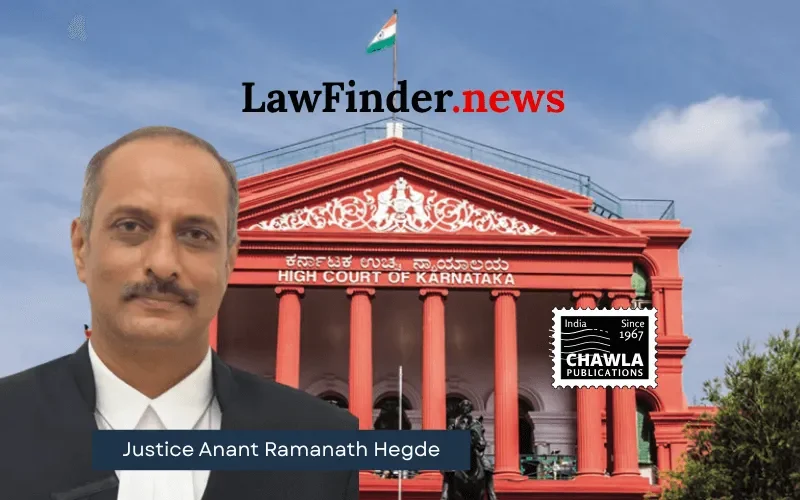
In a significant judgment dated 17th November 2026, the Karnataka High Court, presided over by Justice Anant Ramanath Hegde, stayed the ongoing police investigation concerning allegations of filing false information in Form No.7 under the Registration of Electors Rules, 1960. The case involves accusations against U.H. Lokesh and others for allegedly submitting false declarations aimed at deleting the names of eligible Muslim voters from the electoral rolls in Byatagudda Village, Kodagu district.
The complaint, lodged on 4th October 2026, alleges that the petitioners, including local political booth agents, submitted Form No.7 with incorrect information intending to curtail the voting rights of the complainant and his family, who belong to the Muslim community. The FIR registered under Crime No.170/2026 invoked Sections 190, 192, 353(1), 353(2), and 61(2) of the Bharatiya Nyaya Sanhita, 2023 ("BNS"), which relate to criminal offences of false evidence, public servant misconduct, and other procedural violations.
The State Public Prosecutor argued that the allegations disclosed cognizable offences and investigation could not be stalled, emphasizing the constitutional importance of voting rights. The petitioners' counsel countered that the filing of Form No.7 by Booth Level Agents is lawful under the statutory scheme and that any alleged discrepancies must first be examined through the statutory inquiry mechanism under the Registration of Electors Rules, 1960 ("Rules, 1960").
The Court undertook a detailed analysis of the statutory framework governing electoral roll revisions, notably Rules 5 to 23 of the Registration of Electors Rules, 1960, which lay down the procedure for claims and objections regarding voters' names. Importantly, objections to entries, including deletions, are to be filed in Form No.7 by persons already included in the electoral roll. The Rules mandate a process involving the display of claims and objections, an opportunity for inquiry, and adjudication by the Registration Officer, including statutory rights of appeal.
Referring to the constitutional sanctity of the right to vote as affirmed by the Supreme Court in recent judgments such as Anoop Baranwal v. Union of India (2023) and Bhim Rao Baswanth Rao Patil v. K. Madan Mohan Rao (2023), the Court acknowledged the gravity of allegations of communal targeting and electoral manipulation. However, it emphasized that the comprehensive statutory scheme under the Representation of the People Act, 1950 and the Rules, 1960 provides a specialized mechanism for scrutiny of such claims and objections, including penal provisions under Section 31 of the Representation of the People Act for false declarations.
The Court observed that the inquiry under the Rules, 1960 must be completed first to ascertain the correctness of the information furnished in Form No.7. Only if the Registration Officer's findings indicate falsehoods attracting penal consequences may further criminal investigation under the BNS be warranted. Therefore, the Court found no justification at this stage for permitting investigation into offences under the BNS sections cited.
Accordingly, the Court ordered:
1. Stay of further investigation into FIR No.170/2026 pending completion of the inquiry under the Rules, 1960.
2. The Election Commission of India (Respondent No.6) was directed to provide materials relating to decisions on the Forms No.7 filed by the petitioners.
3. Reissuance of notice to the complainant (Respondent No.5), who is also permitted to seek modification or vacation of the interim stay.
4. Respondents No.1 to 4 are also permitted to apply for modification or vacating the interim order upon receipt of records from the Election Commission.
This judgment underscores the judiciary's cautious approach to electoral disputes involving allegations of false data in voter rolls, reinforcing the primacy of statutory safeguards and inquiry procedures before criminal proceedings are initiated. It also highlights the constitutional protection of voting rights and the need to balance prompt investigation with procedural fairness.
Bottom Line:
Filing of incorrect or false information in Form No.7 under the Registration of Electors Rules, 1960, aimed at deletion of eligible voters' names, requires inquiry under the Rules, 1960, before initiating investigation under Bharatiya Nyaya Sanhita, 2023 (BNS). Investigation into alleged offences under BNS is stayed until the inquiry process is completed.
Statutory provision(s):
Representation of the People Act, 1950 Section 31; Registration of Electors Rules, 1960 Rules 5 to 23 (notably Rules 15, 16, 17, 18, 19, 20, 21, 21A, 22, 23); Bharatiya Nyaya Sanhita, 2023 Sections 190, 192, 353(1), 353(2), 61(2)
U. H. Lokesh v. State of Karnataka, (Karnataka) : Law Finder Doc Id # 3129626