Court directs Election Commission to review disputed voter deletion applications amidst allegations of forgery and targeting of minority communities
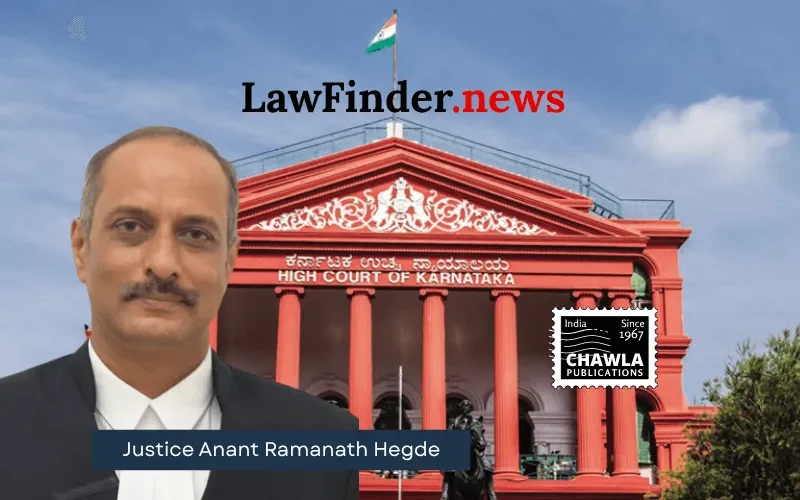
In a significant judgment dated November 17, 2026, the Karnataka High Court, presided over by Justice Anant Ramanath Hegde, has granted an interim stay on the investigation related to the filing of thousands of Form No.7 voter deletion applications during the Special Intensive Revision exercise of electoral rolls in Bengaluru. The case arose from a complaint filed by a former MLA alleging that the petitioners, identified as booth level agents affiliated with the Bharatiya Janata Party, had submitted a bulk number of Form No.7 applications to delete voters predominantly belonging to religious minority communities in multiple wards of Bengaluru.
The complaint contended that a total of 5,698 Form No.7 applications were filed, notably in wards such as Pattabhiramanagar, Byramandra, Jayanagar East, Gurrapanapalya, and JP Nagar among others. It was alleged that these applications were part of a deliberate effort to manipulate the electoral rolls by submitting false information, forged signatures, and impersonation to disenfranchise loyal voters of a particular political party.
The State had initially sought to proceed with investigation citing offences under the newly enacted Bharatiya Nyaya Sanhita (BNS), 2023 including Sections 61 (criminal conspiracy), 217 (false information with intent to cause public servant to misuse lawful power), 319 (cheating by impersonation), 336 (forgery), and 340 (using forged documents), alongside provisions from the Representation of the People Act, 1950 and the Registration of Electors Rules, 1960.
However, the High Court emphasized the comprehensive statutory framework governing electoral roll revision, highlighting the procedural safeguards under the Registration of Electors Rules, 1960. The Court noted that Form No.7 objections are filed by persons whose names already appear on the electoral roll and that the Registration Officer is empowered to scrutinize the validity of such claims through inquiries and hearings before accepting or rejecting them.
Importantly, the Court observed that the petitioners did not disown their signatures on the Form No.7 applications, thereby negating prima facie allegations of forgery at this stage. The Court also pointed out that no complaint was filed by any voter whose name was sought to be deleted, and the signatures alleged to be forged did not belong to the complainant or the affected voters. In view of this, the Court held that investigation into forgery and impersonation offences under Sections 336 and 340 BNS was not justified at this juncture.
Further, the Court referenced Section 217 of the BNS, which requires a complaint to be filed by a public servant concerned before cognizance of such offences. Since the complaint was not filed by the relevant public servant and no decision had been taken by the Registration Officer on the Forms, the Court held that investigation under this provision was impermissible without fulfilling statutory requirements.
The Court underscored the constitutional importance of the right to vote, citing various Supreme Court precedents that protect voter rights and affirm the legality of the Special Intensive Revision exercise. It directed the Election Commission of India to provide materials relating to the decision on the disputed Form No.7 applications and stayed further investigation until such decisions are taken.
The Court also permitted the complainant and other respondents to file applications to modify or vacate the interim order based on the Election Commission's findings. This balanced approach aims to ensure that statutory procedures are followed, false deletions are prevented, and any genuine grievances are addressed through proper legal channels.
This ruling reinforces the need for strict adherence to electoral laws and procedures while safeguarding the democratic right to vote against potential misuse of legal forms. It also clarifies the threshold for initiating criminal investigations in electoral disputes, emphasizing the preliminary role of electoral officers before judicial or police action.
Bottom Line:
Filing false voter deletion forms (Form No.7) under the Representation of the People Act, 1950 and Registration of Electors Rules, 1960 - Allegations of misuse, false information, forgery, and impersonation - Interim stay on investigation directed till Election Commission's decision on the forms.
Statutory provision(s):
Bharatiya Nyaya Sanhita, 2023 Sections 61, 217, 319, 336, 340; Representation of the People Act, 1950 Sections 31, 195; Registration of Electors Rules, 1960 Rules 15-23
Ramakrishna v. State of Karnataka, (Karnataka) : Law Finder Doc Id # 3129625