Court Rules Alleged Possession of Mobile Phone in Cancelled NEET Exam Cannot Overshadow Merit Earned in Valid Re-Examination; Directs NTA to Release Result and Maintain Admission
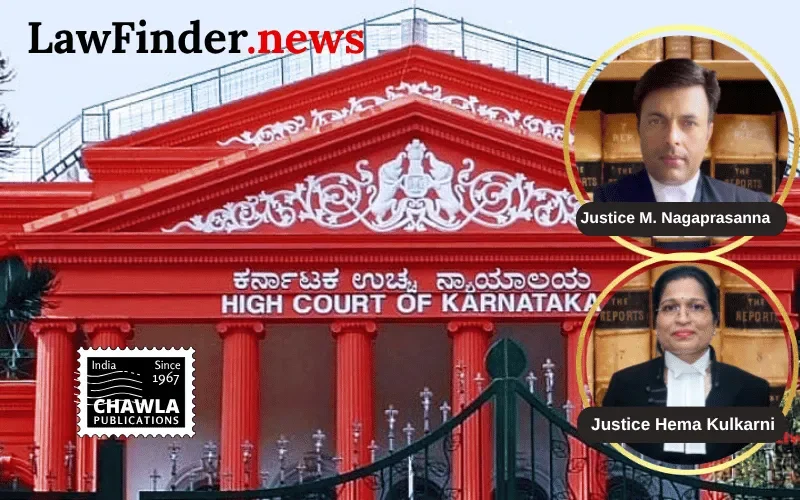
In a landmark judgment delivered on November 19, 2026, the Karnataka High Court (Dharwad Bench) decisively ruled in favor of Ms. Anushka Basavaraj Maidur, a medical aspirant whose NEET (UG) 2026 re-examination results were withheld by the National Testing Agency (NTA) due to an allegation of possessing a mobile phone during the earlier scrapped examination. The Court held that an infraction alleged in a cancelled examination cannot be allowed to overshadow the merit demonstrated by a candidate in a subsequent, independently conducted re-examination.
The controversy arose from the cancellation of the NEET (UG) examination conducted on May 3, 2026, following widespread leakage of question papers and malpractices. The entire examination was declared void by the NTA, which ordered a re-examination on June 21, 2026. Ms. Maidur appeared in the re-examination under a fresh roll number and secured an impressive score of 570 out of 620 marks, earning a seat at the prestigious Belagavi Institute of Medical Sciences.
However, shortly before the re-examination, the NTA issued a show cause notice alleging that the petitioner had carried a mobile phone into the cancelled May 3 exam venue. Despite the examination being scrapped and no unfair advantage gained from the device, the NTA withheld her result of the valid re-examination, citing the alleged violation in the earlier exam. The petitioner’s repeated requests for result declaration were ignored, prompting her to approach the High Court.
The Court examined the timeline and the facts meticulously. It noted that the petitioner was permitted to sit for the re-examination by the NTA’s own fresh admit card, and no allegations of malpractice arose from the re-examination itself. The show cause notice was issued at a time overlapping with her preparation for the re-examination and even contained a typographical error that had to be corrected by the NTA. The petitioner’s defense was that carrying the phone was an inadvertent lapse due to examination anxiety, without any usage or intention to cheat.
Importantly, the Court emphasized that the essence of unfair means in examinations is to prevent candidates from gaining an unfair advantage over others. Since the May 3 exam was cancelled and did not contribute to the merit or ranking, the alleged infraction could not form a basis for penalizing the petitioner’s performance in the re-examination. The Court underscored the constitutional principles of fairness and equal opportunity enshrined under Articles 14 and 21, affirming that merit obtained in a valid examination cannot be negated by procedural technicalities tied to a voided exam.
Referencing authoritative Supreme Court judgments including Siddhant Mahajan v. State of Rajasthan (2025) and Christian Medical College Vellore Association v. Union of India (2020), the Court reiterated that NEET’s primary objective is to uphold merit and ensure a level playing field in medical admissions. It held that while examination discipline is critical, it cannot be applied in a rigid manner that defeats merit and punishes inadvertent lapses disproportionately.
The High Court quashed the show cause notice and the remark “RESULT WITHHELD/R/W” on the petitioner’s scorecard, directed the NTA to issue her marks card without any adverse observation, and upheld her admission to the medical college. The Court also allowed her to participate in the ongoing medical counseling process, emphasizing that interim relief was granted to preserve her academic future without prejudging the final outcome.
This judgment sets a significant precedent affirming that administrative actions in examination contexts must be reasonable, just, and proportionate. It clarifies that penalties for alleged unfair means must be linked to actual unfair advantage obtained and cannot mechanically extend to subsequent independent assessments or overshadow demonstrated merit. The decision protects the rights of students against procedural overreach and reinforces the constitutional mandate of fairness and meritocracy in professional education.
Bottom Line:
Education Law - Withholding of results in re-examination due to an alleged infraction in a scrapped examination - Examining body cannot mechanically impose penalties without determining culpability or its impact on subsequent independent examinations.
Statutory provision(s):
Public Examinations (Prevention of Unfair Means) Act, 2024; Articles 14 and 21 of the Constitution of India; NEET (UG) 2026 Information Bulletin provisions on Unfair Means Practices.