Court holds disciplinary action was vitiated by lack of charge memo, vague notice, and violation of natural justice; directs separate examination for affected students.
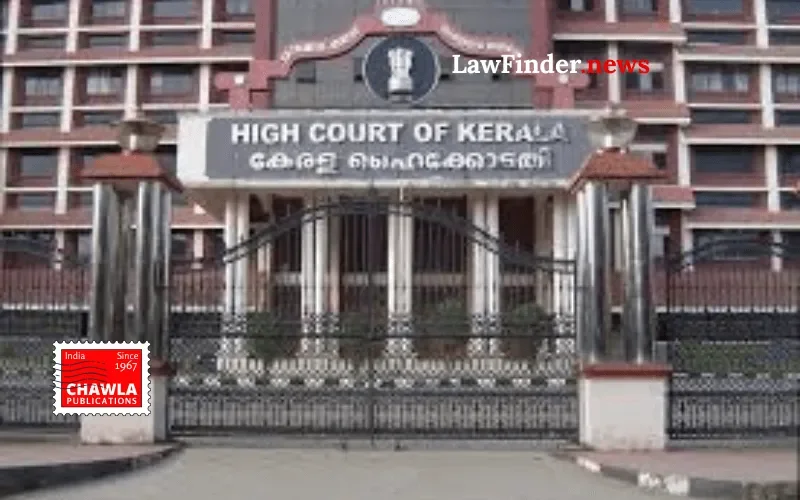
The Kerala High Court has set aside the suspension and disciplinary proceedings initiated by Sree Sankaracharya University of Sanskrit against 16 students over an alleged incident during a Syndicate meeting on August 13, 2026, holding that the university failed to follow the principles of natural justice.
Justice P.V. Kunhikrishnan allowed the writ petition filed by Archana P.S. and others, observing that the students were suspended and proceeded against without being given a proper memo of charges, clear allegations, or an effective opportunity to rebut the evidence against them. The Court found that the enquiry process was fundamentally flawed and could not be sustained.
According to the students, they had been protesting over academic and administrative grievances, including vacant lecturer posts, lack of printed certificates, infrastructure issues, and delayed fellowship disbursal. They claimed that when the Vice Chancellor visited the campus, they sought an opportunity to present their concerns, but were not heard. A scuffle allegedly followed, leading to police cases and later university action.
The university suspended the students on September 1, 2026, and later constituted an enquiry committee. The students challenged the suspension, the enquiry report, and the final disciplinary orders, arguing that the entire process was arbitrary and illegal.
The High Court first rejected the university’s contention that the petitioners had an alternative remedy under the Students Grievance Redressal Regulations, 2023. The Court held that the grievance redressal mechanism was not an efficacious remedy in the facts of the case, especially since the impugned action itself was alleged to be illegal and violative of natural justice. The Court also noted that the SGRC and Ombudsperson were university-appointed bodies, which made them unsuitable forums in a dispute where the university itself was the authority taking action.
On merits, the Court held that while the university did have the power to maintain discipline under the Sree Sankaracharya University of Sanskrit Act, 1994 and the Statutes, 1997, the procedure adopted in this case was unsustainable. The suspension order and enquiry notice did not clearly specify the allegations. No charge memo was issued. Witness statements were recorded without the students being given a fair chance to cross-examine or rebut them. The enquiry report was also found to be a unilateral exercise, lacking proper discussion of evidence and reasons.
Referring to earlier Supreme Court and High Court precedents, the Court reiterated that disciplinary enquiries affecting students’ careers must be conducted fairly, transparently, and in accordance with natural justice. The Court held that the enquiry report was not a speaking order and that the consequential punishment based on such a report could not stand.
Taking note of the university’s undertaking before the Supreme Court that a separate examination would be held if the High Court passed a favourable order, the Court directed the university to conduct a fresh examination for petitioner nos. 1, 7, 8, 9, 11, 12, 13, 14, 15 and 16 within six weeks. It also directed that the petitioners be allowed to enter the campus and attend classes forthwith.
At the same time, the Court clarified that the university would be free to initiate fresh disciplinary proceedings, if so advised, but without suspending the students again pending enquiry. The Court further directed that if any fresh punishment is imposed, the earlier 84-day suspension period must be taken into account.
Bottom Line:
Students' rights - University suspension orders and disciplinary actions must adhere to principles of natural justice, including providing clear allegations, fair hearing, and the opportunity to rebut evidence.
Statutory provision(s): Article 226 of the Constitution of India, Section 7(xix) and (xxvi) of the Sree Sankaracharya University of Sanskrit Act, 1994, Section 14(2)(t) and (u) of the Sree Sankaracharya University of Sanskrit Act, 1994, Section 41(1)(d) of the Sree Sankaracharya University of Sanskrit Act, 1994, Statute 3(xxii) of the Sree Sankaracharya University of Sanskrit Statutes, 1997, Sree Sankaracharya University of Sanskrit (Redressal of Grievances of Students) Regulations, 2023
Archana P.S. v. Sri Sankaracharya University of Sanskrit, (Kerala) : Law Finder Doc id # 3253676