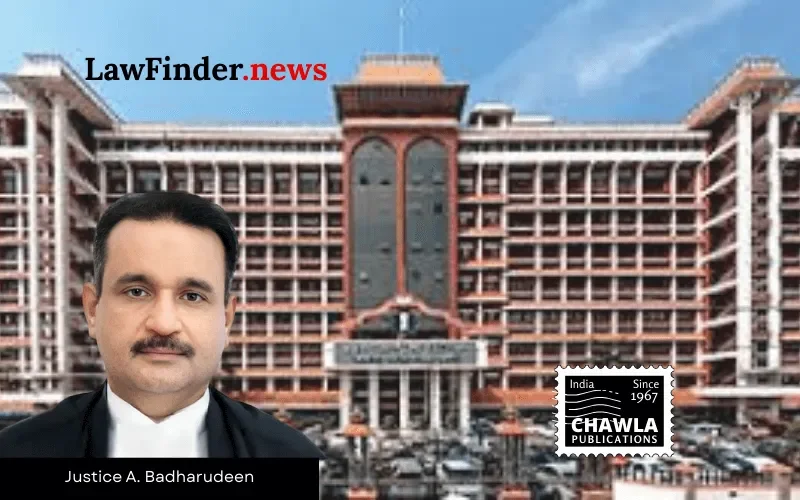
Court holds issuance of cheque towards a time-barred debt amounts to acknowledgment and revival of liability; acquittal on limitation ground set aside with accused sentenced to imprisonment and fine.
In a significant ruling delivered on October 8, 2026, the Kerala High Court overturned the acquittal of an accused in a cheque bounce case under Section 138 of the Negotiable Instruments Act, 1881. The Court emphasized that issuance of a cheque towards repayment of a time-barred debt is not only permissible but constitutes an acknowledgment and revival of the liability, thus attracting penal consequences under the Act.
The case involved G. Sanil Kumar (complainant) and Sujith (first respondent/accused). The complainant alleged that the accused had borrowed Rs.9,30,230/- through various transactions during 2011-2012 and issued a cheque dated July 6, 2015, to repay the sum. Upon presentation, the cheque was dishonoured due to insufficient funds. Despite issuance of statutory demand notice, the accused failed to make payment, leading to prosecution under Section 138 NI Act.
At the trial before the Judicial First Class Magistrate Court, Varkkala, the accused was acquitted on the sole ground that the debt was time-barred, and hence, not legally enforceable. However, the High Court found this conclusion erroneous. Drawing upon settled legal principles and authoritative precedents, including the Division Bench decision in *Ramakrishnan v. Parthasaradhy* (2003) and Supreme Court rulings such as *Hymavathi K. v. State of Andhra Pradesh* (2023), the Court held that issuance of a cheque against a time-barred debt revives the liability and attracts penal action upon dishonour.
The Court noted that the trial court had accepted the transaction, cheque execution, dishonour, and non-payment despite statutory notice, establishing the ingredients of the offence. The only error was in treating the underlying debt as barred by limitation, which the High Court ruled as immaterial given the revival through cheque issuance.
Consequently, the High Court set aside the acquittal and convicted the accused under Section 138 of the NI Act. The accused was sentenced to simple imprisonment until the rising of the Court and fined Rs.14,00,000/-. Of the fine, Rs.13,50,000/- is to be paid as compensation to the complainant under Section 357(1)(b) of the Code of Criminal Procedure, with the balance Rs.50,000/- directed to the State Exchequer. Failure to pay the fine will entail default imprisonment for six months.
The accused has been directed to appear before the Magistrate Court, Varkkala, on October 31, 2026, to undergo the sentence. The judgment reinforces the legal position that a cheque issued to repay a barred debt is a fresh acknowledgment, thereby sustaining prosecution under Section 138 even if the original debt is time-barred.
Bottom Line:
Negotiable Instruments Act - Cheque issued towards time-barred debt amounts to acknowledgment/revival of liability - Dishonour of such cheque can still attract Section 138 of the NI Act - Acquittal solely on ground that debt was time-barred held erroneous.
Statutory provision(s):
Section 138 of the Negotiable Instruments Act, 1881; Section 357(1)(b) of the Code of Criminal Procedure, 1973
G. Sanil Kumar v. Sujith, (Kerala) : Law Finder Doc Id # 2994780