Court sets aside Maintenance Tribunal order directing daughter-in-law to pay monthly maintenance, clarifying statutory definitions exclude daughter-in-law unless senior citizen is childless.
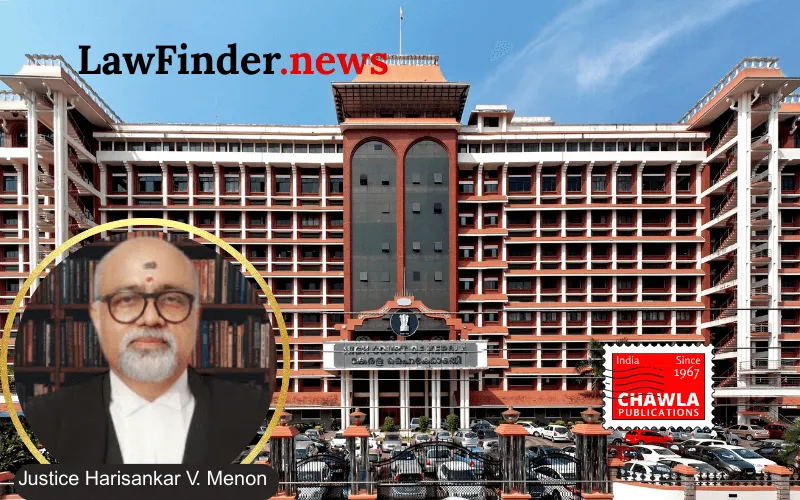
In a significant judgment delivered on September 8, 2026, the Kerala High Court, through Justice Harisankar V. Menon, ruled in favor of a daughter-in-law, Hajara, who challenged an order by the Maintenance Tribunal directing her to pay monthly maintenance to her mother-in-law under the Maintenance and Welfare of Parents and Senior Citizens Act, 2007.
The case arose after the petitioner's husband, Abdulla, son of the 2nd respondent (the senior citizen mother), passed away. Despite the mother-in-law having other living children, she initiated maintenance proceedings solely against her daughter-in-law. The Maintenance Tribunal had ordered Hajara to pay Rs.10,000 per month to the mother-in-law, relying partly on a settlement deed executed by the mother-in-law granting the petitioner certain property rights with reserved life interest.
On appeal, the High Court scrutinized whether the daughter-in-law could be held liable for maintenance under the Act. The Court observed that Section 9 of the Act permits maintenance orders only against "children or relatives" of the senior citizen. The definitions under Sections 2(a) and 2(g) clarify that "children" include sons, daughters, grandsons and granddaughters, excluding minors, while "relatives" include legal heirs of a childless senior citizen who would inherit the property.
Importantly, the Court noted that the definition does not include a daughter-in-law as a "child" or "relative" for the purpose of maintenance obligations if the senior citizen has other children. Since the mother-in-law in this case had multiple children, the daughter-in-law was not legally obligated to maintain her under the Act.
Further, the Court pointed out that the mother-in-law resided with one of her sons, who was willing to maintain her, and the other children were financially capable of supporting her. The Court found no justification for singling out the daughter-in-law for maintenance.
Accordingly, the Kerala High Court set aside the Maintenance Tribunal's order, holding that the Tribunal had no authority to direct maintenance from the daughter-in-law in such circumstances. However, the Court noted that since the petitioner had already been making payments as per the Tribunal's order, the mother-in-law was not required to refund the amounts paid.
This judgment provides clarity on the scope of maintenance liability under the Maintenance and Welfare of Parents and Senior Citizens Act, 2007, emphasizing that daughters-in-law are excluded from maintenance obligations when other legal heirs are available to support the senior citizen.
Bottom Line:
Under the Maintenance and Welfare of Parents and Senior Citizens Act, 2007, a daughter-in-law is not included within the definition of "children" or "relative" for the purpose of maintenance obligations, unless the senior citizen is childless and the daughter-in-law stands to inherit the property.
Statutory provision(s): Maintenance and Welfare of Parents and Senior Citizens Act, 2007 Sections 2(a), 2(g), 9
Hajara v. Maintenance Tribunal, (Kerala) : Law Finder Doc Id # 2977644