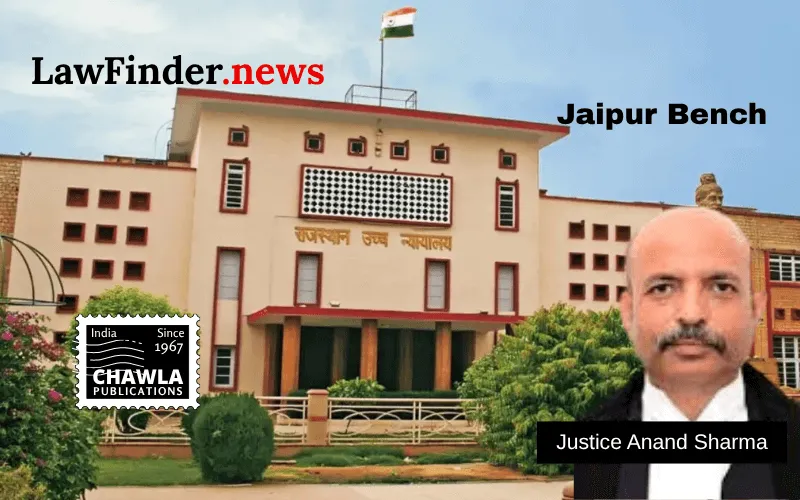
Court Upholds Constitutional Bar Under Article 243-ZG, Rejects Petition Challenging Deletion of Voter Name During Election Process
In a significant ruling on September 3, 2026, the Rajasthan High Court (Jaipur Bench), presided over by Justice Anoop Kumar Dhand, dismissed a writ petition filed by Kuldeep Kumar challenging the deletion of his name from the voter list for the Nagar Palika General Elections, 2026. The Court held that once the election process has commenced and the election schedule is notified by the State Election Commission, courts are constitutionally barred from interfering in election matters under Article 243-ZG of the Constitution of India.
Kuldeep Kumar contended that his name was removed from the voter list dated August 28 and August 31, 2026, without any notice or opportunity of hearing, thereby violating principles of natural justice. He sought quashing of the impugned voter lists and issuance of a revised list including his and other persons' names.
However, the Court emphasized the binding precedent set by the Supreme Court in landmark cases such as N.P. Ponnuswami v. Returning Officer (1952) and Mohinder Singh Gill v. Chief Election Commissioner (1978), which establish that the High Courts have no jurisdiction to entertain writ petitions challenging any part of the election process once the election program is declared by the Election Commission. The Court reiterated that the Constitution under Article 243-ZG expressly bars judicial interference during the election period to avoid disruption of the electoral process.
Justice Dhand noted that the election schedule for the Nagar Palika General Elections had been officially notified, with the last date for filing nominations on July 31, 2026, and the entire process scheduled between August 27 and September 29, 2026. Given that the election process had already commenced, the Court found itself constrained to reject the petition.
The judgment further clarified that while principles of natural justice require notice and opportunity before deletion of a name from the voter list, such grievances must be addressed through appropriate election petitions after the completion of elections, and not during the ongoing election process.
This ruling underscores the constitutional balance between protecting electoral integrity and ensuring timely conduct of elections without judicial delays. It reaffirms the exclusive jurisdiction of election tribunals to adjudicate electoral disputes post-election, preserving the sanctity and smooth progression of democratic processes.
Bottom Line:
Judicial interference in electoral process - Once election process is initiated and election program is declared by the Election Commission, courts cannot interfere under Article 226 of the Constitution due to the bar under Article 243-ZG of the Constitution of India.
Statutory provision(s):
Article 243-ZG of the Constitution of India, Article 226 of the Constitution of India, Article 329(b) of the Constitution of India, Section 80 of the Representation of the People Act, 1951
Kuldeep Kumar v. State of Rajasthan, (Rajasthan)(Jaipur Bench) : Law Finder Doc Id # 2977651