Court validates customary divorce under Madras Marumakkattayam Act, enabling daughter's pension rights
In a significant judgment, the Kerala High Court has upheld the right of Smt. Saraswati Saraswati to receive a family pension following the death of her mother. The court validated the customary divorce agreement executed under the Madras Marumakkattayam Act, 1932, prior to its repeal, affirming its statutory backing through Section 29(2) of the Hindu Marriage Act, 1955. This decision came in the case of Union of India and others versus Smt. Saraswati Saraswati.
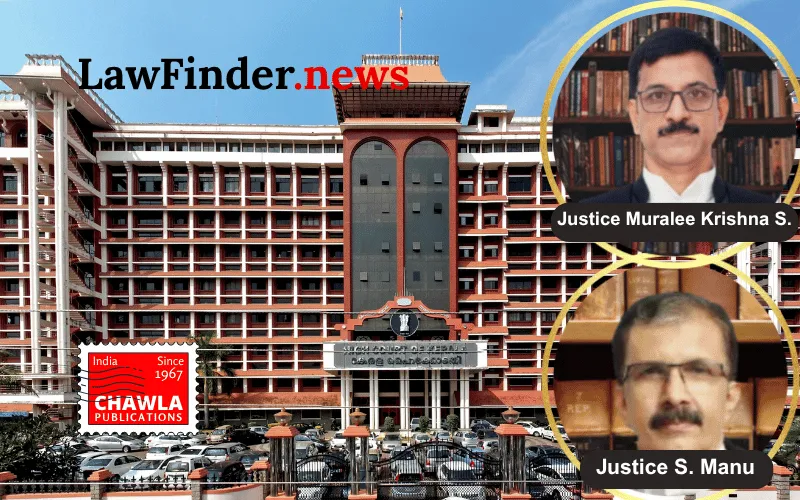
The court, comprising Justices S. Manu and Muralee Krishna S., dismissed the writ petition filed by the Union of India, challenging the Armed Forces Tribunal's order that granted the pension claim to Saraswati. The Tribunal had directed the issuance of a Pension Payment Order (PPO) for Saraswati, recognizing her as entitled to the family pension from the date of her mother’s demise.
The case revolved around Saraswati, the daughter of late N.K.E. Krishnan, an ex-serviceman. Following the death of her father, her mother received a family pension until her own death in 2015. Saraswati, citing financial hardship and customary divorce from an early marriage, applied for the continuation of the family pension. Her initial application was rejected, leading her to seek legal recourse.
Central to the court's decision was the recognition of the customary divorce agreement executed in 1974 between Saraswati and her then-husband, Elancherry Raghavan. This agreement was executed according to the customs of the Thiyya community, which was acknowledged to have statutory backing under the Madras Marumakkattayam Act. The court emphasized that such customary practices, when supported by statutory provisions, remain valid under Section 29(2) of the Hindu Marriage Act, even post the repeal of the original act by the Kerala Joint Hindu Family System (Abolition) Act, 1975.
The High Court highlighted that the customary practice of dissolution of marriage among the Thiyya community was not disputed by the petitioners. Furthermore, it noted that the subsequent formal decree of divorce obtained by Saraswati from a Family Court in 2018 was only pursued due to administrative insistence on a court-issued decree, despite the existence of the customary divorce agreement.
The court also addressed the petitioners' suppression of material facts, including their failure to disclose previous court undertakings and judgments. However, it refrained from basing its dismissal solely on these grounds, citing sufficient merit in Saraswati's claim.
This judgment reiterates the legal acceptance of customary practices under specific statutory frameworks and underscores the importance of recognizing such rights in the context of pension entitlements. The court's decision marks a crucial affirmation of traditional practices in modern legal adjudication.
Bottom line:-
A daughter's claim for family pension upheld based on the validity of a customary divorce agreement executed under the Madras Marumakkattayam Act, 1932, prior to its repeal, and supported by Section 29(2) of the Hindu Marriage Act, 1955.
Statutory provision(s): Article 226 of the Constitution of India, Madras Marumakkattayam Act, 1932, Hindu Marriage Act, 1955 (Section 29(2)), Armed Forces Tribunal Act, 2007, Kerala Joint Hindu Family System (Abolition) Act, 1975, Contempt of Courts Act, 1971
Union of India v. Smt Saraswati Saraswati, (Kerala)(DB) : Law Finder Doc id # 2935855