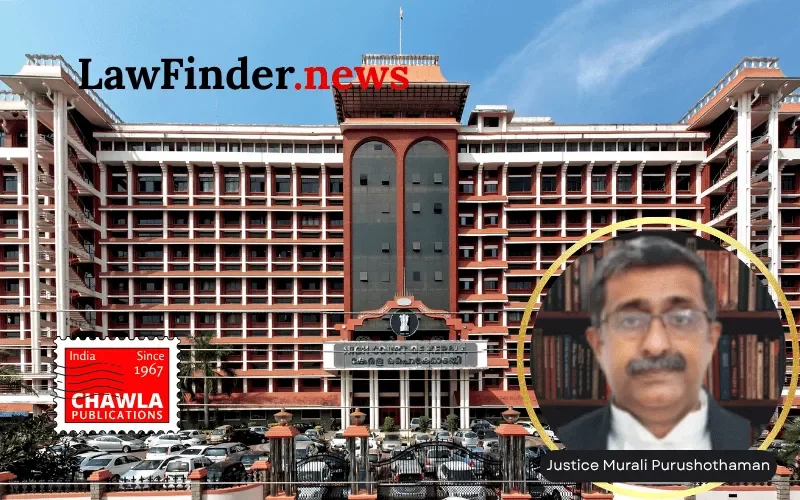
Court rules police cannot unilaterally curtail bar hotel operations beyond 11 p.m. without legal basis; noise and public order concerns must align with statutory procedures
In a landmark judgment dated November 10, 2026, the Kerala High Court, led by Justice Murali Purushothaman, clarified the scope of police authority in regulating the operating hours and entertainment activities of five-star classified FL-3 licensed bar hotels, specifically addressing restrictions on DJ parties and extended hours of operation.
The case arose when Mahadevan, the licensee of a five-star FL-3 bar hotel in Ernakulam, challenged police notices that restricted the hotel's operations beyond midnight and banned DJ parties after 11 p.m., despite the hotel having official permission to operate till 3 a.m. under the Government of Kerala's Foreign Liquor (Amendment) Rules, 2026. The petitioner had paid an additional annual rental of Rs. 5,00,000 to avail the extended operating hours aimed at promoting MICE tourism and international conferences.
The police, citing concerns over noise pollution, public order, and incidents of narcotic use and violence allegedly linked to late-night DJ parties, issued multiple notices curtailing the hotel's functioning hours and prohibiting DJ events after 11 p.m. An FIR was also registered against the petitioner for violating these restrictions.
The Court extensively examined the interplay between the petitioner's fundamental rights under Articles 19(1)(g) (right to carry on business) and 21 (right to life including the right to live free from noise pollution) of the Constitution, the Kerala Police Act, 2011, the Noise Pollution (Regulation and Control) Rules, 2000, and the Foreign Liquor Rules.
Key findings and directions of the Court include:
1. Entitlement to Extended Hours: The Court upheld that the petitioner's hotel is entitled to operate for an additional three hours beyond midnight, i.e., until 3 a.m., based on the Government notification and payment of the additional fee, except on statutory dry days.
2. Limits of Police Powers: The Court held that police powers under Sections 77 to 79 of the Kerala Police Act allow regulation of noise and public assemblies but do not empower the police to impose indefinite or blanket prohibitions on extended operating hours granted by the Government. Any such restrictions must be supported by sufficient grounds and comply with statutory procedures.
3. Noise Pollution Regulation: The Court recognized that high-decibel music at DJ parties during night hours must comply with the Noise Pollution Rules, which restrict the use of loudspeakers and sound amplifiers after 10 p.m. in open or public places, with certain exceptions. Police may issue preventive directions under these rules if violations occur, but such actions require due process.
4. Public Order Concerns: While acknowledging police concerns regarding drug abuse, violent disturbances, and large crowds at DJ parties, the Court noted the lack of a rational basis for restricting DJ parties solely on the extension of operating hours beyond 11 p.m. The possibility of criminal activity does not justify curtailing the petitioner's business rights without specific evidence or legal sanction.
5. Role of Police vs. Government: The Court clarified that it is the Government's prerogative to frame rules prescribing exceptions or conditions on extended operating hours under the Foreign Liquor Rules. Until such rules exist, the police cannot unilaterally restrict lawful extended operations.
6. Temporary Nature of Police Notifications: Orders under Section 79 of the Kerala Police Act regulating public assemblies are valid only for a maximum of 15 days and require government extension thereafter. Permanent restrictions without such extensions are invalid.
The Court set aside the police notices restricting the petitioner's hotel operations and DJ parties, directing that the hotel be permitted to function as per the Government's amendment to the Foreign Liquor Rules.
This judgment balances the constitutional right to carry on business and the right to life with dignity, including living free from noise pollution, with the state's duty to maintain public order and safety. It underscores that police intervention must be proportionate, procedurally valid, and based on concrete grounds rather than mere apprehension.
The ruling also calls for the Government to enact clear regulations governing extended hours and entertainment activities in licensed premises to harmonize commercial interests with public peace.
Bottom Line:
The Police cannot impose restrictions on DJ parties or extended operating hours of FL-3 licensed bar hotels beyond 11:00 p.m. without sufficient justification under the Kerala Police Act or Foreign Liquor Rules. Noise pollution and public order concerns must be regulated within the framework of law, and any restriction must comply with prescribed procedures.
Statutory provision(s): Article 19(1)(g) of the Constitution of India, Article 21 of the Constitution of India, Sections 4(d), 4(e), 4(g), 77, 78, 79 of the Kerala Police Act, 2011, Foreign Liquor Rules, 1953 (Rule 28(1) and proviso), Noise Pollution (Regulation and Control) Rules, 2000 (Rules 2(j), 5, 6, 7, 8)
Mahadevan v. State of Kerala, (Kerala) : Law Finder Doc Id # 3018737