Court directs strict prohibition on photography and videography inside courtroom to protect fairness of trial; public access may be restricted during eyewitness testimony
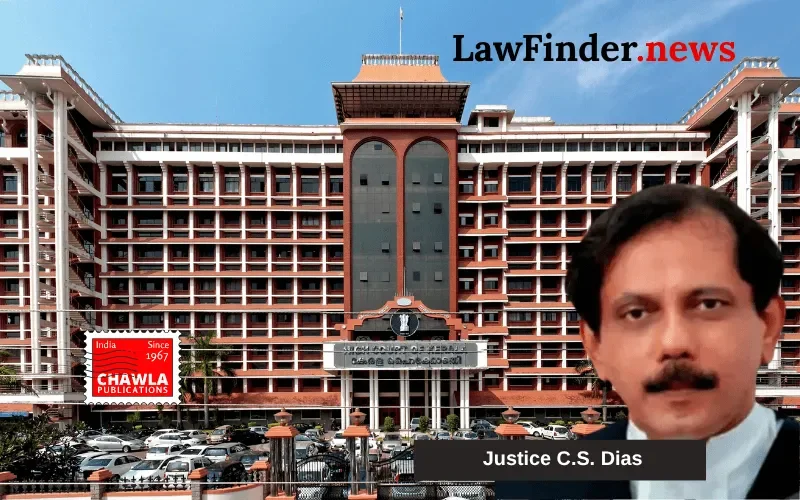
In a significant judgment delivered on October 7, 2026, the Kerala High Court, presided over by Justice C.S. Dias, dismissed the petitioners' plea for conducting the trial "in-camera" in a sensational murder case involving multiple accused. The case, registered as Crime No. 1548 of 2018 at the Ernakulam Central Police Station, concerns the alleged murder of a Maharaja's College student, with charges framed under Sections 143, 148, 323, 324, 307, and 302 read with Section 149 of the Indian Penal Code.
The petitioners-accused persons in the case-had sought an in-camera trial primarily on the ground that no test identification parade was conducted during the investigation. They expressed apprehension that prior exposure of their photographs or video recordings to witnesses might influence witness identification during the trial. They also highlighted concerns over extensive media coverage and the potential for witnesses to learn about the accused's identity from others present in the courtroom, potentially prejudicing the fairness of the proceedings.
However, the trial court had dismissed their application, and the Kerala High Court upheld this decision. The Court emphasized that under Section 366 of the Bharatiya Nagarik Suraksha Sanhita, 2023 (BNSS), criminal trials are to be conducted in open court as a general rule, with in-camera proceedings being an exception. The Court noted that the petitioners' apprehension, based solely on the possibility of photographs or video recordings influencing witnesses, was insufficient to warrant an in-camera trial. There was no evidence of law-and-order issues, threats, intimidation, or disturbances that would justify closing the courtroom to the public.
Justice Dias referred to the landmark Supreme Court judgment in Naresh Shridhar Mirajkar v. State of Maharashtra (1966), which underscored the importance of public trials for ensuring transparency, fairness, and public confidence in the justice system. Similarly, the Court distinguished the decision in Jollyamma Joseph v. State of Kerala (2023), holding that it was rendered on peculiar facts and did not establish a broad precedent for in-camera trials.
While rejecting the petitioners' main prayer, the Court acknowledged their concerns regarding photography and videography inside the courtroom. It directed the trial court, in coordination with the police, to strictly prohibit any person from photographing or video-recording the trial or the accused within the courtroom. Furthermore, the Court instructed the trial court to consider, in accordance with law and the facts of the case, whether restricting public entry during the examination of eyewitnesses would be necessary to preserve the fairness of the trial.
The Court observed that the prosecution had made adequate arrangements, including a bundobust scheme with sufficient police deployment, to maintain order and prevent any disruption during the trial. The accused persons have been on bail since 2018 and have actively participated in social and personal life without incident.
This judgment reaffirms the principle that open court trials remain the cornerstone of the criminal justice system in India, ensuring transparency and public scrutiny. At the same time, it balances the accused's right to a fair trial by empowering courts to impose reasonable restrictions on courtroom conduct, including controlling photography and regulating public access during sensitive testimony.
Bottom Line:
Criminal trial - Open court is the rule under Section 366 of the Bharatiya Nagarik Suraksha Sanhita, 2023 and in-camera proceedings are an exception - Mere apprehension of accused that photographs or video recordings may influence witness identification is not sufficient to direct in-camera trial - However, Court can direct that no photography or videography of accused or trial be permitted inside courtroom and may consider restricting public entry during examination of eyewitnesses to preserve fairness of trial.
Statutory provision(s): Section 366 of the Bharatiya Nagarik Suraksha Sanhita, 2023; Sections 143, 148, 323, 324, 307, 302, 149 of the Indian Penal Code
Mohammed J I v. State of Kerala, (Kerala) : Law Finder Doc Id # 2992801