Court Rules Borrowers Cannot Delay Claiming MSME Benefits to Thwart Recovery Actions; Reinforces Doctrine of Res Judicata in SARFAESI Cases
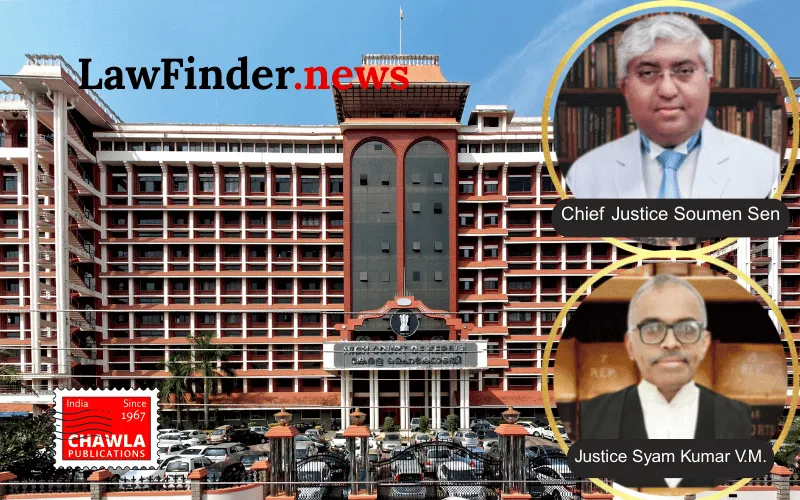
In a significant judgment dated September 1, 2026, the Kerala High Court (Division Bench) dismissed the writ appeal filed by M/s. Soubhagye Road Builders challenging the Reserve Bank of India’s (RBI) SARFAESI Act proceedings initiated against it. The case revolved around the invocation of Sections 13(2), 13(4), and 14 of the Securitisation and Reconstruction of Financial Assets and Enforcement of Security Interest Act, 2002 (SARFAESI Act) and the applicability of the MSME Notification S.O.1432(E) dated May 29, 2015, along with RBI Circular dated March 17, 2016.
The appellant, an MSME borrower, had contended that the Bank had violated the MSME Notification, which mandates identification of incipient stress in MSME accounts and requires constitution of a stress MSME Committee before initiating recovery measures. The appellant argued that the Bank failed to follow the prescribed procedure and that the SARFAESI proceedings should be stayed.
However, the Court found that the borrower had not availed of the MSME benefits at the earliest opportunity. The borrower failed to raise this claim during the initial stages when the demand notice under Section 13(2) was issued, instead raising it belatedly only at the stage of implementation of the SARFAESI Act’s provisions under Section 14. The Court observed that such delay amounts to an abandonment of the MSME claim.
Further, the Court emphasized that the borrower has an obligation to proactively seek rehabilitation under the MSME framework upon detection of financial stress. The failure to approach the Bank or the prescribed Committee with a rehabilitation proposal or to respond adequately to the Bank’s communication seeking renewal documents was a critical factor in permitting the SARFAESI proceedings to continue.
The judgment also reinforced the doctrine of res judicata, referencing the Henderson Principle as recently expounded by the Supreme Court in CELIR LLP v. Mr. Sumati Prasad Bafna (2024 INSC 978). The Court held that once a competent court adjudicates a matter, parties cannot reopen or litigate issues that could have been raised earlier, except under exceptional circumstances. Since the appellant had the opportunity to challenge the SARFAESI measures in the earlier writ petition but failed to do so, the subsequent challenge was barred.
Importantly, the Court clarified that writ petitions under Article 226 of the Constitution are not maintainable if an efficacious statutory remedy exists under Section 17 of the SARFAESI Act, i.e., the borrower can approach the Debt Recovery Tribunal (DRT) for relief. The Court granted liberty to the appellant to file an application before the DRT within three weeks, directing the Tribunal to accept the application without insisting on condonation of delay.
The appeal was dismissed, upholding the Bank’s right to proceed under the SARFAESI Act and underscoring the importance of timely invocation of MSME protections and adherence to procedural requirements.
This ruling aligns with earlier Kerala High Court decisions in M/s. Irine Agro Spices v. Axis Bank Ltd. and M/s. Sree Matha Cosmetic Industries v. UCO Bank, which similarly elucidated the interplay between MSME protections and SARFAESI proceedings.
Detailed Analysis and Stepwise Guide on the Judgment:
1. Background and Parties:
The appellant, M/s. Soubhagye Road Builders (an MSME), had availed an overdraft facility from the Bank. Following non-renewal and alleged defaults, the Bank classified the account as Non-Performing Asset (NPA) and initiated recovery under the SARFAESI Act by issuing notices under Sections 13(2) and 13(4).
2. Initial Litigation:
The appellant challenged the SARFAESI notices in an earlier writ petition but did not claim MSME benefits at that stage, nor did they file for rehabilitation under the MSME Framework. The writ petition was dismissed with liberty to challenge recovery measures through SARFAESI’s statutory remedies.
3. Subsequent Auction Notice and Writ Petition:
After the Bank proceeded with auctioning the secured assets, the appellant filed a second writ petition claiming protection under the MSME Notification and RBI Circular, asserting the Bank did not follow the prescribed MSME stress resolution mechanism.
4. Court’s Findings on MSME Notification Compliance:
The Court found that:
- - The MSME Notification requires the Bank to identify stressed MSME accounts and constitute a stress MSME Committee before recovery.
- - The borrower also has the obligation to apply for rehabilitation under this framework.
- - The appellant did not respond effectively to renewal requests or approach the Bank with a rehabilitation proposal.
- - No application for rehabilitation was made during the proceedings.
5. On Delay in Claiming MSME Benefits:
The Court ruled that MSME benefits must be claimed at the earliest opportunity—preferably in response to the initial demand notice under Section 13(2). Failure to do so means the borrower cannot later invoke these protections to stall recovery.
6. Doctrine of Res Judicata and Henderson Principle:
- - The Court relied on the Henderson Principle, which bars re-litigation of issues that could and should have been raised earlier.
- - The appellant’s failure to raise MSME protection claims initially bars them from reopening the issue at the auction stage.
- - This principle applies equally to writ petitions under Article 226.
7. Availability of Alternative Remedy:
- - The Court emphasized that when an efficacious statutory remedy exists (here, recourse to the DRT under Section 17 SARFAESI Act), writ petitions should not be entertained except in extraordinary circumstances.
- - The appellant was given liberty to approach the DRT without delay.
8. Final Outcome:
The Court dismissed the writ appeal, allowing the SARFAESI proceedings to continue, and directed that any challenge should be pursued before the DRT.
9. Implications:
This judgment clarifies that MSME borrowers must promptly claim benefits and cannot selectively raise claims to delay secured creditor actions. It strengthens the finality of SARFAESI proceedings and directs adherence to procedural mandates under the MSME framework.
This decision serves as a crucial precedent in balancing borrower protections under the MSME laws with the secured creditors’ rights under the SARFAESI Act, ensuring that borrowers cannot evade recovery through procedural delays or piecemeal litigation.
Bottom Line:
SARFAESI Act proceedings - Borrower cannot challenge the measures taken by a secured creditor under the SARFAESI Act at a later stage if an earlier opportunity to do so was not availed.
Statutory provision(s):
SARFAESI Act, 2002 Sections 13(2), 13(4), 14, 17; MSME Notification S.O.1432(E) dated 29.05.2015; Micro, Small and Medium Enterprises Development Act, 2006; Article 226 of the Constitution of India
M/s. Soubhagye Road Builders v. Reserve Bank of India, (Kerala)(DB) : Law Finder Doc Id # 2971404