Court highlights road safety concerns and traffic congestion caused by unregulated e-rickshaws; mandates State Governments to adapt and notify comprehensive policies within 120 days
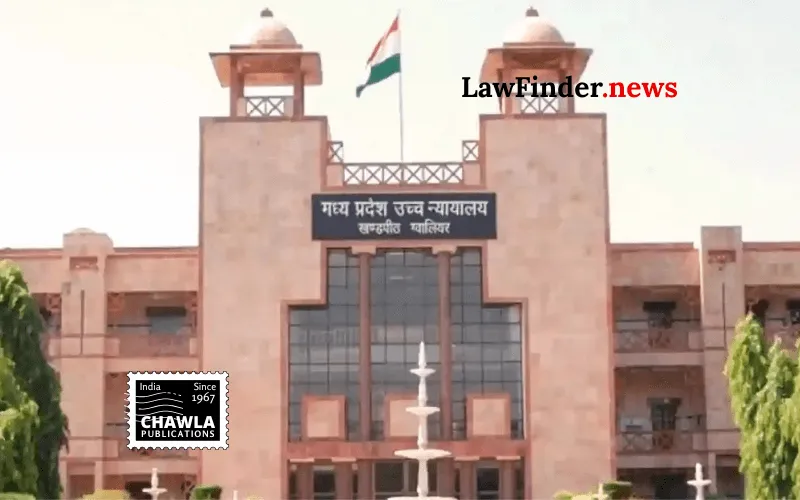
In a significant Public Interest Litigation (PIL) concerning the regulation of e-rickshaws, the Madhya Pradesh High Court (Division Bench at Gwalior) has directed the Union of India to formulate a comprehensive policy for the operation of e-rickshaws across the country. The judgment, delivered on September 10, 2026, addresses the growing concerns regarding traffic congestion, road safety, and the unregulated proliferation of e-rickshaws which have been plying on Indian roads for over a decade without any specific statutory framework.
The petition, filed by Ms. Nisha Gurjar, highlighted the chaotic situation arising from the absence of rules governing the number, route permits, and general operation of e-rickshaws. It was pointed out that these vehicles, operating without permits or regulation, contribute to severe traffic congestion and unfairly prejudice permit holders of other vehicles who pay hefty fees for lawful operation.
During the proceedings, both the Deputy Solicitor General of India, Shri Praveen Kumar Newaskar, and State Counsel Ms. Smriti Sharma acknowledged the gravity of the issue and concurred that a national-level policy is imperative to address this menace effectively.
Consequently, the Court ordered the Union of India, through the Ministry of Road Transport and Highways, to frame a policy within 60 days that regulates the plying of e-rickshaws, including controlling their numbers on roads in specific cities and issuing route permits to ensure smooth traffic flow and decongestion. After the policy is circulated to all State Governments, including Madhya Pradesh, the latter is tasked with adapting the policy to suit local geographical and demographic conditions and notifying a comprehensive policy within 120 days.
The Court also underscored an important safety concern raised during the hearing: certain models of e-rickshaws suffer from stability issues, such as a tendency to topple easily during short turns. It urged the Union of India to incorporate structural safety standards in the policy, specifically focusing on maintaining the center of gravity to prevent such accidents.
The bench appreciated the efforts of the petitioner's counsel and government advocates for bringing forth a matter of significant public interest that affects road safety and urban traffic management. It also granted liberty to the petitioner to move for revival of the writ petition if the Union or the State fail to implement the policy within the stipulated timeframe.
This judgment marks a crucial step towards formalizing the regulation of e-rickshaws, which have become a popular mode of transport in many Indian cities, but have operated in a legal vacuum until now. The policy is expected to balance the interests of commuters, legitimate permit holders, and public safety, thereby fostering organized urban transport.
Bottom Line:
Public Interest Litigation (PIL) concerning regulation of e-rickshaws - Directions issued for framing a policy by Union of India regarding plying of e-rickshaws, regulation of their numbers, issuance of route permits, and ensuring road safety standards.
Statutory provision(s):
Directions pertain to policy formulation under existing transport regulatory frameworks and administrative law principles.
Nisha Gurjar v. Union of India, (Madhya Pradesh)(DB)(Gwalior) : Law Finder Doc Id # 2976746