Court Emphasizes Compassion and Flexibility in Dealing with Appointment Claims of Deceased Employees' Families
In a significant ruling, the Madhya Pradesh High Court has set aside the rejection of a compassionate appointment application filed by Divya Kushwah. The court criticized the rigid approach taken by the Madhya Pradesh Madhya Kshetra Vidyut Vitran Company Limited and emphasized the necessity of flexibility and compassion when handling claims for compassionate appointments.
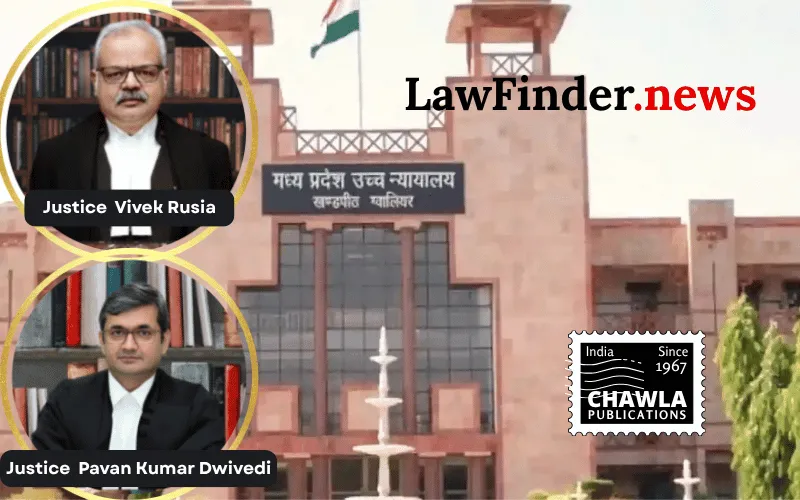
The writ appeal was heard by a division bench comprising Acting Chief Justice Vivek Rusia and Justice Pavan Kumar Dwivedi. The appellant, Divya Kushwah, sought relief after the company rejected her application due to a delay, citing Clause 3.3 of the 2018 Policy, which mandates a six-month period of limitation from the date of the employee's death.
The case traces back to the death of Divya's father on February 4, 2015, while he was employed with the company. Following his demise, her elder brother initially applied for a compassionate appointment but was unable to pursue the claim due to a lack of requisite qualifications. With the family's consent, Divya later filed an application on October 4, 2021, which was subsequently denied.
The High Court, in its ruling, highlighted that the substitution of one dependent by another within a family for a compassionate appointment claim should not be treated as a fresh application. The court noted that the primary aim of compassionate appointments is to provide financial assistance to the family of the deceased employee and that a rigid approach undermines this objective.
Drawing upon precedents, including the Supreme Court's ruling in State of M.P. v. Ashish Awasthi, the court asserted that the policy prevailing at the time of the employee's death should govern the compassionate appointment claims. The bench further criticized the authorities for not providing proper guidance to the family on eligibility and application procedures, stressing the need for a sensitive approach.
The court directed the company to reconsider Divya's application within 30 days, emphasizing that technical grounds should not impede the rightful claims of a family seeking financial relief. This judgment reinforces the judiciary's commitment to ensuring that compassionate appointment schemes fulfill their intended purpose of aiding families in times of financial distress.
Bottom Line :
Compassionate appointment - Substitution of one dependent by another in a compassionate appointment claim is permissible and does not constitute a fresh application. Authorities must adopt a compassionate and sensitive approach rather than a rigid and technical attitude when dealing with such claims.
Statutory provision(s):
- Compassionate Appointment Policy of 2018
- Supreme Court judgment in State of M.P. v. Ashish Awasthi, 2022(2) SCC 157
- Supreme Court judgment in Umesh Kumar Nagpal v. State of Haryana, (1994) 4 SCC 138
- Reference to High Court of Bombay in Kalpana Wd/o. Vilas Taram v. State of Maharashtra, 2024 SCC Online Bom 4258