Court directs recovery of 100 sovereigns of gold and a Volvo car given as dowry; rejects plea for reinvestigation but permits CCTV evidence during trial
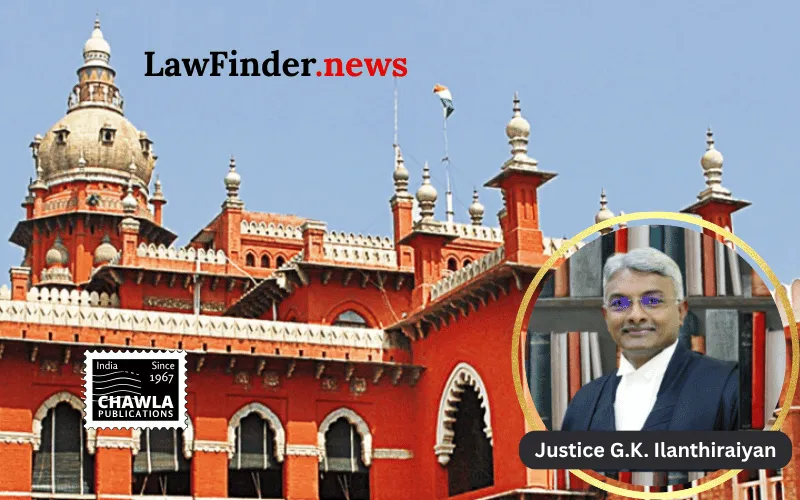
In a significant judgment dated August 24, 2026, the Madras High Court, presided over by Justice G.K. Ilanthiraiyan, has ruled in favor of the father of a deceased woman in a dowry death case, directing the police to seize and hand over dowry articles including 100 sovereigns of gold and a Volvo car to the petitioner. The case involved allegations of dowry harassment and subsequent suicide of the petitioner's daughter within seven months of her marriage.
The petitioner, R. Annadurai, had married his daughter to the first accused on April 11, 2025. At the time of marriage, dowry articles including 100 sovereigns of gold and a Volvo car worth approximately Rs. 63 lakh were given to the accused. Due to continuous dowry and sexual harassment, the deceased was driven out of her matrimonial home and eventually committed suicide by consuming poison.
The police investigation resulted in a final report filed under Sections 85 and 108 of the Bharatiya Nyaya Sanhita (BNS), 2023, and Sections 3(1) and 4 of the Dowry Prohibition Act, 1961. The petitioner's request for return of the dowry articles was rejected by the trial Magistrate on the grounds that these articles were neither seized nor produced before the court.
The High Court found that the Investigating Officer had failed to seize the dowry articles despite clear evidence, including a voice note from the deceased stating that the jewels were kept under lock and key in her matrimonial home. The Court emphasized that under Section 6 of the Dowry Prohibition Act, where a woman dies within seven years of marriage without children, the dowry articles must be returned to her parents.
Rejecting the petitioner's plea for reinvestigation, the Court held that the final report was rightly filed based on the available material. Instead, it directed the police to immediately seize the gold jewels and the Volvo car registered in the deceased's name and hand them over to the petitioner in accordance with the law.
Additionally, the Court permitted the petitioner to mark the CCTV footage along with audio evidence submitted during the investigation for use during the trial, which is currently pending before the Mahila Court, Tiruppur.
This ruling reiterates the legal obligation under the Dowry Prohibition Act to safeguard the rights of the deceased woman's family to recover dowry articles in dowry death cases and ensures that such properties are not wrongfully retained by the accused.
Bottom Line:
Dowry Prohibition Act, 1961 - Dowry articles given to deceased wife at or in connection with marriage, where she died within seven years of marriage and had no children, are liable to be recovered from accused persons and handed over to her parents under Section 6 - No reinvestigation warranted when final report was otherwise properly filed.
Statutory provision(s):
Dowry Prohibition Act, 1961 Sections 3(1), 4, 6; Bharatiya Nyaya Sanhita, 2023 Sections 85, 108
R. Annadurai v. State, (Madras) : Law Finder Doc Id # 2992028