Court holds false social media allegations against Minister politically motivated but not inciting public disorder; directs petitioner to apologize and exercise caution in future posts
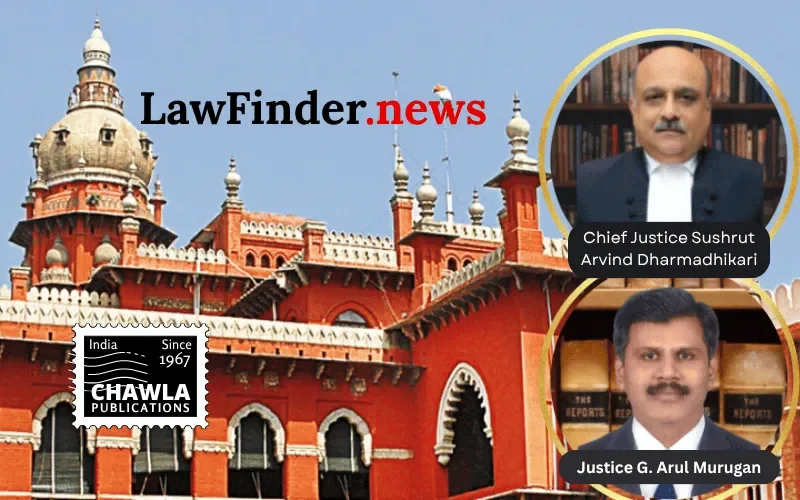
In a significant judgment dated August 28, 2026, the Madras High Court, presided over by Justice D. Bharatha Chakravarthy, quashed the First Information Report registered against Vinoth Suriya Kumar for his social media posts criticizing the management of the Arulmighu Dhandayuthapani Swamy Temple land dispute. The case stemmed from allegations under Sections 192, 353(1)(b), and 353(2) of the Bharatiya Nagarik Suraksha Sanhita, 2023, related to dissemination of false information and causing public mischief.
The petitioner had posted politically charged comments on platforms like X and Instagram, alleging fraudulent land registration linked to the temple and implicating the Minister for Hindu Religious and Charitable Endowments. The posts were deemed defamatory and false by the complainant, a Junior Personal Assistant to the Minister, leading to a police case and the petitioner’s arrest. However, upon detailed scrutiny of the facts and the content of the posts, the Court found that while the posts contained false information and defamatory imputations, they did not incite public disorder, fear, or enmity among different groups.
The background of the dispute involved a contested sale deed concerning land at the foothills of the Pazhani Temple. The property ownership was disputed between a private trust and the HR & CE Department. The registration of the sale deed was initially refused by the Sub-Registrar citing a pending suit, but a writ petition temporarily allowed registration until the High Court later set aside that order. The petitioner’s social media posts emerged in the politically charged atmosphere surrounding these events.
Justice Chakravarthy emphasized that political criticism, even if harsh or defamatory, generally falls within the ambit of the right to freedom of speech and expression, provided it does not provoke violence or hatred. The Court held that the offence provisions invoked require that the false information must be intended or likely to provoke public disorder or enmity on grounds such as religion or community, which was not established here.
While the Court quashed the FIR, it also noted the defamatory nature of some posts against the Minister and left the door open for civil or criminal defamation proceedings to be initiated by the Minister or complainant. Further, the petitioner was directed to file an affidavit expressing regret for posting unverified and false information and to undertake verification of facts before future posts. The Court stressed the need for responsibility in social media communications to avoid unnecessary anxiety and harm to public interests.
This judgment reiterates the delicate balance between safeguarding freedom of expression and preventing misuse of social media to spread falsehoods that could disrupt public order. It also underscores the judiciary’s approach to political speech in the digital era, emphasizing fact verification and responsible expression.
Bottom Line:
Dissemination of false information through social media posts, even if politically motivated, does not attract offences under Sections 192, 353(1)(b), and 353(2) of the Bharatiya Nagarik Suraksha Sanhita, 2023, unless it provokes or is likely to provoke public disorder, fear, or enmity among different groups.
Statutory provision(s):
Sections 192, 353(1)(b), 353(2) of the Bharatiya Nagarik Suraksha Sanhita, 2023
Vinoth Suriya Kumar v. State, (Madras) : Law Finder Doc Id # 2969384