Court directs payment of arrears and disposal of matrimonial petition within four months; mandates data collection on disputes from 2020-2022 marriages to explore alternative resolution methods.
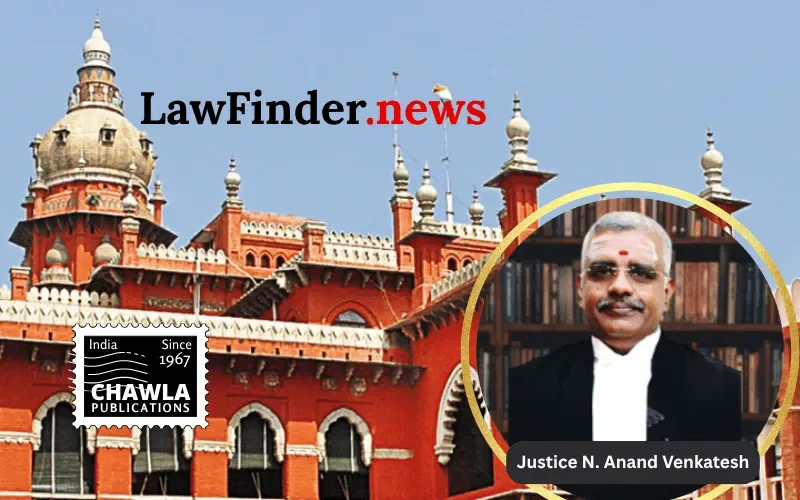
In a significant ruling on October 16, 2026, the Madras High Court, presided over by Justice N. Anand Venkatesh, upheld an interim maintenance order of Rs.10,000 per month awarded to a wife by the Sub Court, Alandur, under Section 24 of the Hindu Marriage Act, 1955. The Civil Revision Petition (CRP No. 3799 of 2026) filed by the husband, S. Sivabalan, challenging this order was dismissed, affirming the trial court's discretion and the reasonableness of the maintenance amount.
Background and Court Proceedings:
The dispute arose from O.P. No. 377 of 2023 filed by the respondent, R. Sivasakthipriya, seeking interim maintenance during the pendency of matrimonial proceedings. The Sub Court had fixed the maintenance at Rs.10,000 per month. Upon challenge, the Madras High Court initially directed the petitioner to pay Rs.7,000 per month as interim maintenance and mandated payment of arrears accrued.
Upon final consideration, the High Court found no grounds to interfere with the trial court's decision. The Court emphasized that the amount was neither exorbitant nor arbitrary but a fair exercise of judicial discretion. Consequently, the petitioner was directed to pay the differential arrears within four weeks. Moreover, the Court ordered the Sub Court, Alandur, to dispose of the matrimonial petition within four months, underscoring the need for expeditious resolution of such matters.
Addressing Pandemic-Era Matrimonial Disputes:
Remarkably, the Court took judicial notice of a rising trend in matrimonial disputes involving marriages solemnized between 2019 and 2022, a period marked by the COVID-19 pandemic and lockdowns. The Court observed that in over 95% of such cases, couples had cohabited for a mere three to nine months, often under extraordinary stress and confinement. This unprecedented situation exposed vulnerabilities in marital relationships, leading to an increase in disputes.
Highlighting the unique challenges posed by this period, the Court advocated for "out-of-box" solutions tailored to these cases. It directed all Principal District Judges across Tamil Nadu to collect comprehensive data on matrimonial cases relating to marriages from 2020 to 2022. The Court intends to review this data and seek expert assistance from experienced Family Court counsel to devise alternative dispute resolution mechanisms. The aim is to facilitate amicable settlements and possibly preserve marital bonds affected by the pandemic's extraordinary circumstances.
Implications:
This judgment reaffirms the judiciary's balanced approach in awarding interim maintenance, protecting spouses' rights while ensuring amounts are reasonable. The directive for timely disposal of matrimonial cases reflects an emphasis on reducing prolonged litigation.
Furthermore, the Court's proactive stance on pandemic-affected marriages signals an innovative judicial mindset keen on adapting dispute resolution to contemporary social realities. By collecting data and exploring specialized solutions, the judiciary aims to mitigate the impact of the pandemic on marital stability and family welfare.
The next hearing is scheduled for November 27, 2026, where the Court will review the data collected and deliberate on potential new frameworks for resolving these unique matrimonial disputes.
Bottom Line:
Hindu Marriage Act, 1955 Section 24 Interim maintenance of Rs.10,000/- per month awarded by trial Court upheld in supervisory jurisdiction under Article 227 of Constitution of India - High Court held amount to be reasonable and not exorbitant - Arrears directed to be paid and matrimonial original petition directed to be disposed of within four months.
Statutory provision(s):
Hindu Marriage Act, 1955 Section 24; Constitution of India Article 227
S.Sivabalan v. R.Sivasakthipriya, (Madras) : Law Finder Doc Id # 2998854